
Choosing the right PTFE convoluted tube is not only about selecting a size from a product list. For many industrial applications, the tube must handle chemicals, high temperatures, pressure changes, vibration, repeated bending, limited installation space, and strict cleanliness requirements. If the wrong tube is selected, the result may be leakage, kinking, flow restriction, contamination, reduced service life, or unexpected maintenance costs.
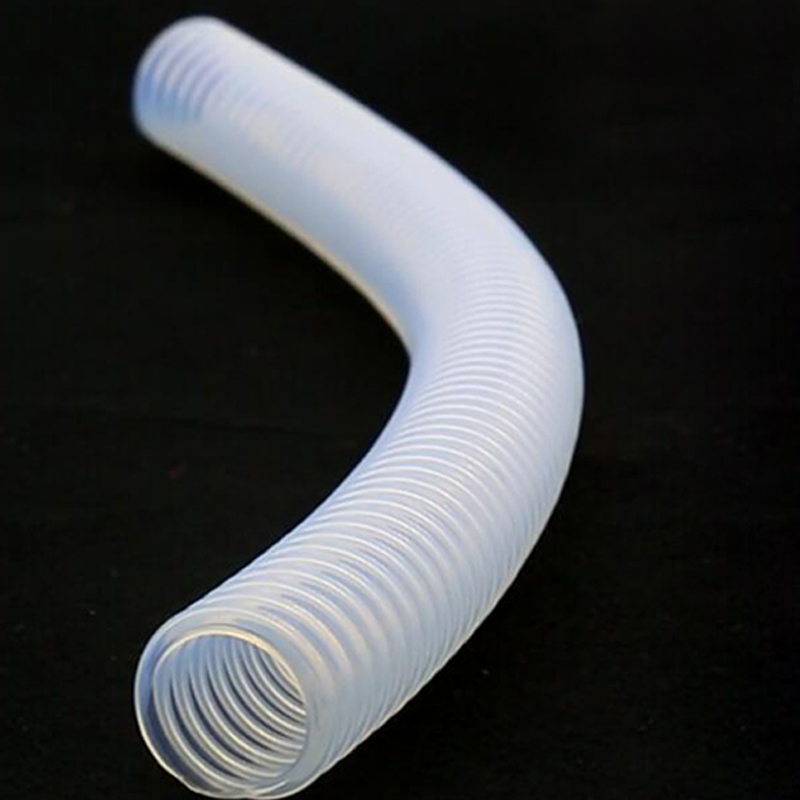
PTFE convoluted tubing is widely used because it combines the excellent chemical resistance of PTFE with a flexible corrugated structure. Compared with a standard smooth bore PTFE tube, a convoluted design can bend more easily and fit into compact or complex routing paths.
However, not every PTFE convoluted tube is suitable for every application. Before choosing a product, buyers should evaluate the fluid type, working temperature, pressure, vacuum condition, bending radius, cleaning requirements, tube size, reinforcement needs, and supplier capability. This guide will help you choose the right PTFE convoluted tube for your application and avoid common purchasing mistakes.
When Should You Choose PTFE Convoluted Tubing?
PTFE convoluted tubing is a good choice when your application requires flexibility, chemical resistance, and reliable performance in demanding environments. It is often selected when installation space is limited, when equipment vibration is present, or when the tube needs to connect components at difficult angles.
You should consider using a PTFE convoluted tube if your system includes tight routing paths, moving parts, frequent bending, high-temperature exposure, chemical media, or compact equipment design. It is also useful when you want to reduce the number of elbows, adapters, or extra fittings in a system.
Compared with a straight PTFE tube, a convoluted tube is often the better solution when the application involves dynamic movement, vibration absorption, thermal expansion compensation, or flexible routing inside equipment. This is why PTFE convoluted tubing is widely used in automation systems, robotics, laboratory equipment, food machinery, pharmaceutical equipment, and compact industrial assemblies.
For example, in chemical dosing equipment, a PTFE tube for chemical transfer must resist corrosive fluids while remaining flexible enough to fit inside compact skid systems. In food machinery, a PTFE tube for food processing may need to handle cleaning cycles, temperature changes, and flexible equipment connections. In automotive or industrial equipment, a PTFE tube for tight spaces can help improve installation efficiency and reduce bending stress.
Key Factors to Consider Before Choosing a PTFE Convoluted Tube
1. Fluid or Medium Type
The first question is: what will flow through the tube? PTFE is known for excellent chemical resistance, but the actual working conditions still need to be confirmed. Different fluids may have different concentration levels, temperatures, cleaning requirements, and safety risks.
If the tube will carry acids, solvents, fuels, oils, adhesives, cleaning agents, or aggressive chemicals, you should select a chemical resistant PTFE tube designed for stable performance under those conditions. For food or beverage applications, you should also consider cleanliness, compliance requirements, and whether the tube is suitable for repeated flushing or cleaning.
Before purchasing, provide your supplier with the fluid name, concentration, working temperature, and whether the fluid contains particles or is highly viscous. This information helps the supplier recommend a suitable PTFE convoluted tube structure.
2. Working Temperature
PTFE performs well across a wide temperature range, which is one reason it is used in demanding industries. However, temperature still affects pressure performance, flexibility, and long-term service life.
When selecting PTFE convoluted tubing, confirm both the normal working temperature and the maximum temperature that may occur during operation or cleaning. For example, a tube used in food processing may face hot water, steam cleaning, or chemical washdown. A tube used in automotive or machinery applications may be exposed to engine heat, friction heat, or outdoor temperature changes.
If your application has high temperatures and pressure at the same time, you should discuss the exact working conditions with a professional PTFE tube manufacturer before confirming the final specification.
3. Pressure and Vacuum Conditions
Pressure is one of the most important factors in tube selection. Different PTFE convoluted tube structures may have different pressure ratings depending on wall thickness, tube size, reinforcement, and operating temperature.
If the tube will be used in a pressure system, ask for working pressure and burst pressure information. If the tube will be used in vacuum or negative pressure conditions, you should also confirm whether the tube needs reinforcement to prevent collapse.
For some applications, standard PTFE convoluted tubing may be enough. For higher pressure, vacuum, or dynamic use, braided or reinforced structures may be required. Never choose a tube only based on appearance. Always match the tube structure with actual pressure conditions.
4. Bending Radius and Installation Space
One of the biggest advantages of a PTFE convoluted tube is its small bending radius. This makes it ideal as a PTFE tube for tight spaces, especially in compact machines, automotive compartments, control cabinets, dosing systems, laboratory equipment, robotic systems, and processing equipment.
Before choosing the tube, check the installation route carefully. Consider whether the tube needs to pass through narrow gaps, turn around corners, connect to fittings at difficult angles, compensate for misaligned ports, or move during operation.
If the tube is forced into a bend smaller than its recommended bending radius, it may kink, flatten, or reduce flow. A flexible PTFE tube helps solve this issue, but it still needs to be selected according to the actual installation environment.
5. Flow Performance and Cleaning Requirements
PTFE convoluted tubing offers excellent flexibility, but its internal corrugated structure may create more turbulence than a smooth bore tube. For many industrial applications, this is acceptable. However, if your fluid is highly viscous, sticky, or sensitive to residue, you should carefully evaluate cleaning and flow requirements.
For chemical transfer, the structure should support safe and stable movement of the medium. For food processing, the tube should be easy to clean and suitable for the required hygiene level. If the application requires very low residue or frequent cleaning, you may need to compare PTFE convoluted tube with smooth bore PTFE tube or consider a special design.
A professional PTFE convoluted tube supplier can help evaluate whether the flexibility benefits outweigh the possible flow or cleaning concerns.
6. Tube Size and Wall Thickness
Tube size directly affects flow rate, pressure performance, flexibility, and installation. Inner diameter controls how much fluid can pass through the tube, while wall thickness affects strength, pressure resistance, and durability.
When selecting a custom PTFE convoluted tube, confirm the inner diameter, outer diameter, wall thickness, length, tolerance, and connection method. If the tube needs to connect with fittings, assemblies, or equipment ports, dimensional accuracy is especially important.
A small size error may lead to leakage, difficult assembly, poor sealing, or rejected parts. For long-term projects, make sure the supplier can maintain batch-to-batch consistency.
Common Applications of PTFE Convoluted Tube
One of the most important reasons engineers choose PTFE convoluted tubing is that there are many situations where a straight PTFE tube is difficult or impractical to use. The corrugated structure provides flexibility that helps solve installation and movement challenges while maintaining PTFE's excellent chemical resistance and temperature performance.
1.Tight Routing Inside Equipment
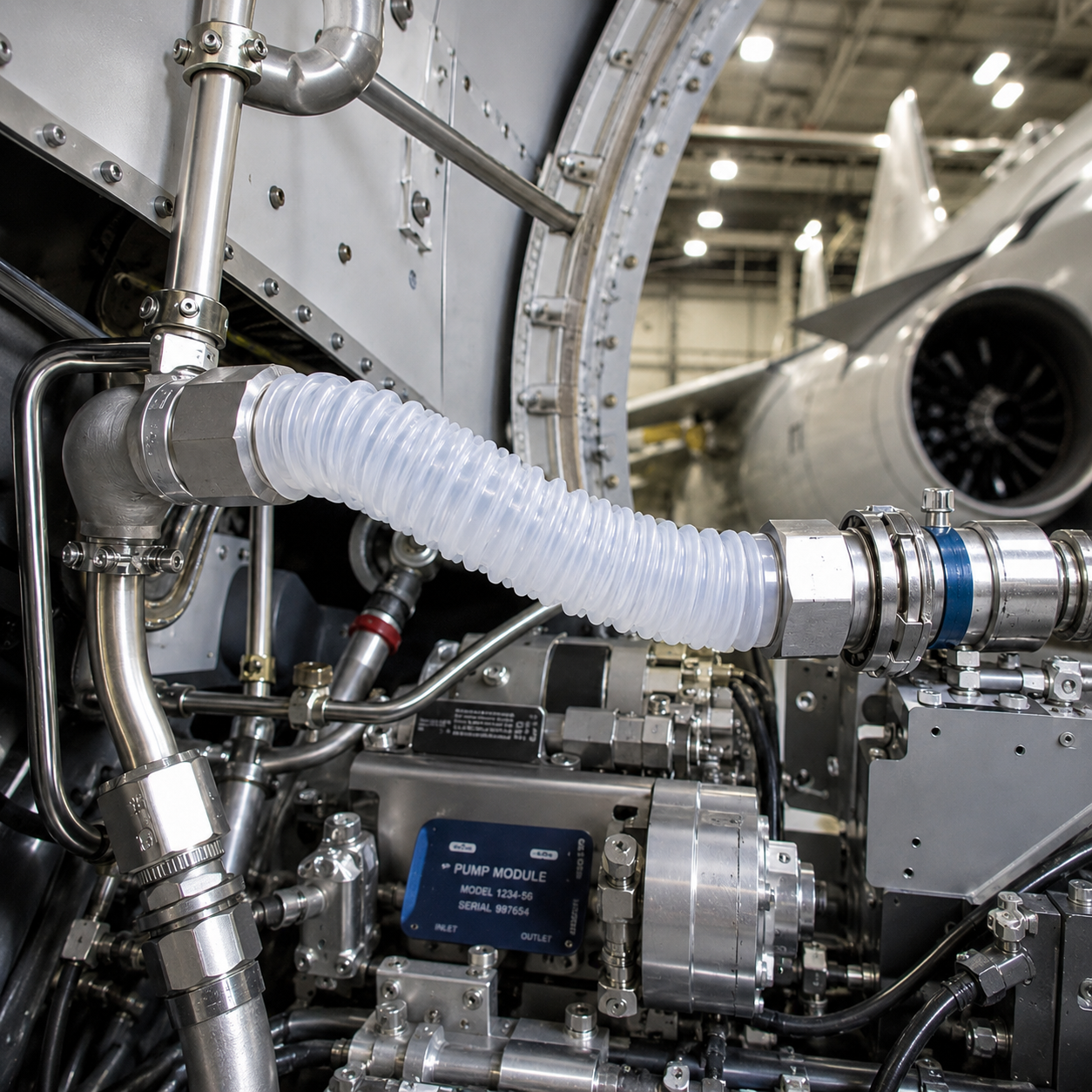
PTFE convoluted tubing is commonly used inside compact equipment where installation space is limited. In dosing systems, laboratory instruments, analytical equipment, compact chemical skids, and automotive compartments, the tube often needs to pass through narrow spaces or around components. A convoluted tube can achieve a much smaller bending radius than a straight PTFE tube, making installation easier and reducing stress on fittings.
2.Connecting Misaligned Ports or Complex Angles
Many systems have inlet and outlet ports that are not perfectly aligned. Instead of adding multiple elbows and adapters, a PTFE convoluted tube can provide a flexible connection between ports located at different angles or positions. This helps simplify system design and reduce potential leak points.
3.Pump, Valve, and Metering Pump Connections
PTFE convoluted tubing is frequently used as a flexible connection between pumps, valves, metering pumps, and process equipment. The tube can absorb minor vibration and movement that would otherwise be transferred directly to rigid piping or fittings. This helps improve reliability and reduce stress on connection points.
4.Moving Fluid Supply Lines in Automation Equipment
Automation equipment often requires fluid lines that move with machine components. PTFE convoluted tubing is suitable for supplying chemicals, cleaning fluids, lubricants, or process media to moving assemblies because it can tolerate repeated bending better than rigid tubing.
5.Robotic, Sliding Rail, and Spray Head Applications
Robotic arms, sliding platforms, dispensing systems, and spray heads frequently require flexible tubing that moves continuously during operation. PTFE convoluted tubing is often selected because it combines flexibility with chemical resistance, making it suitable for dynamic routing applications where straight tubing would be difficult to manage.
6.Thermal Expansion and Movement Compensation
In hot and cold cycling systems, equipment and piping may expand or contract during operation. PTFE convoluted tubing can help compensate for small amounts of thermal movement and installation misalignment. This makes it useful in temperature control systems, heat transfer equipment, cleaning systems, and other applications exposed to temperature fluctuations.
7.Short Flexible Connections in Laboratory, Food, and Pharmaceutical Equipment
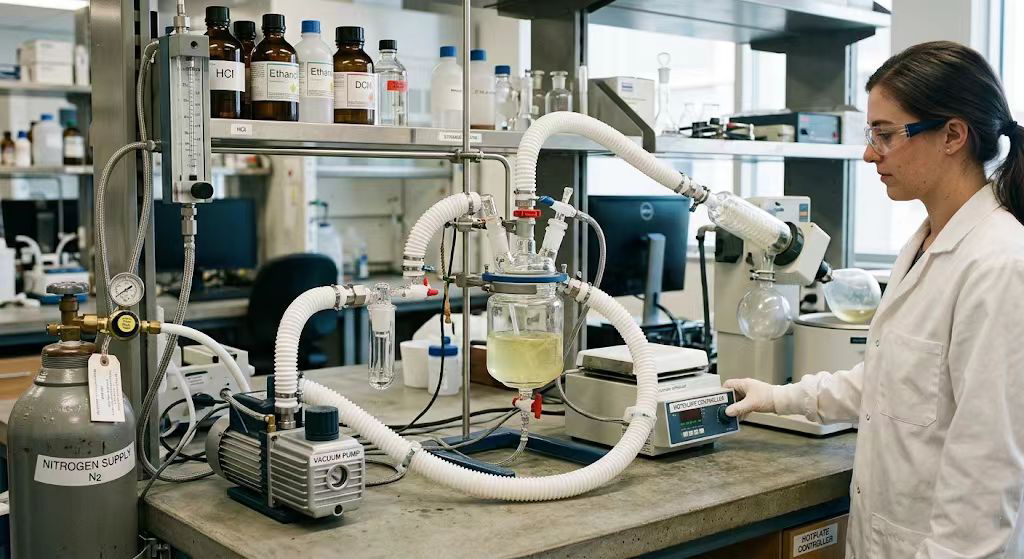
Laboratory instruments, testing equipment, food processing machinery, and pharmaceutical systems often require short flexible connections between components. PTFE convoluted tubing provides flexibility while maintaining resistance to chemicals, cleaning agents, and temperature changes. It is commonly used where rigid tubing would make assembly or maintenance more difficult.
8.Bare Tube Applications Requiring Flexibility
Some customers do not need stainless steel braiding or external reinforcement. They simply need a chemically resistant and flexible PTFE tube. In these situations, PTFE convoluted bare tubing is often preferred because it provides flexibility without the added weight, cost, or complexity of braided hose constructions.
PTFE Convoluted Tube for Chemical Transfer
A PTFE tube for chemical transfer is often used in systems that handle acids, solvents, fuels, oils, alkalis, and other aggressive media. PTFE is widely chosen because it resists many chemicals that may damage rubber, PVC, or ordinary plastic tubing.
When choosing a PTFE convoluted tube for chemical transfer, pay attention to chemical compatibility, working temperature, pressure, connection safety, static electricity risk, and leakage prevention. If the medium is flammable or has static discharge concerns, anti-static or conductive options may be required.
Chemical applications can be high-risk, so supplier selection is also important. Choose a PTFE tube manufacturer that understands chemical transfer requirements and can provide suitable testing, documentation, and technical support.
Common Mistakes to Avoid When Buying PTFE Convoluted Tubing
One common mistake is choosing the cheapest product without checking material quality or production stability. A low-cost tube may lead to leakage, short service life, or inconsistent performance.
Another mistake is ignoring the bending radius. Even a flexible PTFE tube has design limits. If the tube is bent too sharply, performance may be affected.
Some buyers also choose PTFE convoluted tubing for every application without considering cleaning or flow requirements. While convoluted tubing is excellent for flexibility, smooth bore tubing may be better for high-flow or high-cleanliness applications.
Other common mistakes include not confirming pressure ratings, ignoring vacuum conditions, using unclear specifications, skipping sample testing, and choosing a supplier without quality documentation.
To reduce risks, always confirm the application, request samples when necessary, review the supplier’s manufacturing ability, and define acceptance standards before bulk production.
Why Choose Besteflon as Your PTFE Tube Manufacturer?
| Advantages | Details |
| Company Positioning | Professional PTFE tube manufacturer with long-term expertise in PTFE hose and tubing solutions |
| Core Products | PTFE convoluted tube, PTFE smooth bore tube, flexible PTFE hose, PTFE brake hose, customized PTFE hose assemblies |
| Industry Experience | Over 20 years of experience in PTFE hose and tubing production |
| Served Industries | Chemical transfer, food processing, automotive systems, machinery, electronics, pharmaceutical equipment, laboratory instruments, automation systems, robotics, industrial fluid applications |
| Technical Support | Assists customers in selecting suitable tube structures based on pressure, temperature, medium, bending radius, installation space, movement requirements, and cleaning requirements |
| Production Scale | Modern production base of approximately 10,000 square meters, equipped with over 40 high-speed braiding machines |
| Capacity Advantages | Annual output reaches up to 30 million meters, supports stable production, repeat orders, customized projects, and long-term cooperation |
| Quality Standards | International standards and certifications including ISO9001, IATF16949, FDA, ROHS, and SGS |
| Testing Capabilities | Air tightness testing, hydraulic pressure testing, pressure holding tests, burst pressure testing, high-pressure testing, bending fatigue testing |
| Customization Services | Special sizes, specific wall thickness, braided reinforcement, covered structures, anti-static options, hose assemblies, application-based recommendations; from sample testing to mass production |
| Partnership Values | Quality, customization, technical communication, stable production, long-term partnership |
FAQ About Choosing PTFE Convoluted Tube
What is the main advantage of PTFE convoluted tubing?
The main advantage of PTFE convoluted tubing is flexibility. Its corrugated structure allows it to bend more easily than straight tubing, making it suitable for compact spaces, complex routing, moving equipment, and applications with vibration.
Is PTFE convoluted tube suitable for chemical transfer?
Yes. PTFE has excellent chemical resistance, so PTFE convoluted tube is widely used for chemical transfer. However, buyers should confirm fluid type, concentration, temperature, pressure, and whether anti-static options are needed.
Can PTFE convoluted tube be used for food processing?
Yes, PTFE convoluted tube can be used in food processing equipment when flexibility and material stability are required. Buyers should also consider cleaning requirements, residue control, and documentation needs.
What information should I provide before ordering?
You should provide inner diameter, outer diameter, wall thickness, length, working pressure, temperature range, fluid type, bending radius, application environment, movement requirements, quantity, and certification requirements.
When do I need a custom PTFE convoluted tube?
You may need a custom PTFE convoluted tube when standard sizes or structures cannot meet your installation, pressure, flexibility, movement, connection, or industry requirements.
If you are in PTFE Convoluted Tube, you may like
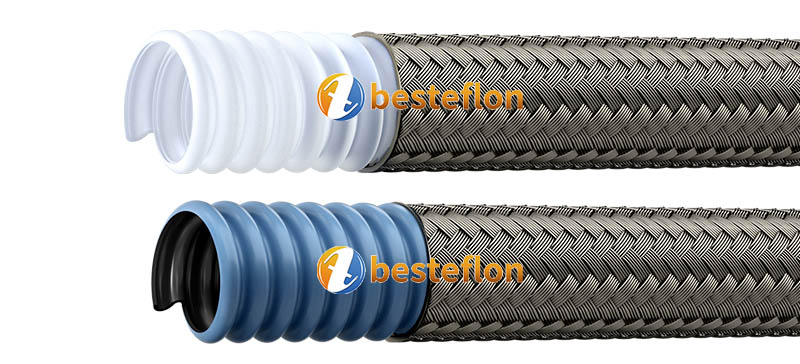
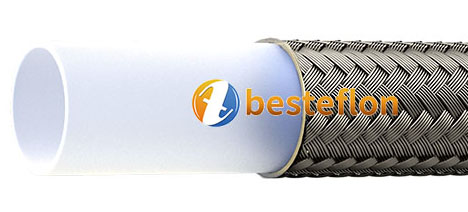
Buying the right PTFE Convoluted Tube is not only about choosing different specifications for different applications. More to choose a reliable manufacturer. Besteflon Fluorine plastic Industry Co., Ltd. specializes in the production of high-quality PTFE hoses and tubes for 20 years. If any questions and needs, please feel free to consult us for more professional advice.
Post time: Jun-11-2026