
When designing a fluid transfer system in a limited space, one common question is: should I choose PTFE convoluted tube or smooth bore PTFE tube? Both products are made from PTFE and offer excellent chemical resistance, temperature resistance, and long service life. However, their structures are different, and that difference can directly affect installation, flexibility, flow performance, cleaning, pressure behavior, and long-term maintenance.
For projects with tight routing, repeated movement, or complex installation paths, PTFE convoluted tube is often considered a better option because of its superior flexibility and smaller bending radius. For systems that require high flow efficiency, easy cleaning, and minimal material retention, smooth bore PTFE tube may still be the more suitable choice.
This article explains the differences between PTFE convoluted tube and smooth bore PTFE tube, especially for tight spaces. It will help you evaluate which option fits your application and how to avoid common selection mistakes before purchasing.
What Is PTFE Convoluted Tube?
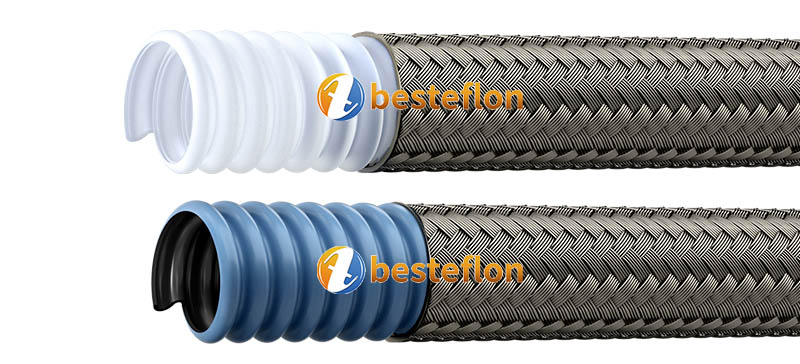
PTFE convoluted tube is a flexible tube with a corrugated or wave-shaped structure. Compared with a straight smooth tube, the convoluted design allows the tube to bend more easily without kinking. This makes it useful in equipment where space is limited or where the tube needs to pass around corners, moving parts, compact machinery, or irregular installation areas.
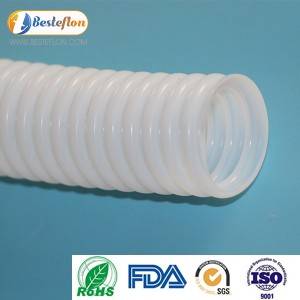
Because PTFE itself has excellent chemical resistance and a wide working temperature range, PTFE convoluted tube is widely used in chemical processing, automotive systems, food and beverage equipment, pharmaceutical machinery, electrical insulation, semiconductor equipment, laboratory devices, and industrial fluid transfer systems.
The biggest advantage of PTFE convoluted tube is flexibility. It can often be installed in areas where a rigid or semi-rigid smooth bore tube would be difficult to route. In many compact systems, this flexibility can reduce installation stress, simplify assembly, and help avoid tube damage caused by forced bending.
What Is PTFE Smooth Bore Tube?
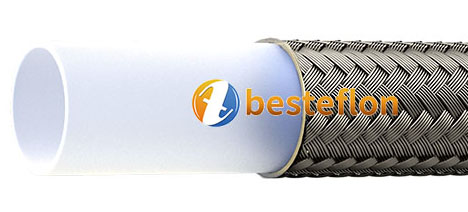
PTFE smooth bore tube has a straight and smooth inner surface. It is commonly used when the system requires stable flow, low friction, clean transfer, and easy flushing. Because the internal wall is smooth, fluid can move through the tube with less turbulence compared with a convoluted structure.
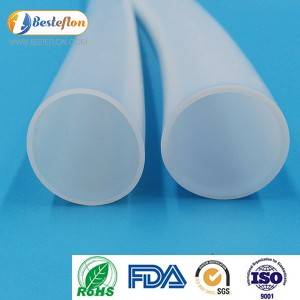
PTFE smooth bore tube is often used in chemical transfer lines, food-grade fluid systems, laboratory equipment, high-purity applications, hydraulic lines, automotive assemblies, and other industrial systems where clean flow and consistent performance are important.
The main advantage of PTFE smooth bore tube is its flow efficiency. It is easier to clean, less likely to retain residue, and more suitable for applications where product purity, hygiene, and low-pressure drop are important. However, it is usually less flexible than PTFE convoluted tube, which may become a challenge in tight spaces.
Why Tight Spaces Change the Tube Selection
In an open installation environment, smooth bore PTFE tube can be an excellent choice. But when the system design includes narrow gaps, sharp turns, compact equipment, limited access points, or moving components, flexibility becomes a major selection factor.
In tight spaces, the tube may need to bend around machinery, pass through small openings, connect to fittings at difficult angles, or absorb vibration from equipment operation. If the tube is too stiff, installers may force it into position. This can create stress at the connection points, increase the risk of kinking, reduce flow, or shorten service life.
PTFE convoluted tube helps solve this issue because the wave-shaped structure allows easier bending. It can adapt to complex routing without requiring excessive force during installation. This makes it especially useful for compact machines, automotive engine compartments, robotics, analytical instruments, food processing equipment, and chemical dosing systems.
However, tight space is not the only factor. Buyers also need to consider the fluid type, cleaning requirements, working pressure, vacuum conditions, temperature, flow rate, and maintenance schedule before making a final decision.
PTFE Convoluted Tube vs Smooth Bore PTFE Tube: Key Differences
The main difference between PTFE convoluted tube and smooth bore PTFE tube is the internal and external structure. A convoluted tube has a corrugated shape that improves flexibility, while a smooth bore tube has a straight internal surface designed for efficient flow.
In terms of flexibility, PTFE convoluted tube usually performs better. It can bend more easily and is less likely to kink when installed in narrow or curved spaces. This makes it ideal for applications where the tube must move, bend, or fit into compact layouts.
In terms of flow performance, smooth bore PTFE tube usually has the advantage. The smooth inner wall helps reduce turbulence and pressure loss. For high-flow systems, viscous fluids, or applications that require fast cleaning, smooth bore PTFE tube may be the better option.
In terms of cleaning, smooth bore PTFE tube is easier to flush because there are no internal corrugations. PTFE convoluted tube may create more turbulence and may retain small amounts of material in certain applications, especially if the fluid is sticky, thick, or contains particles.
In terms of installation, PTFE convoluted tube is often easier to handle in difficult spaces. It can reduce the need for extra fittings, elbows, or complicated routing solutions. In some cases, using convoluted tubing can also shorten installation time and reduce labor costs.
In terms of appearance and structure, smooth bore PTFE tube is simpler, while PTFE convoluted tube is more specialized for flexibility and space-saving applications.
Is PTFE Convoluted Tube Better for Tight Spaces?
In most tight-space applications, PTFE convoluted tube is better than smooth bore PTFE tube because it offers greater flexibility and a smaller bending radius. This allows the tube to fit into compact systems without being overstretched, flattened, or forced into sharp bends.
For example, in an automotive engine compartment, the available space may be very limited. The tube must route around metal parts, electrical components, heat sources, and moving structures. A smooth bore PTFE tube may not bend easily enough, while a PTFE convoluted tube can follow the required path with less stress.
In chemical equipment, compact skids and dosing systems often require tubes to pass through tight frames and narrow gaps. PTFE convoluted tube can make installation easier while maintaining chemical resistance.
In food or pharmaceutical equipment, PTFE convoluted tube may be useful in areas where flexibility is required, but buyers must also consider cleaning and residue control. If the system requires frequent CIP cleaning or high hygiene standards, a smooth bore PTFE tube or a smooth-bore convoluted design may be more appropriate.
Therefore, the answer is not simply yes or no. PTFE convoluted tube is usually better for tight spaces, but smooth bore PTFE tube may still be better for applications where flow efficiency, cleaning, and low residue are more important than flexibility.
When Should You Choose PTFE Convoluted Tube?
You should consider PTFE convoluted tube when your application has one or more of the following conditions:
- The installation space is narrow or complex.
- The tube needs to bend around equipment.
- The system requires a small bending radius.
- The tube may experience movement or vibration.
- The layout changes frequently during assembly.
- The tube must connect fittings at difficult angles.
- The system needs chemical resistance and flexibility at the same time.
- The installation team wants to reduce the use of extra elbows or adapters.
PTFE convoluted tube is especially valuable when forced bending would create stress in a smooth bore tube. It helps protect the tube from kinking, bending fatigue, and installation damage.
For long-term use, PTFE convoluted tube can also improve reliability in dynamic applications. If a tube is repeatedly moved, bent, or exposed to vibration, flexibility becomes more than a convenience. It becomes a factor that affects service life.
When Should You Choose PTFE Smooth Bore Tube?
PTFE Smooth bore tube may be the better choice when the system requires stable flow, easier cleaning, and lower material retention. It is commonly selected for applications where the fluid path should remain clean and efficient.
You should consider PTFE smooth bore tube when:
- The fluid is viscous or sticky.
- The system requires easy flushing or cleaning.
- The application has strict hygiene requirements.
- The flow rate must remain stable.
- Pressure drop must be minimized.
- The tube routing is relatively straight.
- The installation space is not extremely limited.
- The application requires low turbulence.
For food, beverage, pharmaceutical, and high-purity fluid transfer systems, PTFE smooth bore tube often provides stronger advantages in cleaning and flow control. It may also be preferred when the process fluid cannot remain trapped in small spaces.
In other words, PTFE smooth bore tube is not worse than PTFE convoluted tube. It is simply designed for different priorities. The correct choice depends on whether your system values flexibility more than flow efficiency, or flow efficiency more than flexibility.
FAQ
Q: Is PTFE convoluted tube always more flexible than smooth bore PTFE tube?
A: In most cases, yes. The corrugated structure allows PTFE convoluted tube to bend more easily than smooth bore PTFE tube. This makes it more suitable for tight routing and compact installation spaces.
Q: Does PTFE convoluted tube reduce flow rate?
A: PTFE convoluted tube may create more turbulence than smooth bore PTFE tube because of its internal structure. For high-flow or easy-cleaning applications, smooth bore PTFE tube may provide better flow performance.
Q: Can PTFE convoluted tube be used for food-grade applications?
A: Yes, PTFE itself is suitable for many food-related applications, but the final choice depends on the tube structure, cleaning method, certification requirements, and fluid type. For high hygiene requirements, smooth bore PTFE tube may be easier to clean.
Q: Which tube is better for chemical transfer?
A: Both PTFE convoluted tube and smooth bore PTFE tube can be used for chemical transfer because PTFE has excellent chemical resistance. The better choice depends on flexibility, flow, pressure, cleaning, and installation requirements.
Q: Can PTFE convoluted tube handle vacuum applications?
A: It depends on the tube design, wall thickness, temperature, and vacuum level. For vacuum or negative pressure applications, reinforced structures may be needed to improve stability and prevent collapse.
Q: How do I choose between PTFE convoluted tube and smooth bore PTFE tube?
A: Choose PTFE convoluted tube if flexibility and tight routing are the main concerns. Choose smooth bore PTFE tube if flow efficiency, cleaning, and low residue are more important. For complex projects, consult a professional PTFE tubing supplier before confirming the specification.
Why choose Besteflon PTFE Tubing?
Besteflon is a professional PTFE tubing and hose manufacturer focused on providing reliable solutions for industrial fluid transfer, automotive systems, chemical processing, food equipment, pharmaceutical applications, machinery, electronics, and other demanding industries.
Besteflon has a modern production base of about 10,000 square meters and more than 40 high-speed braiding machines. This production strength allows the company to support stable supply, achieving an annual production capacity of up to 30 million meters of PTFE tubing.
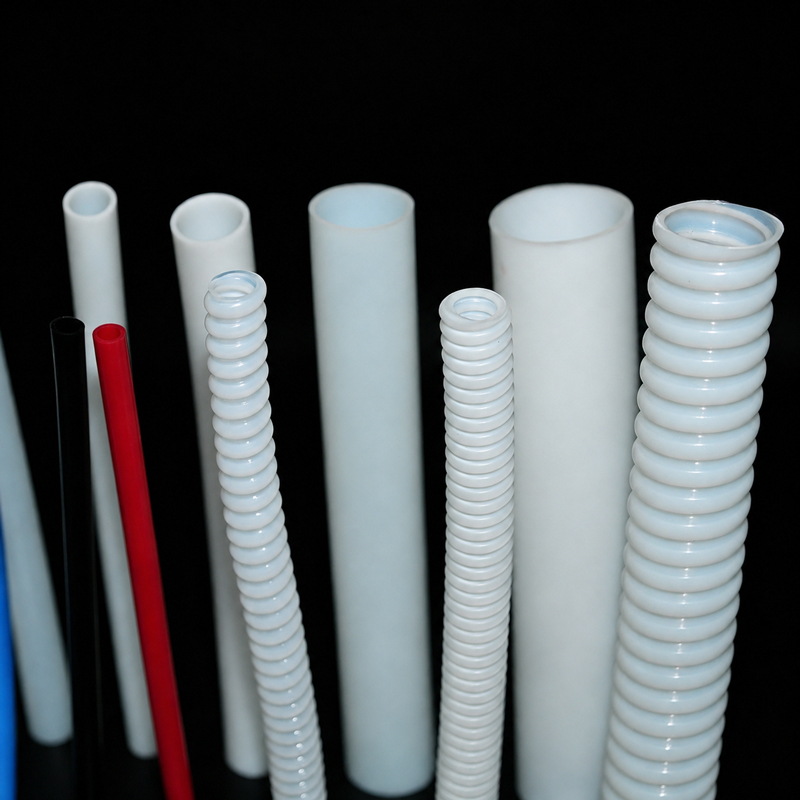
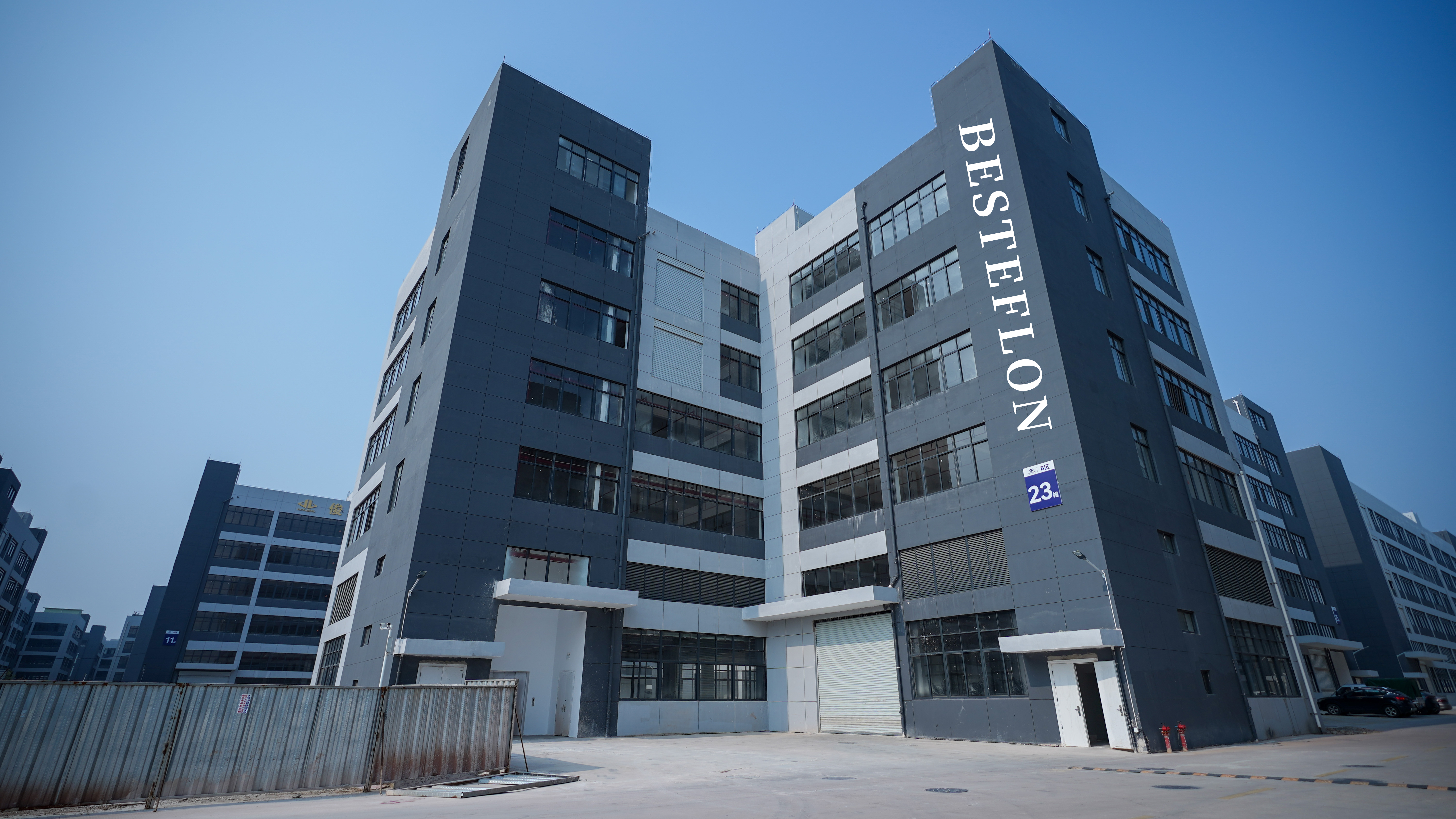
Besteflon offers a wide product range, including PTFE smooth bore tube, PTFE convoluted tube, PTFE smooth bore hose, PTFE convoluted hose, PTFE hose assemblies, PTFE brake hose, FEP tube, and PFA tube. This broad product coverage helps customers source related products from one professional supplier, improving communication efficiency and reducing procurement complexity.
Quality control is also a key advantage of Besteflon. The company follows strict quality management processes and supports international standards and certifications such as ISO9001, IATF16949, FDA, ROHS, and SGS-related requirements. Before shipment, products can go through multiple inspection and testing processes, including air tightness testing, hydraulic pressure testing, pressure holding tests, high-pressure testing, burst pressure testing, and bending fatigue testing according to product and application needs.
Besteflon also focuses on technical development and continuous improvement. The company has developed solutions for reinforced structures, anti-static applications, and customized PTFE tubing systems. This helps customers solve practical problems related to pressure, flexibility, installation space, static control, and long-term reliability.
For customers comparing PTFE convoluted tube and smooth bore PTFE tube, Besteflon can help evaluate the real application conditions before making a recommendation. Whether your priority is tight-space routing, chemical resistance, food-grade transfer, pressure performance, flexibility, or long-term durability, Besteflon can provide suitable PTFE tubing solutions for your project.
If you are in PTFE Convoluted Tube, you may like
Buying the right PTFE Convoluted Tube is not only about choosing different specifications for different applications. More to choose a reliable manufacturer. Besteflon Fluorine plastic Industry Co., Ltd. specializes in the production of high-quality PTFE hoses and tubes for 20 years. If any questions and needs, please feel free to consult us for more professional advice.
Post time: Jun-06-2026