
You may have encountered this classic dilemma during the material selection phase: PTFE, PFA, and FEP – while their names sound similar, each material has distinct performance characteristics. Choosing the wrong option can lead to either cost overruns or project delays. Through client interactions, we've observed that many treat "fluoroplastic pipes" as a generic category, only realizing they've selected the wrong material when equipment issues arise. This article provides a clear understanding of the key differences between these three materials and the rationale behind their selection.
• PTFE exhibits the highest temperature resistance and strongest chemical resistance, but is opaque and cannot be melted or welded.
• PFA combines temperature resistance, transparency, and weldability, making it the preferred material for semiconductor applications and high-purity environments.
• FEP is the most flexible and transparent material, with slightly lower temperature resistance, making it ideal for visual flow paths and low-temperature applications.
• Price ranking of the three materials: FEP <PTFE <PFA
• The key to selection isn't "which option is better," but rather "which performance feature should take priority based on your operational requirements."
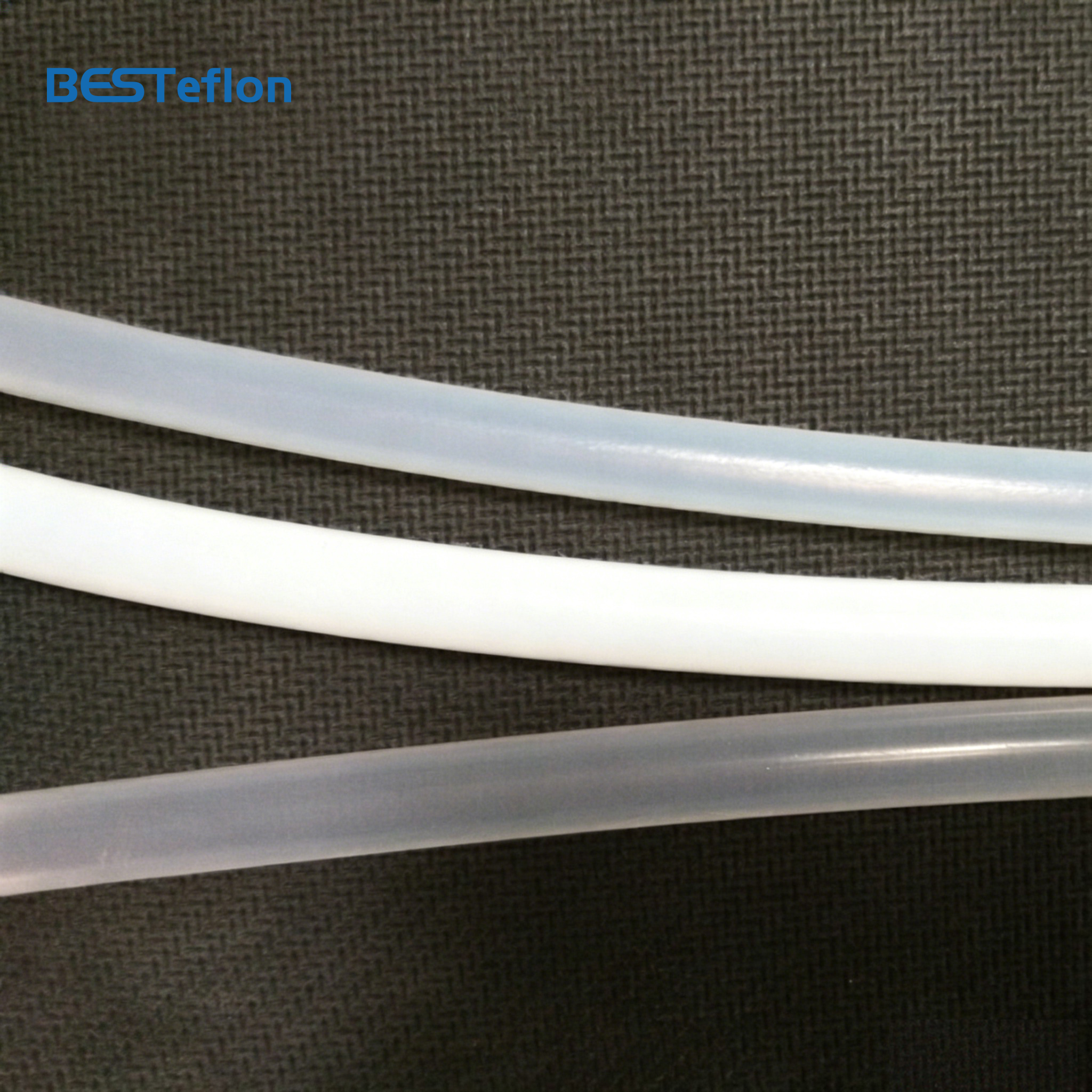
What Are PTFE, PFA, and FEP?
All three materials belong to the fluoropolymer family and share a carbon-fluorine bond as their fundamental structural unit. However, differences in these key atoms determine their distinct processing requirements and physical properties. Understanding the essential characteristics of each material serves as the foundation for selection criteria determination.
PTFE (Polytetrafluoroethylene)
PTFE is the first fluoropolymer to be industrially applied, discovered by DuPont in 1938; its trade name Teflon® refers specifically to PTFE. Its molecular chain consists entirely of carbon and fluorine atoms, with no side or branched chains—this structure endows it with exceptional chemical inertness and temperature resistance, but also renders it non-meltable for processing, allowing only extrusion or molding.
• Working temperature range: -65°C to +260°C
• Appearance: milky white
• Characteristics: friction coefficient (0.11), superior chemical resistance, and excellent dielectric properties
• Processing method: Paste extrusion or mold compression sintering; injection molding or hot-melt welding is not permitted.
Among the complete PTFE tube, PTFE represents the most comprehensive category. Besteflon independently produces all products—from 0.3 mm micro-diameter capillary tubes to 50mm large-diameter industrial pipes—through extrusion processes.
PFA (Perfluoroalkoxy)
PFA introduces perfluoroalkoxy side chains onto the PTFE molecular chain, endowing it with melt-processability—capable of injection molding, hot-melt welding, and exhibiting enhanced optical transparency. Its chemical resistance and temperature stability are nearly equivalent to those of PTFE, though it is more expensive.
• Working temperature range: -200°C to +260°C
• Appearance: semi-transparent to transparent
• Properties: Meltable for processing, weldable, ultra-high purity (low precipitation), transparent
• Processing methods: Extrusion, injection molding, and hot-melt welding are all applicable.
PFA is the standard material choice for semiconductor manufacturing and high-purity fluid transportation, as it offers transparency and weldability while maintaining PTFE-level chemical resistance. When monitoring fluid conditions within pipes or welding pipe materials to joints, PFA provides capabilities that PTFE cannot match.
FEP (Fluorinated Ethylene Propylene)
FEP is a copolymer of PTFE and hexafluoropropylene, with-CF₃ side groups introduced into its molecular chain. This structure makes FEP the most processable material among the three—characterized by a lower melting point, improved fluidity, as well as exceptional transparency and flexibility. However, its maximum temperature resistance is approximately 60 °C lower than that of PTFE and PFA.
• Working temperature range: -200°C to +200°C
• Appearance: Transparent
• Characteristics: Most transparent, most flexible, lowest processing cost, and suitable for hot-melt welding
• Processing methods: extrusion, injection molding, hot-melt welding
The FEP is the most cost-effective solution when operating without requiring temperatures as high as 260°C. It is widely used in visual flow paths, low-temperature chemical transportation systems, and pipeline networks that require bending or flexing.
PTFE vs PFA vs FEP: 7-Dimension Comparison
Now that the definitions are clear, we move on to the most critical part of actual material selection: directly comparing the three materials across all seven key dimensions. These seven criteria represent the primary factors considered by B2B procurement teams when selecting materials, and variations in each dimension can serve as decisive reasons for choosing or rejecting a particular material.
| Comparison Dimension | PTFE | PFA | FEP |
| Maximum working temperature | 260°C | 260°C | 200°C |
| Chemical resistance | Excellent (for almost all chemicals) | Excellent | Good (some solvents slightly inferior) |
| Transparency | Milky white | Semitransparent to transparent | Fully transparent |
| Flexibility | Can be bent but not folded | Flexible | Most flexible |
| Weldability | Non heat-shed welding | Thermally fusible weldable | Thermally fusible weldable |
| Purity | Excellent | Excellent(minimum precipitation) | Good |
| Price level | Medium | High | Low |
Key evaluation points:
• If you require 260°C, FEP is directly excluded; only PTFE or PFA remains as options.
• If transparency is required, PTFE is excluded; both PFA and FEP are acceptable.
• If you need to weld a piping system, use PTFE insulation
• If you require the lowest epitaxial quality (semiconductor-grade), PFA is the only option.
• If 200°C is sufficient and budget is a concern, FEP offers the best cost-performance ratio.
Which Material Fits Your Application?
A general comparison table only shows parameter differences across dimensions, but the key factor in selection isn't the parameters themselves—it's which performance feature your operational requirements truly need. Below are practical selection recommendations tailored to specific industry scenarios.
| Application Scenarios | Recommended Materials | Core Reason | Materials Not Recommended and Reasons |
| Analysis instruments (HPLC/ICP/Capillary electrophoresis) | PTFE | The inner surface is smooth, solvent-resistant, and exhibits the lowest friction coefficient. | FEP: Insufficient heat resistance; may deform under high-temperature analysis conditions. |
| High-purity semiconductor fluids | PFA | Minimum precipitation rate; weldable; ultra-high purity | PTFE – opaque and not observable; cannot be welded |
| Medical Catheters/Diagnostic Devices | PTFE or PFA | Biocompatibility: PTFE is more rigid for guiding purposes, while PFA is softer for connecting applications. | FEP – The medical-grade certification pathway is less mature than that of PTFE/PFA. |
| Chemical treatment/corrosive fluids | PTFE | Exhibits the highest chemical resistance, with a temperature tolerance of 260°C | FEP – exhibits slightly poorer resistance to certain strong acids and bases, with an upper limit of 200°C. |
| food and beverage | PTFE or FEP | PTFE exhibits greater temperature resistance, while FEP offers higher transparency for observation. | PFA – In food-grade applications, ultra-high purity PFA is unnecessary, resulting in cost waste. |
| Visual flow path/lift level monitoring | FEP | Totally transparent and highly flexible | PTFE – opaque |
| 3D Printer Feed Tube | PTFE | Lowest friction coefficient, wear-resistant | FEP – exhibits inferior wear resistance compared to PTFE, with significant internal wall wear during prolonged use. |
| electrical insulation | PTFE | Low dielectric constant (2.1) and high breakdown voltage | All three options are viable, but PTFE offers the best cost-performance ratio. |
Manufacturing Recommendations for Besteflon: We produce the full range of PTFE tubing products (PTFE capillary tubes, PTFE smooth bore tubes, PTFE convoluted tubes). If you're uncertain between PTFE and PFA/FEP, simply provide us with your application requirements and operating parameters. Our engineers will assess whether PTFE meets your needs—often, PTFE is sufficient, eliminating unnecessary costs for features you won't utilize.
Decision Tree: PTFE, PFA, or FEP?
The comparison table and application matching table cover most scenarios, but some projects require a combination of both approaches, necessitating a more systematic evaluation framework. The decision tree below helps you narrow down options step by step based on the most critical performance constraints.
Step 1 — Temperature resistance requirement
Does your system's maximum working temperature exceed 200℃?
• YES → Exclude FEP and proceed to Step 2
• No → All three materials are acceptable; proceed to Step 3
Step 2 — PTFE or PFA?
Do you need transparency or welding capabilities?
• Need transparency → Select PFA
• Need Welding → Select PFA
• None of them are needed. → Select PTFE(Higher cost-effectiveness and superior chemical resistance)
Step 3 — Choose one from three
What do you prioritize?
• Chemical resistance/Friction coefficient/Dielectric properties → Select PTFE
• Purity/Welding/Transparency → Select PFA
• Transparency/Flexibility/Cost → Select FEP
Special Circumstances:
• Medical tubes requiring USP Class VI certification → PTFE or PFA, depending on the required hardness and transparency.
• requires ultra-high purity (semiconductor grade)→ PFA
• A corrugated structure is required for flexural compensation. → PTFE(Besteflon's PTFE convoluted tubes represent a mature product line.)
• The budget is tight, but 200℃ will be sufficient. → FEP
What about ePTFE and Teflon?
When searching for fluoropolymer pipe materials, you may also encounter two frequently mentioned terms: ePTFE and Teflon. What is their relationship to the three materials discussed in this article? A brief explanation is provided below to avoid confusion.
ePTFE vs PTFE
ePTFE (expanded polytetrafluoroethylene) is a form of PTFE produced through stretching and expansion, featuring a microporous internal structure. While retaining PTFE's chemical inertness, ePTFE exhibits breathability and an exceptionally low density, making it primarily used for gaskets (e.g., Gore-Tex® sealing strips) and breathable membranes, rather than as tubing material. When referring to "ePTFE tube," it most likely denotes a PTFE pipe, though this description may be imprecise.
Teflon vs PTFE
Teflon® is a registered trademark for PTFE owned by Chemours (formerly DuPont). Teflon stands for PTFE, just as Kleenex represents paper towels. However, in industry practice, "Teflon tubing" is sometimes used interchangeably with PFA or FEP tubing, as Chemours also markets PFA and FEP products under the Teflon® brand. If you specify "Teflon tube" on your purchase order, suppliers may ask which type you require—PTFE, PFA, or FEP. For further details, refer to our other article: PTFE vs Teflon: Are They the Same Material?
Frequently Asked Questions
By now, you should have a clear understanding of the differences between these three materials. Below are the most common questions clients ask during the selection phase—if any of your concerns remain unanswered, please contact Besteflon engineers directly for prompt assistance.
Q: Are PTFE and PFA completely identical in terms of chemical resistance?
A: In the vast majority of chemicals, the chemical resistance of both materials is nearly identical. Differences primarily manifest under a few extreme conditions: PFA exhibits slightly superior stability when exposed to high temperatures and concentrated alkalis over extended periods, whereas PTFE demonstrates stronger creep resistance under high temperature and pressure conditions. For 99% of industrial applications, their chemical resistance can be considered equivalent.
Q: Is the 200°C upper limit for FEP absolute? Can it be used under short-term overheating conditions?
A: 200°C is the maximum continuous operating temperature for FEP. While short-term exposure (within a few hours) can withstand temperatures of 205–210°C, prolonged exposure above 200°C accelerates material aging and reduces mechanical strength. If your system may experience transient overheating, it is recommended to directly select PTFE or PFA.
Q: Why is PFA more expensive than PTFE?
A: PFA has higher raw material costs (due to the elevated price of perfluoroalkyl vinyl ether copolymer monomers) and a narrower processing temperature range, resulting in slightly lower yield rates; moreover, market supply is concentrated among a few chemical manufacturers. If you do not require PFA's unique advantages—such as transparency, weldability, or ultra-high purity—PTFE is the more cost-effective option.
Q: Which of the three materials is easiest to process and customize?
A: FEP is the most suitable material—characterized by a low melting point and excellent fluidity, ideal for extrusion and injection molding of complex shapes. PFA comes next, requiring higher processing temperatures but also being fusible. PTFE is the least suitable option—it can only be extruded as a paste or molded via sintering, cannot be injection-molded, and offers the lowest flexibility in custom shape production. This explains why Besteflon's PTFE custom orders require engineering review: not all specifications are feasible.
Q: My project requires medical-grade certification; are all three materials suitable?
A: Both PTFE and PFA have established medical-grade certification pathways (USP Class VI, ISO 10993), whereas FEP has relatively fewer medical-grade applications. The specific choice depends on the requirements of your device regarding tube hardness, transparency, and temperature resistance.

If you are in PTFE Smooth Bore Tube, you may like
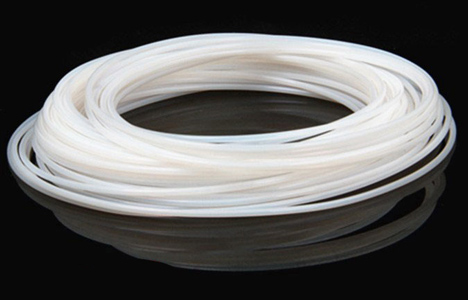
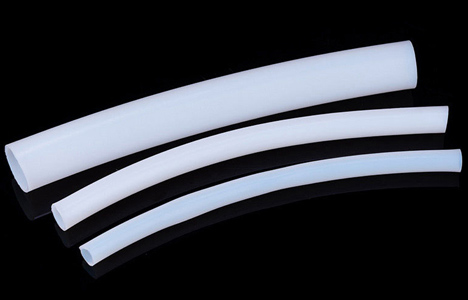
Buying the right PTFE Tube is not only about choosing different specifications for different applications. More to choose a reliable manufacturer. Besteflon Fluorine plastic Industry Co., Ltd. specializes in the production of high-quality PTFE hoses and tubes for 20 years. If any questions and needs, please feel free to consult us for more professional advice.
Post time: Jun-22-2026