
When working with overseas clients, we often encounter this scenario: the drawings specify a PTFE tube, while the supplier's quotation lists it as a Teflon tube, leaving procurement teams uncertain about whether they refer to the same material and causing time-consuming back-and-forth confirmations. More problematic still, some suppliers use "Teflon" to denote either PFA or FEP—since the Teflon® trademark covers multiple materials. This article provides a comprehensive explanation of terminology, trademarks, and practical procurement considerations in one place.
• PTFE and Teflon are the same material; Teflon® is merely the trade name for PTFE.
• However, the term "Teflon" has been widely generalized in the industry and may refer to PTFE, PFA, or FEP.
• Chemours (formerly DuPont) holds the Teflon® trademark; unauthorized suppliers may not use it legally.
• The purchase order should specify PTFE instead of Teflon to avoid delivery ambiguity.
• The "Teflon tube" with extremely low price is highly likely not manufactured using Chemours raw materials; this needs to be confirmed.
Are PTFE and Teflon the same substance?
This is the core question, and the answer is simple: yes, PTFE and Teflon are the same material. However, "the same material" and "the same term" do not mean the same thing in procurement contexts—understanding this distinction makes all subsequent questions straightforward.
PTFE = Polytetrafluoroethylene = Chemical name
PTFE stands for Polytetrafluoroethylene, commonly known in Chinese as "polytetrafluoroethylene." This is a chemical designation referring to a polymer synthesized from tetrafluoroethylene monomers. Regardless of the source of raw materials, all polytetrafluoroethylene products manufactured by any company are uniformly labeled as PTFE—a standardized industry term that does not belong to any specific manufacturer.
Teflon® = Registered trademark of DuPont
Teflon® is a registered trademark of Chemours (which was spun off from DuPont in 2015). In 1938, DuPont scientist Roy Plunkett accidentally discovered PTFE, and the company began commercializing it under the Teflon® trademark in 1945. Strictly speaking, Teflon® refers to "PTFE produced by DuPont/Chemours" —just as Kleenex® denotes a specific brand of paper towels.
However, reality is more complex than definitions suggest. In the industry, "Teflon" has become synonymous with PTFE, and many suppliers use this term to describe their products without authorization—a practice particularly common in China's manufacturing sector: when customers request "Teflon tubes," suppliers universally recognize this as referring to PTFE tubes. At Besteflon, we frequently encounter such inquiries; after confirming the material specifications, we consistently specify PTFE in official documentation to avoid ambiguity.
Why does "Teflon" not necessarily refer to PTFE?
If Teflon were merely the trade name for PTFE, the issue would be straightforward. However, in reality, Chemours markets more than one fluoropolymer under the brand name Teflon®. This fact is the root cause of procurement confusion and underscores the necessity for greater precision in specification documentation.
Chemours currently sells the following materials under the Teflon® brand:
| Material type | Teflon®Brand Name | Chemical name | Instructions |
| PTFE | Teflon® PTFE | Polytetrafluoroethylene | The most primitive Teflon |
| PFA | Teflon® PFA | Perfluoroalkoxy polymer | Transparent, weldable |
| FEP | Teflon® FEP | Fluorinated Ethylene Propylene | Transparent and flexible |
| AF | Teflon® AF | Amorphous fluoropolymer | Special Optical Applications |
This means that when a supplier states "we supply Teflon tubing," they could be referring to PTFE tubes, PFA tubes, or FEP tubes. These three materials differ significantly in their maximum temperature resistance, processing requirements, and pricing; a single character error can result in a completely different performance level upon delivery.
Advice: Always use the chemical names (PTFE/PFA/FEP) in purchase orders, specifications, and contracts; avoid using "Teflon." This is not mere nitpicking but the simplest way to prevent delivery disputes. Note that all Besteflon PTFE tubing products are labeled with chemical names rather than "Teflon"-because precision outweighs convenience.
Who owns the Teflon® trademark?
While trademark ownership may seem a legal matter, it directly determines whether your suppliers can legally use the term "Teflon" and what materials are actually used in the "Teflon tube" you purchase.
Trademark History
• 1938, DuPont scientist Roy Plunkett discovered PTFE.
• 1945: DuPont registered the Teflon® trademark and began its commercialization.
• 2015: DuPont spun off its performance chemicals business into the independent company Chemours, with the Teflon® trademark assigned to Chemours.
• So far, Chemours holds the Teflon® trademark and grants licensing rights to PTFE resin buyers worldwide.
What does this mean for procurement?
The legal ownership of a trademark has two practical implications for procurement:
1. Your supplier may not be authorized to label the product with Teflon®. If a pipe manufacturer uses the Teflon® logo on product labels or websites without obtaining brand authorization from Chemours, this constitutes trademark infringement legally. This does not affect the quality of the material itself—many China-based factories use domestically produced PTFE resin (e.g., Dongyue, Haohua, etc.), which fully meets performance standards—but you cannot label the final product with Teflon®.
2. "The Teflon tube" cannot be used as a basis for acceptance. The purchase order should specify "Teflon tube"; the supplier may deliver any type of fluoropolymer pipe. Only specifying "PTFE tube" or "PFA tube" can serve as the technical acceptance standard in case of disputes.
Are the properties of PTFE from different sources completely identical?
Having clarified the issues regarding trademarks and naming conventions, the next concern for procurement teams is: Do PTFE materials from different sources exhibit identical properties? The answer is "basically identical, with minor variations" —these differences generally do not affect performance in most applications but may pose challenges in high-precision scenarios.
The identical parts of all PTFE materials
The chemical structure of PTFE consists of linear chains formed by carbon-fluorine bonds, and remains identical regardless of whether the raw material is sourced from Chemours, Daikin, Dongyue, or other suppliers. The following properties are consistent across all types of PTFE:
• Chemical inertness – almost no chemical reactions occur.
• Working temperature range: -65°C to +260°C
• Friction coefficient – 0.1, relatively low for solid materials
• Dielectric properties – Dielectric constant: 2.1; Dielectric strength: 25 kV/mm
• Non-adhesive – Almost all substances do not adhere
What differences may occur
Chemical structure similarity does not imply complete equivalence among all PTFE products. The following factors may contribute to variations between products from different batches or suppliers:
| Differential Factors | Sphere of influence | Typical Scenario |
| Resin particle size | Extrusion tolerance, surface finish | Microcapillary tubes are more sensitive to particle size. |
| Molecular weight distribution | Anti-creep property and long-term pressure resistance | High-pressure, high-temperature pipelines |
| Additives/Fillers | Color, conductivity, wear resistance | Fiber-reinforced PTFE, Carbon-reinforced PTFE |
| Extrusion Process | Inner wall smoothness and concentricity | HPLC analytic instrument |
| Sintering Process | Crystallinity, mechanical strength | High-precision components |
Key procurement recommendations: For applications involving conventional chemical processing or general industrial use, variations in raw material sources are negligible.However, if the project imposes stringent requirements on internal diameter tolerances (e.g., PTFE capillary tubes), inner wall smoothness, or long-term pressure resistance, your focus should not only be on whether the material is PTFE, but also on verifying the supplier's extrusion and quality control capabilities. Quality control process for Besteflon PTFE smooth tubes——including air tightness test, hydrostatic pressure holding test, as well as a series of verifications such as high pressure test, hydraulic burst test and bending fatigue test, ensuring that the products meet the standards of the fluoroplastic industry.It is specifically designed for such high-precision scenarios.
How should it be written on a purchase order?
The discussion covered differences in naming conventions, trademarks, and materials, ultimately focusing on a practical question: how should these details be specified in purchase orders and technical specifications?
Use chemical names, not brand names
| Writing | Recommended or not | Reason |
| PTFE tube | ✅ Recommended | Precise, unambiguous, and industry-standard |
| Polytetrafluoroethylene tube | ✅ Recommended | The most formal writing style, suitable for contracts and technical specifications. |
| Teflon tube | ❌ Not recommended | May refer to any of PTFE, PFA, or FEP. |
| Teflon® PTFE tube | ⚠️ Authorized Only | If labeling is required, must confirm that the raw materials are sourced from Chemours. |
Writing only the material name is not enough
Simply stating "PTFE tube" is insufficient. A complete procurement specification should include the following:
• Material Grade: Standard Grade / Food Grade (compliant with FDA 21 CFR 177.1550) / Medical Grade
• Size: ID × OD × Wall thickness, with tolerance requirements
• Length and Quantity
• Use Case: Helps suppliers determine whether special quality control is required
• Required certifications and test reports
In Besteflon's quotation process, the first step engineers take is to verify these parameters. This isn't criticism—rather, the clearer the specifications are defined, the smoother the delivery process becomes and the fewer rework requirements arise.
FAQ
Here are the most common questions customers ask about "PTFE vs Teflon." If your situation isn't covered, feel free to ask our engineers directly for assistance.
Q: The supplier claims to use "Teflon material" – is that reliable?
A: Further clarification is required. If they are referring to Chemours 'Teflon® brand PTFE resin, you should request proof of the raw material batch. If "Teflon" is used merely as a general term for PTFE (which is common in the industry), the raw material may come from any PTFE resin supplier—this isn't necessarily problematic, but it cannot be assumed to be from Chemours. For most industrial applications, domestically produced high-quality PTFE resins (such as those from Dongyue or Haohua) meet all performance requirements.
Q: Can the word "Teflon" be printed on a PTFE tube?
A: If the pipe material does not use Chemours' Teflon® resin or lacks authorization from Chemours for the trademark, printing "Teflon" on the product constitutes trademark infringement. It is recommended to print "PTFE" on the pipe – this approach is both compliant and clear.
Q: How much inferior are Chemours' PTFE resins compared to domestically produced PTFE products?
A: In conventional industrial applications, variations are negligible. Significant differences primarily arise under extreme conditions: extrusion stability of ultrafine capillary tube (ID<0.5mm), creep resistance at prolonged high temperature (>200℃), and purity requirements specific to medical or semiconductor applications. If your application does not involve these extreme conditions, domestically produced raw materials can fully meet the requirements at a lower cost.
Q: My client requests "Teflon tubes" – how should I proceed?
A: Confirm with the customer whether they require PTFE tubes or PFA/FEP tubes. In most cases, when customers refer to "Teflon tubes," they are actually referring to PTFE tubes. Once confirmed, replace "Teflon tube" with "PTFE tube" in the contract as the official specification to avoid future disputes.
Q: How can I quickly distinguish between PTFE, PFA, and FEP?
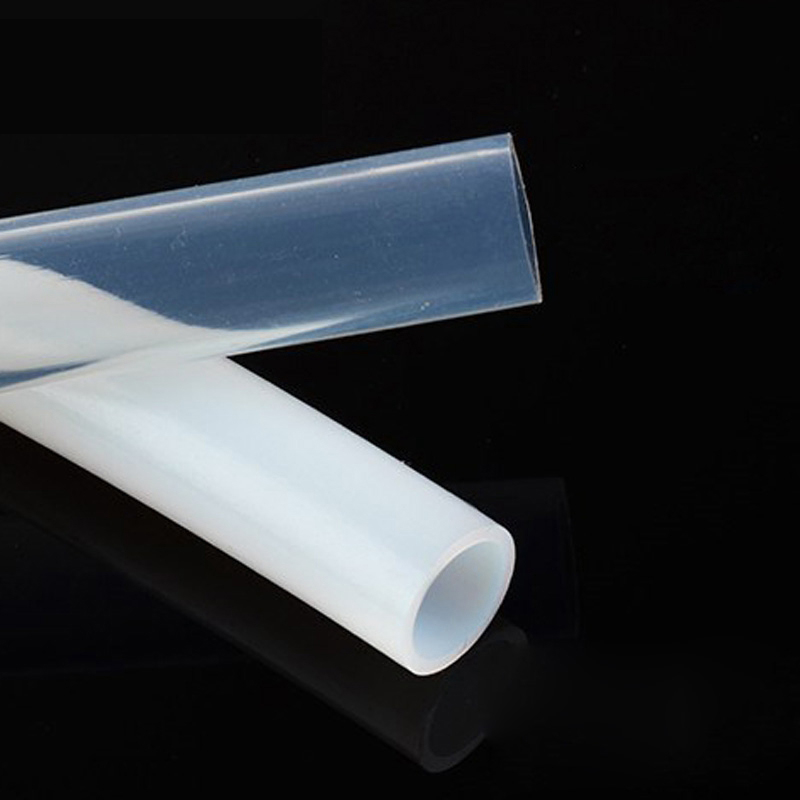
A: The simplest method: opaque = PTFE, semi-transparent = PFA, fully transparent = FEP. Fluids in FEP are clearly visible through the tube; those in PFA appear visible but slightly blurred; while those in PTFE are completely invisible. This is merely a quick assessment—for definitive selection, refer to the 7-dimensional comparison table in the article PTFE vs PFA vs FEP Tubing.
Q: Why is "Teflon" mentioned on Besteflon's website?
A: Besteflon has obtained official authorization to use the Teflon® trademark and operates under legal compliance. We are a specialized manufacturer of Teflon tubes, including PTFE tubes and PFA/FEP tubes.
If you are in PTFE Tube, you may like
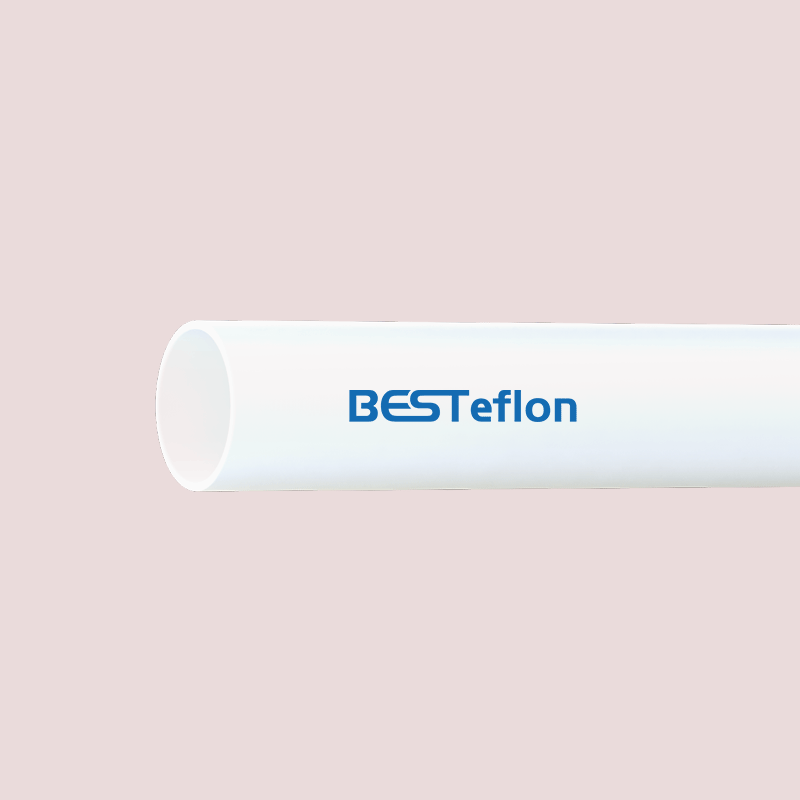
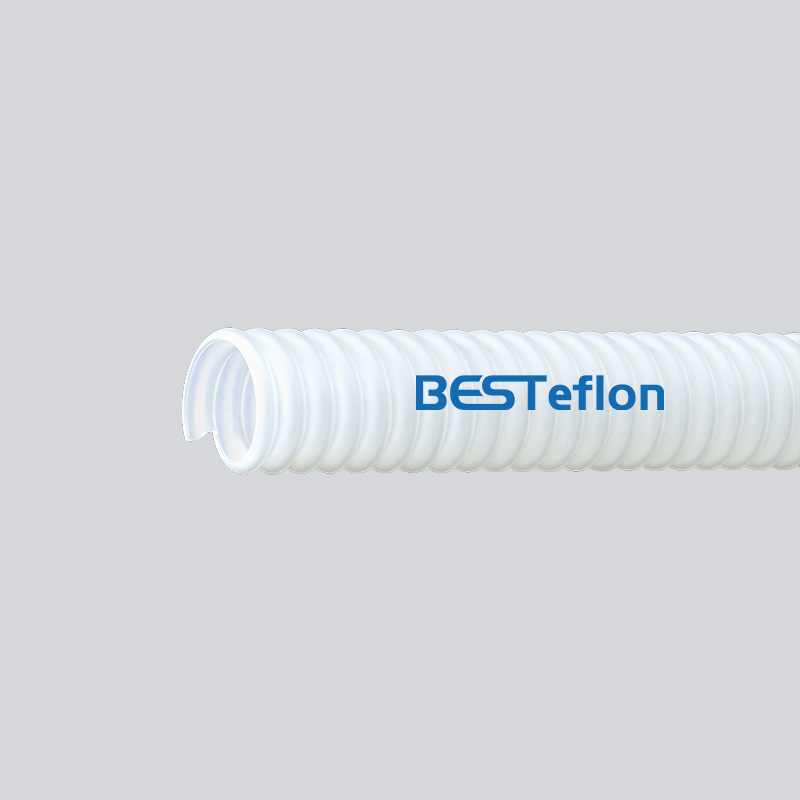
Buying the right PTFE Tube is not only about choosing different specifications for different applications. More to choose a reliable manufacturer. Besteflon Fluorine plastic Industry Co., Ltd. specializes in the production of high-quality PTFE hoses and tubes for 20 years. If any questions and needs, please feel free to consult us for more professional advice.
Post time: Jun-26-2026