
Decision Guide: When Must an Outer Cover Be Installed?
Determining the necessity of an outer cover requires an analysis of the hose’s routing and the surrounding environment. Experience in the field suggests three primary scenarios where additional protection becomes mandatory rather than optional.
1. Mechanical Abrasion Risks
If a brake hose is positioned where it might contact the vehicle’s bodywork or chassis, a cover is required. Physical friction quickly compromises the integrity of an exposed metal braid. Hoses that pass through metal apertures or remain suspended in areas of high airflow often experience "chatter." Over time, this movement against hard surfaces acts like a file on the stainless steel wires. A durable outer layer absorbs this friction, preserving the structural braid underneath.
2. High-Temperature Environments
Thermal management is a significant factor in racing longevity. Besteflon PTFE hoses inherently possess a wide temperature tolerance, typically ranging from -65 to +260 degrees Celsius. However, localized heat near brake calipers, exhaust manifolds, or turbochargers can reach extreme levels. Radiation from these components can accelerate the degradation of the hose assembly. When a hose segment resides in an environment exceeding 150 degrees Celsius, a specialized cover becomes necessary to provide a thermal barrier.
3. Chemical and UV Exposure
Outdoor racing conditions subject vehicle components to intense ultraviolet radiation. Furthermore, frequent contact with fuel, cleaning agents, or spilled brake fluid can cause some materials to swell. Selecting a cover based on chemical resistance ensures the PTFE Brake Hose remains flexible and reliable throughout its service life.
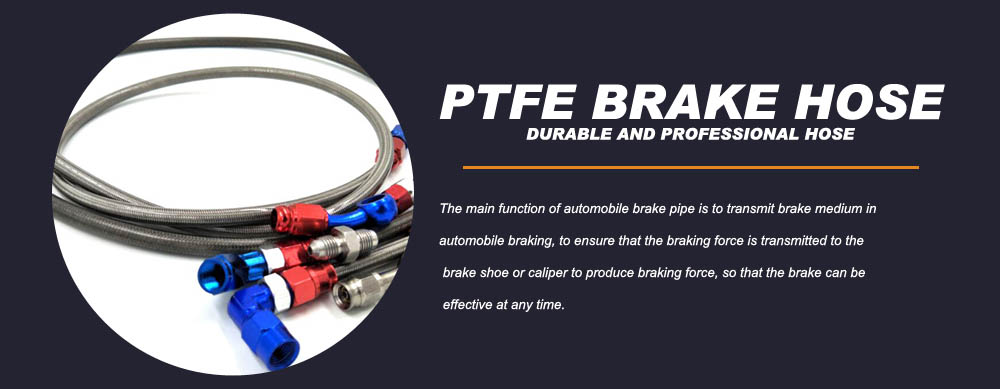
Material Selection: Defining the Protection Grade
The efficacy of a protective layer depends heavily on its material composition. Different environments demand specific physical properties to ensure the longevity of the hose assembly.
PVC covers represent the foundational standard for abrasion resistance. This material is cost-effective and provides excellent protection against oil and grit. It is most suitable for chassis lines where extreme heat is not the primary concern. However, for engine bays and areas adjacent to the braking friction zone, silicone covers are the superior choice. Besteflon’s silicone options maintain flexibility and protective qualities across a broader temperature range, typically from -60 to +200 degrees Celsius.
In contrast, a "bare hose" or uncovered stainless steel braid is generally reserved for fully enclosed conduits or static test rigs. Using an uncovered hose in an exposed racing chassis is discouraged, as the braid remains vulnerable to "wicking" moisture and fine dust.
Technical Validation: From Parameters to Podium Results
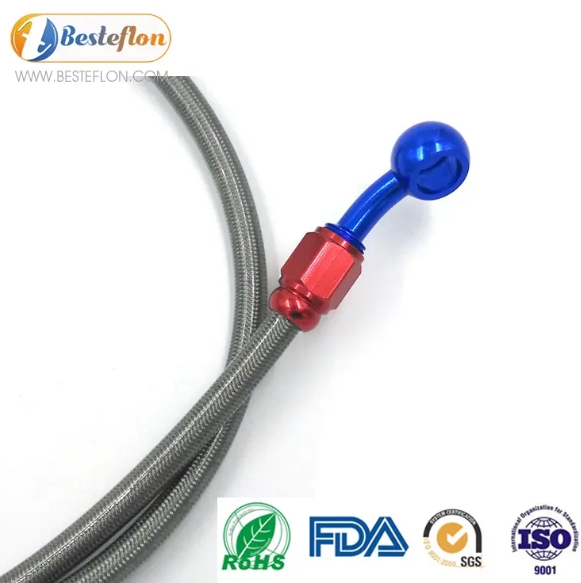
The transition from a theoretical specification to a finished race component involves rigorous testing. Besteflon incorporates an anti-stripping design to combat high-frequency racing vibrations. This involves a tight-fit braiding process where the outer cover and the PTFE inner tube are integrated closely. This prevents the jacket from sliding or loosening during the violent movements of a vehicle on the track.
Modern manufacturing also allows for specialized customization to assist pit crews. Through Besteflon’s OEM and custom services, covers can be printed with specific line numbers or color-coded for rapid identification during repairs. Ultimately, the entire assembly must undergo pulse pressure testing. This process simulates the rapid, high-pressure cycles of heavy braking to verify that the protective cover does not impede the hose's natural bend radius.
Conclusion
The decision to utilize outer covers on high-performance brake hoses is a balance of environmental analysis and material science. By selecting the appropriate jacket—whether PVC or silicone—engineers ensure that their hydraulic systems remain shielded from abrasion, heat, and chemical degradation. This commitment to layered protection is what distinguishes a standard component from a racing-grade asset capable of enduring the most demanding competitive environments.
For more information on high-performance PTFE hose solutions and technical specifications, please visit: https://www.besteflon.com/
Post time: May-30-2026