
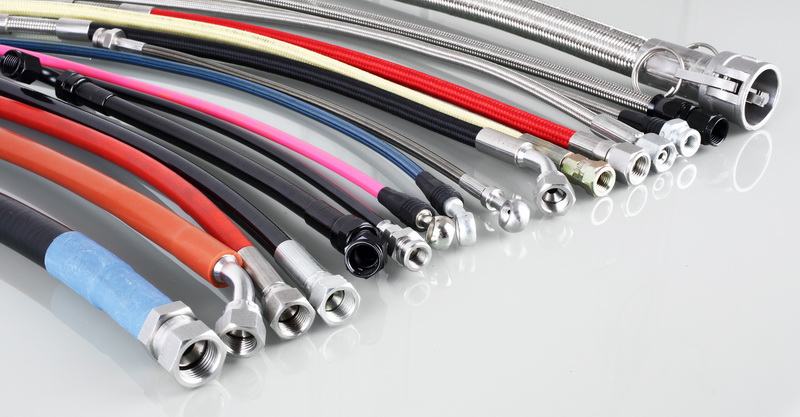
The Core Difference: Material Composition Explained
At the heart of every hydraulic braking system lies the fluid transfer line. To understand why performance varies so drastically, we must look beyond the black exterior and examine the materials we use during manufacturing. The fundamental divide exists between organic rubber compounds and advanced fluoropolymers.
OE Rubber Hoses: EPDM and Fabric Construction
Standard OE rubber brake hoses are designed for cost-effectiveness and mass production. These hoses are typically constructed from EPDM rubber (Ethylene Propylene Diene Monomer), a synthetic organic material.
- Inner Liner: Soft EPDM rubber designed for flexibility.
- Reinforcement: A woven fabric mesh (usually nylon or rayon) sandwiched between rubber layers to contain pressure.
- Outer Layer: A thicker rubber coating to protect against abrasion.
While functional for daily driving, EPDM is inherently porous on a microscopic level and relies on the fabric mesh to prevent bursting. Over time, this organic composition is susceptible to EPDM rubber degradation.
PTFE Braided Hoses: The Fluoropolymer Standard
In contrast, our PTFE braided brake lines are engineered for high-pressure stability. We replace the soft rubber with a dense, extruded PTFE inner core (Polytetrafluoroethylene).
- Inner Core: Virgin PTFE, a dense fluoropolymer that is chemically inert and non-porous.
- Reinforcement: A high-tensile stainless steel overbraid (typically 304 or 316 grade) that tightly wraps the core.
- Protection: Optional PVC or PU covers to protect the steel mesh.
Material Comparison at a Glance
| Feature | OE Rubber Hose | PTFE Braided Hose |
|---|---|---|
| Core Material | EPDM Rubber (Organic) | Extruded PTFE (Fluoropolymer) |
| Reinforcement | Fabric/Nylon Mesh | Stainless Steel Overbraid |
| Structure | Multi-layer bonded | Mechanical lock (Core + Braid) |
| Permeability | High (Micro-porous) | Near Zero (Dense) |
Key Takeaway: The critical distinction is density. OE rubber is a porous organic material that naturally ages and softens, whereas PTFE is a dense, rigid fluoropolymer designed to maintain structural integrity under extreme hydraulic stress.
Performance Metrics: The "Spongy Pedal" Phenomenon
Understanding Volumetric Expansion
When comparing OE rubber brake hoses versus its PTFE braided steel hoses, the most immediate difference you will feel is under your foot. This comes down to a concept called volumetric expansion. In a standard hydraulic system, pressing the brake pedal generates immense internal pressure. Standard rubber hoses are made of elastic materials that naturally expand outward under this stress, acting somewhat like a balloon.
This expansion absorbs a significant portion of the hydraulic energy that should be traveling directly to your brake calipers. Instead of clamping the pads immediately, your effort is wasted inflating the hose. This loss of efficiency is the primary cause of the spongy brake pedal feel that plagues many stock vehicles, especially during hard braking or when the rubber begins to age.
The PTFE Advantage: Restricting Expansion
PTFE braided brake lines are engineered to eliminate this inefficiency. The PTFE inner core is a dense fluoropolymer that is far more rigid than rubber and resists stretching. To further secure the line, we wrap this core in a high-tensile stainless steel overbraid. This mesh acts as a physical barrier, restricting the hose from swelling even under extreme panic-stop pressures.
By minimizing volumetric expansion, we ensure efficient hydraulic pressure transfer. The fluid has nowhere to go but the pistons. This means that the moment you touch the pedal, the pressure is applied to the rotors without the delay caused by hose swelling.
Pedal Feel & Modulation: Linear vs. Vague
The structural stability of PTFE translates directly to superior brake modulation.
- OE Rubber: Often provides a non-linear response. You have to push through a "mushy" zone before the brakes truly bite, resulting in vague feedback.
- PTFE Braided Lines: Deliver a firm, linear feel. The relationship between your foot pressure and the stopping force is direct and consistent.
This improved feedback loop gives you total confidence, allowing you to modulate braking force with precision rather than guessing when the car will stop.
Durability and Lifespan: Which Hose Lasts Longer?
When comparing OE rubber brake hoses versus its ptfe braided steel hoses, the difference in longevity is substantial. Standard rubber is designed for cost-effectiveness and typically requires replacement every 5 to 6 years, whereas PTFE is engineered for permanence.
Chemical Resistance: Handling Aggressive Fluids
OE Rubber Brake Hoses are generally constructed from EPDM rubber. While functional, this material is permeable. Over time, moisture permeates the hose wall, mixing with your hygroscopic brake fluid. This lowers the fluid's boiling point and causes internal corrosion in calipers and master cylinders.
- EPDM Rubber Degradation: Rubber naturally swells and deteriorates when exposed to oil leaks or simply through aging, compromising chemical compatibility.
- PTFE Stability: Our Ptfe Automotive Hydraulic Hoses feature a chemically inert inner core. They resist breakdown from aggressive brake fluids (DOT 3, 4, 5.1) and act as a barrier against moisture ingress, keeping your fluid cleaner for longer.
Environmental Factors: UV and Ozone Protection
Standard rubber lines are constantly under attack from the elements. Prolonged exposure to sunlight and ozone leads to dry rot cracking on the surface of the rubber, a common failure point that creates immediate safety hazards.
PTFE Stainless Steel Braided Lines eliminate this risk completely. The stainless steel overbraid acts as armor, shielding the inner core from UV radiation, ozone, and road debris. Unlike rubber, which hardens and cracks, the stainless mesh ensures the structural integrity remains intact regardless of harsh weather conditions.
Temperature Tolerance: Preventing Brake Fade
Under heavy braking loads—whether you are towing heavy loads or driving aggressively—heat builds up rapidly. Rubber softens as temperatures rise, leading to increased volumetric expansion and a "mushy" pedal feel.
- Heat Resistance: PTFE maintains its structural integrity in extreme temperatures, typically withstanding ranges from -70°C to +260°C without altering its physical properties.
- Consistent Performance: By resisting thermal expansion, PTFE Braided Brake Lines contribute significantly to brake fade reduction. This ensures that hydraulic pressure transfers directly to the calipers rather than being wasted on expanding a hot, soft rubber hose wall.
Safety and Compliance: Addressing the Myths
When analyzing OE rubber brake hoses versus its PTFE braided steel hoses, safety concerns often surface due to outdated information or experiences with inferior "generic" parts. There is a misconception that braided lines are fragile or strictly for off-road racing. The reality is that high-quality PTFE braided brake lines often exceed the safety margins of standard rubber when manufactured and installed correctly.
The "Whipping" Myth and Routing
A common fear is that stainless lines will "whip" or snap near the fittings during suspension travel. This issue is almost exclusively caused by improper length or bad routing, not the material itself. Unlike soft rubber, which is forgiving of sloppy geometry, PTFE requires precise installation.
- Strain Relief: We utilize proper support brackets and strain relief designs to prevent stress concentration at the crimp collar.
- Correct Routing: The line must follow the suspension's full range of motion without binding or leaving excessive slack. When routed with the same care as an OE line, the risk of fatigue failure is effectively eliminated.
Abrasion Risks: The Importance of Covers
The stainless steel overbraid provides immense strength, but the raw metal mesh is abrasive. If an uncovered stainless line rubs against a control arm, shock absorber, or plastic fender liner, it acts like a file. To mitigate this, premium lines feature a protective jacket.
- PVC or PU Outer Covers: We apply a clear, black, or colored coating (typically PVC or Polyurethane) that encapsulates the steel mesh.
- Dual Protection: This layer prevents dirt and grit from working its way into the braid and stops the line from sawing through nearby vehicle components, significantly improving abrasion resistance.
DOT FMVSS 106 Compliance
The most critical factor for street-driven vehicles is legality. Many cheap, universal lines are marked "for off-road use only" because they skip testing. However, professional-grade PTFE assemblies achieve DOT FMVSS 106 compliance. This isn't just a label; it confirms the hose has passed rigorous federal safety standards, including:
- Whip Testing: Verifying the assembly can withstand continuous flexing without leaking.
- Burst Pressure Rating: Ensuring the line holds pressure far beyond typical hydraulic braking loads.
- Tensile Strength: Confirming that fittings will not pull off under extreme tension.
If the assembly carries this certification, it is fully legal for highway use, offering the firm pedal feel of a race line with the regulatory safety assurance of a factory part.
Cost-Benefit Analysis: Is the Upgrade Worth It?
When deciding between OE rubber brake hoses versus its ptfe braided steel hoses, the price tag is often the first thing customers look at. Rubber is cheaper upfront, but value isn't just about the initial purchase price. It is about performance per dollar and how long the product stays on the road. We need to break down where your money actually goes in terms of safety and maintenance.
The Daily Driver: When OE Rubber is Sufficient
For a standard commuter car that never sees a race track or a heavy trailer, OE Rubber Brake Hoses are usually adequate. Manufacturers use EPDM rubber because it is cost-effective and provides a softer pedal feel. This slight "give" caused by volumetric expansion can make braking feel less abrupt for casual drivers. If your vehicle is strictly for grocery runs or sitting in city traffic, the factory rubber lines offer a comfortable, budget-friendly solution that meets basic safety requirements.
Performance Use Cases: Towing, Racing, and Heavy-Duty Needs
If you demand more from your vehicle, the equation changes immediately. For racing, off-roading, or towing heavy loads, PTFE Braided Brake Lines are not a luxury; they are a performance necessity. Under high stress, the hydraulic system generates immense heat and pressure.
- Towing & Hauling: When stopping a heavy load, you cannot afford the spongy brake pedal caused by rubber swelling. PTFE Automotive Hydraulic Hoses maintain rigid structure, ensuring maximum hydraulic pressure transfer to the calipers.
- Racing: Precision is everything. The stainless steel overbraid prevents expansion, giving you precise brake modulation. This allows you to feel the limit of traction without the vague feedback typical of rubber.
- Heat Management: In high-performance scenarios, brake fade reduction is critical. PTFE handles the heat without getting soft, maintaining consistent stopping power lap after lap.
Long-Term Value: Replacement Intervals
This is where the long-term math favors the upgrade. OE Rubber Brake Hoses have a limited shelf life. They suffer from EPDM rubber degradation and dry rot cracking due to UV exposure, ozone, and moisture. Mechanics generally recommend replacing rubber lines every 5 to 6 years to prevent sudden failure.
In contrast, PTFE Stainless Steel Braided Lines are virtually a "lifetime" install. The PTFE inner core is chemically inert and does not degrade with age or fluid exposure. Unless the line is physically damaged by a crash or severe abrasion, it will likely outlast the vehicle itself. While you pay more initially for PTFE Braided Brake Lines, you stop paying for replacements, making them the smarter financial choice for long-term ownership.
Installation Considerations for Braided Lines
When you are swapping OE rubber brake hoses versus its ptfe braided steel hoses, the installation process requires a bit more finesse. You cannot just crank on them like old rubber lines; the materials behave differently under installation stress.
Watch the Bend Radius
The biggest mistake I see is ignoring the bend radius. While EPDM rubber is flexible and forgiving, the PTFE inner core is denser and stiffer.
- Don't Kink It: If you force a sharp 90-degree turn, you risk kinking the liner, which restricts fluid flow.
- Route Carefully: Ensure the Stainless steel overbraid does not rub against suspension parts during full lock turns.
Crimped vs. Reusable Fittings
For most street applications and DOT FMVSS 106 compliance, we strictly recommend permanently crimped fittings.
- Crimped: Machine-pressed at the factory. These offer the highest safety margin and a consistent burst pressure rating.
- Reusable: Often used in racing for field repairs, but they are prone to user error during assembly. Stick to crimped for reliability.
Torque Specifications and Seating
High-pressure brake lines rely on a perfect seal, not brute force.
- Clean Surfaces: Ensure the caliper surface is spotless before installing new Banjo fittings.
- Don't Overtighten: Aluminum or copper crush washers seal with moderate torque. Cranking them too hard strips threads and causes leaks.
- Check for Leaks: Always bleed the system and check for weeping fluid under pressure before hitting the road.
Quality Control and Burst Pressure Testing
Every batch we produce undergoes rigorous testing to verify its burst pressure rating. We don't rely on random sampling for critical metrics; we ensure our high-pressure brake lines can handle loads far exceeding typical braking scenarios. This guarantees safety whether you are on the track or the highway.
The BESTEFLON Standard vs. Generic Alternatives
| Feature | BESTEFLON PTFE Hoses | Generic/Recycled Lines |
|---|---|---|
| Core Material | 100% Virgin PTFE Resin | Recycled or Mixed PTFE |
| Pressure Tolerance | Exceeds SAE/DOT Ratings | Meets Minimum Standards |
| Braiding Quality | Precision High-Tensile Steel | Loose or Standard Steel |
| Wall Consistency | Uniform Thickness | Variable (Potential Weak Points) |
Our commitment to quality ensures that when you upgrade to our PTFE Stainless Steel Braided Lines, you receive a product engineered for longevity and consistent performance.
Frequently Asked Questions About Brake Hose Upgrades
Do Stainless Braided Lines Actually Reduce Stopping Distance?
Let's be clear: tires and brake pads are what physically stop your vehicle. However, upgrading to PTFE Braided Brake Lines improves the reaction time of the system. Because OE Rubber Brake Hoses suffer from volumetric expansion (swelling) under pressure, there is a split-second delay before the calipers fully clamp down.
PTFE Stainless Steel Braided Lines eliminate this swelling. While the friction distance might remain similar, the faster hydraulic response means your brakes engage sooner. In a panic stop, that immediate pressure transfer can save crucial distance.
Can I Mix OE Rubber and PTFE Lines on the Same Vehicle?
Technically, you can, but I strongly advise against it. Mixing Ptfe Automotive Hydraulic Hoses on the front with old rubber lines on the rear creates an imbalance in brake modulation.
- Inconsistent Feel: The front will feel firm and responsive, while the rear remains spongy due to EPDM rubber degradation.
- Unpredictable Bias: Under heavy braking, the pressure delivery will not be uniform across all four corners.
For the best safety and performance, always replace the entire set to maintain consistent hydraulic pressure transfer.
How Do I Know If My Braided Lines Are DOT Approved?
Street legality is non-negotiable for daily drivers. To verify DOT J1401, look for the following indicators on the hose assembly:
- Physical Marking: A permanent stamp or tag on the hose collar (crimp) that explicitly says "DOT."
- Manufacturer ID: Registered symbols or codes identifying the manufacturer.
- Striping: Some hoses have specific color tracers indicating compliance.
If a hose lacks these markings, it is likely intended for off-road or track use only. We ensure our lines meet strict burst pressure rating standards to keep you street-legal.
Why Choose BESTEFLON PTFE Hoses?
When we manufacture PTFE Braided Brake Lines, we don't just meet the standard; we set it. The difference between a reliable brake system and a failure often comes down to the purity of the materials used. Unlike generic suppliers that might blend recycled resins to cut costs, we strictly use virgin PTFE for our inner cores. This ensures uniform density and eliminates the microscopic flaws that can lead to leaks under high stress.
We understand that Ptfe Automotive Hydraulic Hoses are critical safety components. That is why our manufacturing process relies on precision braiding technology. We wrap the core in a high-tensile stainless steel overbraid that fits tightly, ensuring the line resists the volumetric expansion often seen in aging OE rubber brake hoses.
Buying the right PTFE Braided Steel Hoses is not only about choosing different specifications for different applications. More to choose a reliable manufacturer. Besteflon Fluorine plastic Industry Co., Ltd. specializes in the production of high-quality PTFE hoses and tubes for 20 years. If any questions and needs, please feel free to consult us for more professional advice.
If you are in PTFE Braided Steel Hoses,You May Like
Related Articles
Post time: Feb-25-2026