
PTFE (Polytetrafluoroethylene) fittings are widely celebrated in various industries for their exceptional chemical resistance, low friction coefficient, and remarkable temperature tolerance. Proper PTFE fitting installation is the cornerstone to unlocking their full potential and ensuring long-lasting, leak-free performance. In this article, we will walk you through the best practices for PTFE fittings installation and highlight the critical mistakes you should steer clear of.
Pre-Installation Preparation
1. Inspect the Fittings
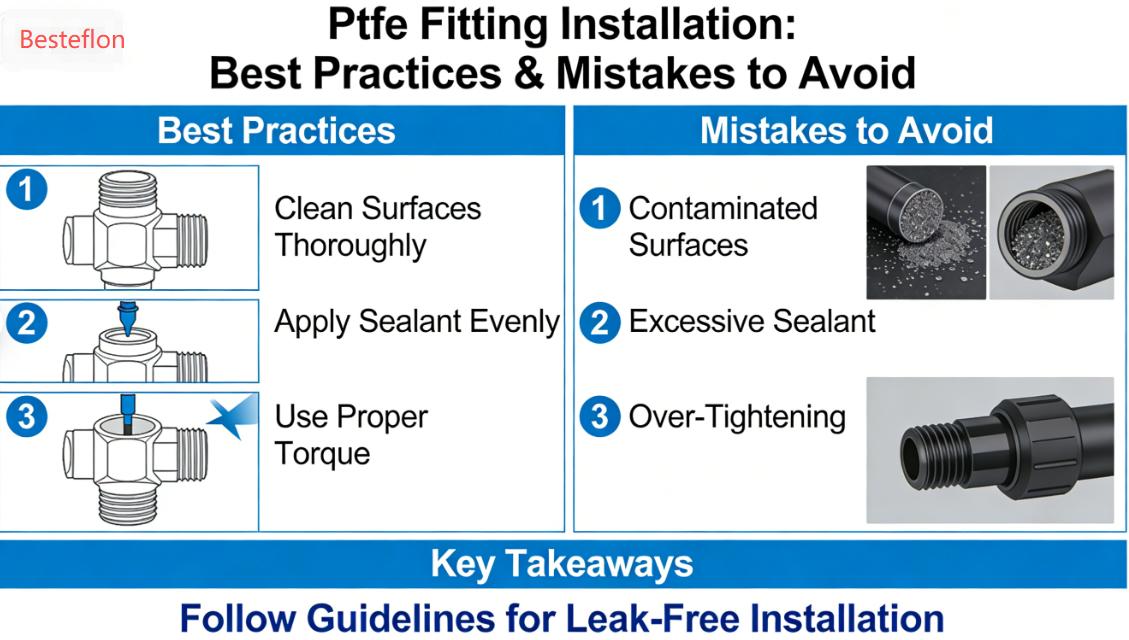
Before you even start the PTFE fitting installation process, carefully examine each PTFE fitting. Look out for any signs of damage such as cracks, deformities, or scratches on the sealing surfaces. Even a tiny imperfection can lead to leaks down the line. Ensure that the threads are clean and free from debris, as any foreign material can prevent a proper seal.
2. Gather the Right Tools
Having the appropriate tools at your disposal is essential for proper PTFE fittings installation. You will need a set of quality wrenches that fit the fittings snugly to avoid rounding off the edges. A PTFE-compatible thread sealant can also be a valuable addition, although it's not always necessary if the fittings are in pristine condition. Additionally, keep a clean cloth or towel handy to wipe away any excess sealant or dirt.
Step-by-Step Installation Best Practices
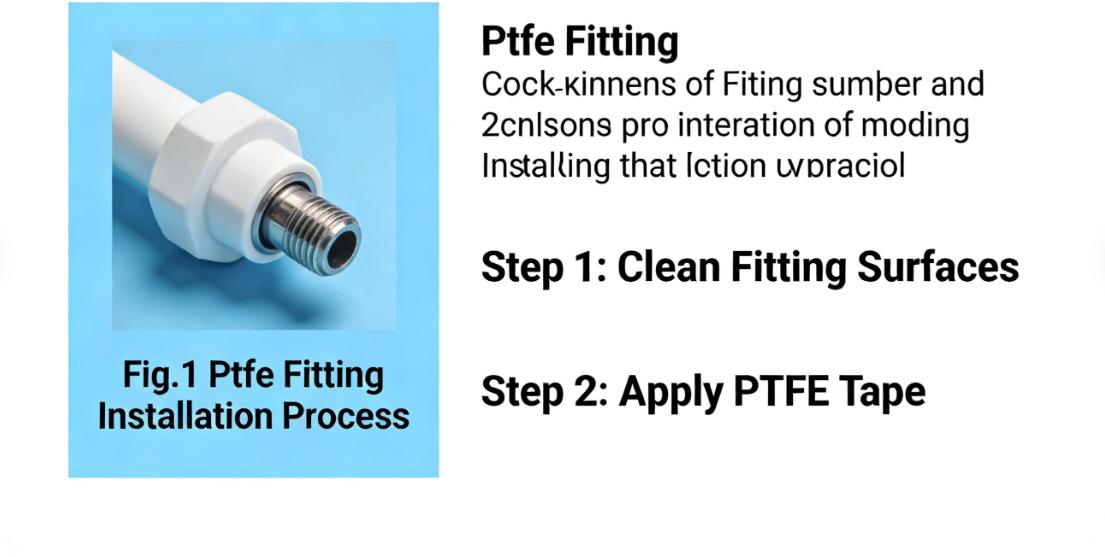
1. Clean the Surfaces
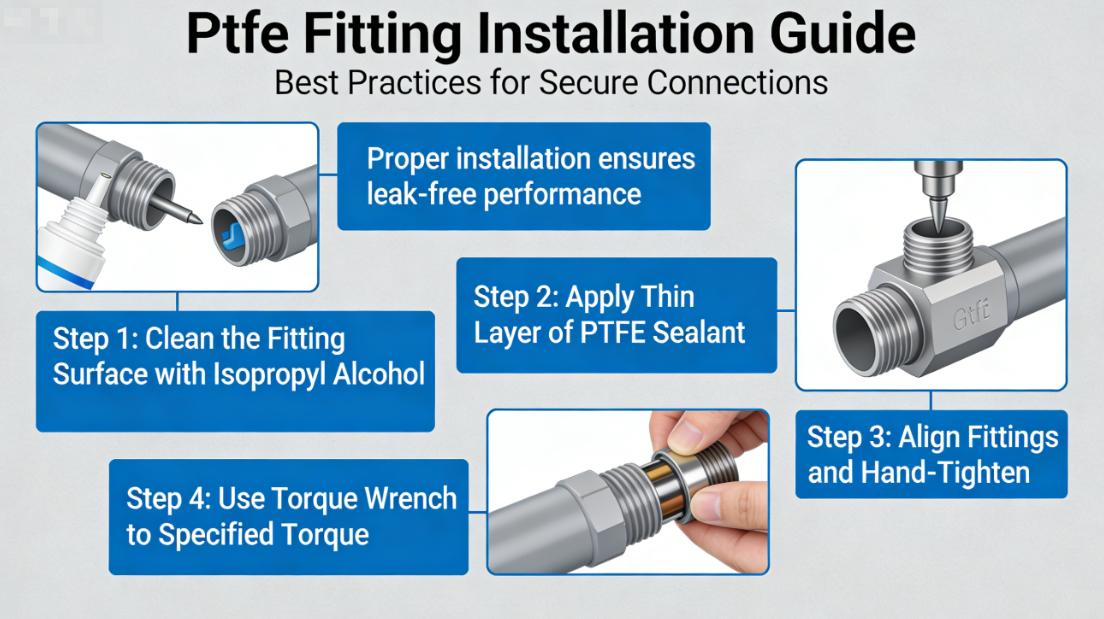
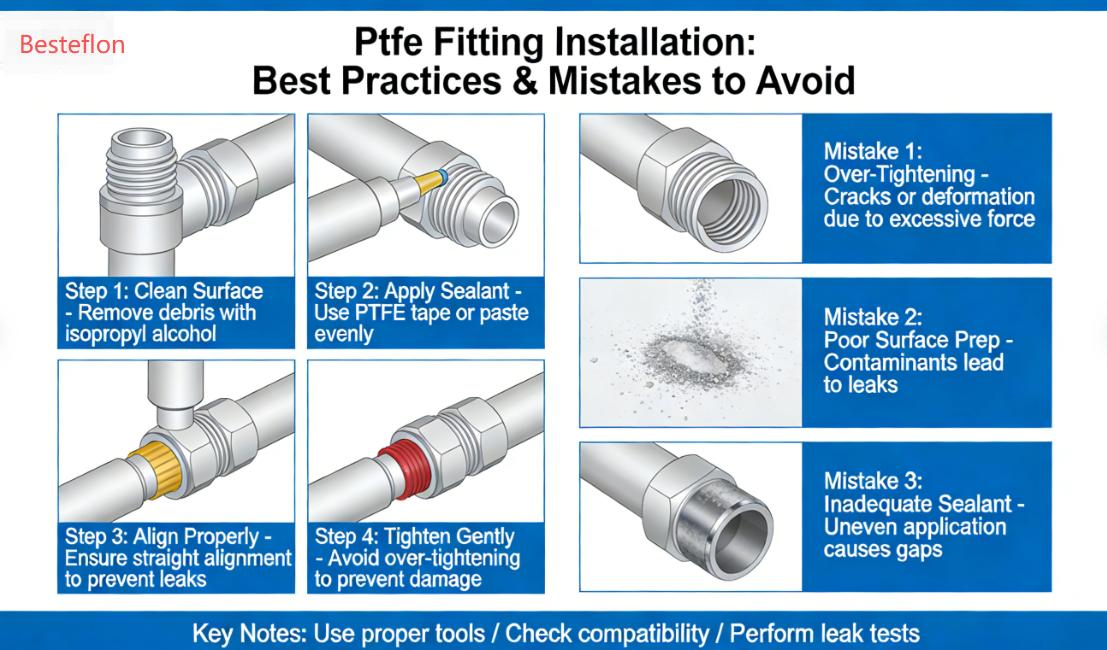
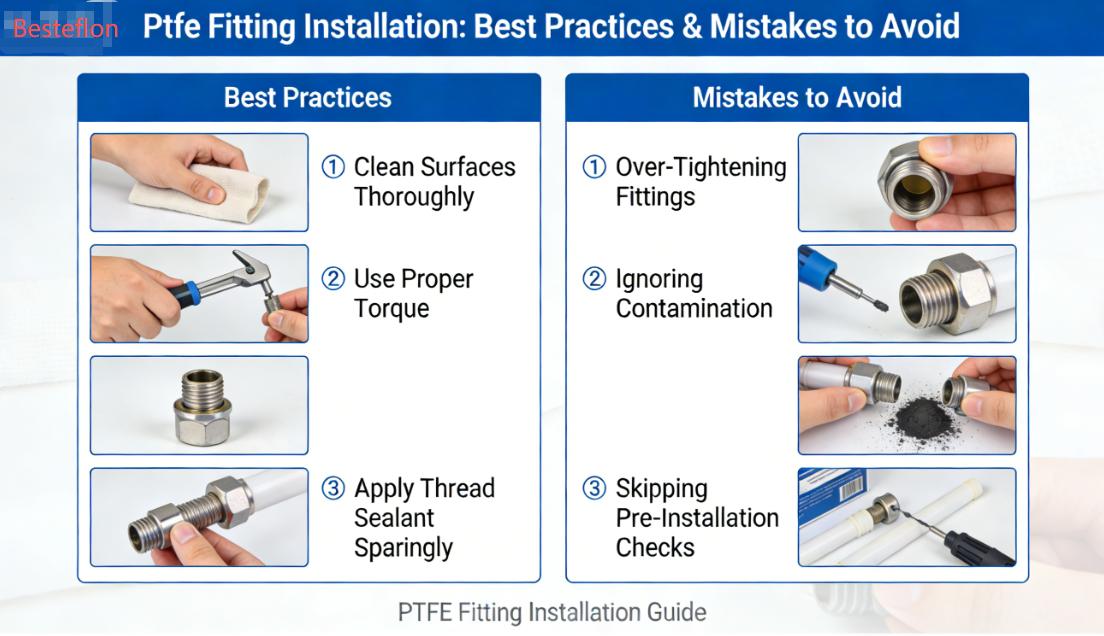
Thoroughly clean both the PTFE fitting and the mating surface. Use a lint-free cloth soaked in a suitable solvent to remove any grease, oil, or dirt. This step is crucial as contaminants can compromise the seal and cause leaks over time, especially in high-performance PTFE fittings systems.
2. Apply Thread Sealant (If Needed)
If you decide to use a thread sealant for PTFE fittings, apply it sparingly to the male threads of the fitting. Avoid applying too much sealant, as it can squeeze into the fluid stream and cause blockages or contamination. A thin, even coat is all you need to create a reliable seal during PTFE fitting installation.
3. Hand-Tighten First
Start by hand-tightening the PTFE fitting onto the mating surface. This helps to align the threads correctly and prevents cross-threading, which can damage both the fitting and the surface. Once the fitting is hand-tight, you can then use a wrench to give it a final snug fit, as recommended by Besteflon PTFE fittings installation standards.
4. Avoid Over-Tightening
One of the most common mistakes in PTFE fitting installation is over-tightening. PTFE is a relatively soft material, and excessive force can cause the fitting to deform or crack. A general rule of thumb is to tighten the fitting with a wrench until you feel a slight resistance, and then stop. Over-tightening can also make it extremely difficult to remove the fitting later on if repairs or replacements are needed.
5. Check for Leaks
After the PTFE fittings installation is complete, it's essential to perform a leak test. Pressurize the system and carefully inspect the fitting connection for any signs of leaks. If you notice any leaks, turn off the pressure and try to tighten the fitting slightly. If the leak persists, you may need to disassemble the fitting, check for damage, and reinstall it properly.
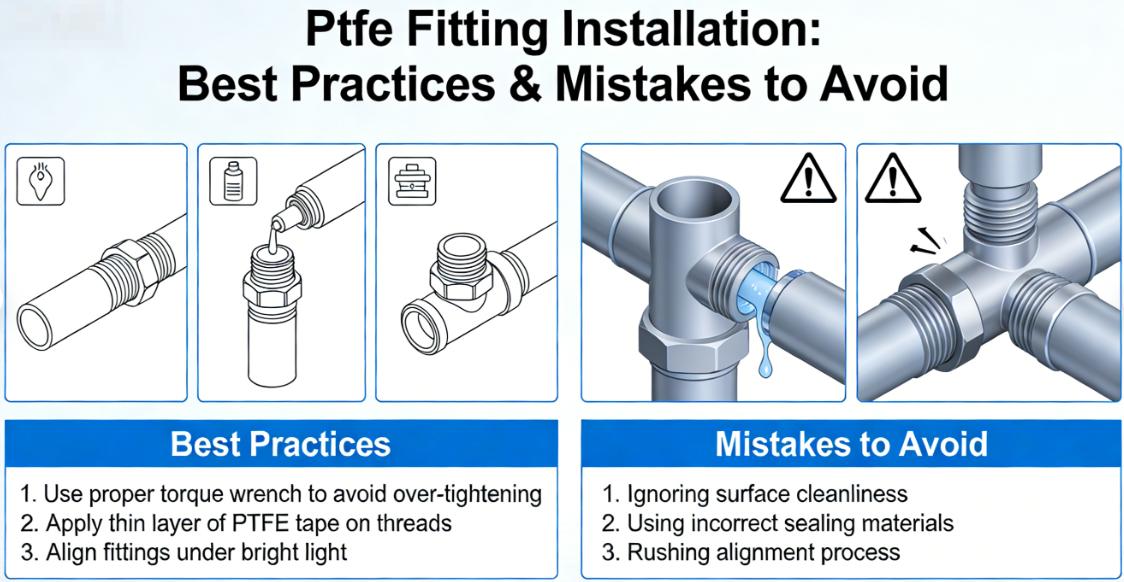
Common Mistakes to Avoid
1. Using the Wrong Tools
Using ill-fitting or low-quality tools can easily damage PTFE fittings. For example, using a wrench that is too large can round off the edges of the fitting, making it impossible to tighten or remove properly. Always use tools that are specifically designed for working with PTFE fittings to ensure a smooth and damage-free installation.
2. Ignoring Surface Preparation
Skipping the surface cleaning step is a recipe for disaster in PTFE fitting installation. Even a small amount of dirt or grease can prevent the PTFE fitting from forming a proper seal, leading to leaks and potential system failures. Take the time to clean the surfaces thoroughly before installation to ensure a reliable connection.
3. Over-Tightening
As mentioned earlier, over-tightening PTFE fittings is a major no-no. The soft nature of PTFE means that it can easily be damaged by excessive force, which can compromise the integrity of the fitting and cause leaks. Always follow the manufacturer's recommended torque specifications, especially when installing Besteflon PTFE fittings.
4. Reusing Old Fittings
While PTFE fittings are durable, they are not indestructible. Reusing old fittings that have been previously installed can be risky, as they may have sustained damage or wear that is not immediately visible. It's always best to use new PTFE fittings for each installation to ensure optimal performance and reliability.
| Action | Best Practice (Do) | Critical Mistake (Don't) |
| Cleaning | Use a lint-free cloth and solvent. | Leave grease or debris on threads. |
| Tightening | Hand-tighten first, then snug with a wrench. | Use excessive force/over-tighten. |
| Tools | Use high-quality, correctly sized wrenches. | Use adjustable wrenches that round edges. |
| Replacement | Always use new fittings for new setups. | Risk leaks by reusing deformed fittings. |
Conclusion
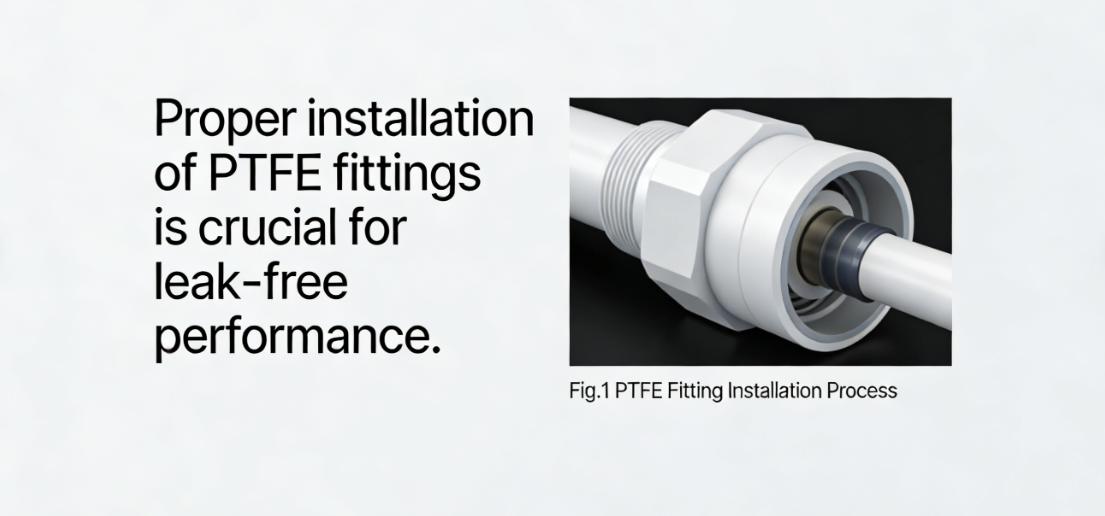
Proper PTFE fitting installation is essential for ensuring the smooth and efficient operation of your systems. By following the best practices outlined in this article and avoiding the common mistakes, you can enjoy leak-free performance and extend the lifespan of your PTFE fittings. Remember to always take the time to prepare properly, use the right tools, and follow the manufacturer's instructions to achieve the best possible results with Besteflon PTFE fittings.
Why Choose Besteflon as Your Trusted PTFE Fitting Partner?
Besteflon is more than just a component supplier; we are a leading manufacturer of high-precision polytetrafluoroethylene (PTFE) fittings, dedicated to providing leak-free connectivity for the world’s most demanding industries. Our fittings are engineered to bridge the gap between high-performance tubing and operational safety.
Here is why industry experts rely on Besteflon for their fitting solutions:
Precision Engineering and Material Purity
Quality starts with the raw material. We use high-grade, 100% virgin PTFE to ensure our fittings offer maximum chemical inertness and thermal stability. Every fitting is precision-machined to exacting tolerances, ensuring a perfect thread match and a superior seal that outperforms standard molded alternatives.
Diverse Configurations and Customization
Every fluid system is unique. Besteflon offers an extensive range of configurations, including NPT, BSPT, and metric threads, as well as specialized compression and flare fittings. If off-the-shelf parts don't meet your needs, our engineering team can custom-design fittings to your specific dimensions and pressure requirements.
Rigorous Quality Assurance
Safety is non-negotiable. Our manufacturing processes are ISO 9001:2015 certified, and our fittings undergo stringent quality control checks. From dimensional inspection to pressure-burst testing, we ensure that every Besteflon fitting can withstand the rigors of corrosive chemicals and extreme temperature fluctuations.
Factory-Direct Value and Technical Expertise
By choosing Besteflon, you benefit from factory-direct pricing without sacrificing professional support. Our relationship with customers doesn't end at the sale; we provide comprehensive technical guidance on installation, material compatibility, and system optimization to ensure your operations run smoothly.
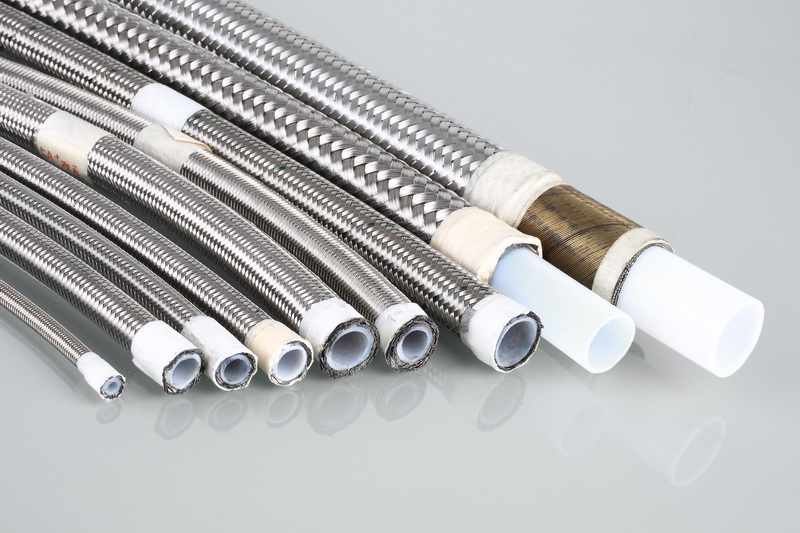
At Besteflon, your safety and operational efficiency are our top priorities. As a leading manufacturer of polytetrafluoroethylene (PTFE) hoses, we are committed to providing products that can withstand the test of time and extreme conditions.. Besteflon Fluorine plastic Industry Co., Ltd. specializes in the production of high-quality PTFE hoses and tubes for 20 years. If any questions and needs, please feel free to consult us for more professional advice.
If you are in Ptfe hose fitting,You May Like
Post time: Jan-24-2026