
Introduction
For 3D printer manufacturers, a small PTFE tube can directly affect filament feeding. Inconsistent inner diameter, rough bore surfaces, or unstable tolerances may increase friction, cause feeding resistance, and lead to inconsistent printing—especially in Bowden and automatic material supply systems.
Sourcing the right PTFE tube therefore requires more than comparing price and nominal dimensions. This guide explains how to select the right specifications, evaluate PTFE tube manufacturers, test samples, and ensure consistent quality for mass production.
Where Are PTFE Tubes Used in 3D Printers?
PTFE has a naturally low coefficient of friction and good temperature and chemical resistance, making PTFE tubing particularly useful for guiding filament through 3D printing systems.
However, different printer architectures place different requirements on the tube.
Bowden Extruder Systems
In a Bowden system, the extruder motor is separated from the hot end, and filament travels through a PTFE tube before reaching the nozzle.
Because the filament may travel through a relatively long path, the tube must provide a smooth and consistent internal surface. Inner diameter, dimensional tolerance, tube bending, and surface quality can all influence feeding resistance.
For manufacturers producing Bowden-style printers, PTFE tube consistency is therefore particularly important.
Direct Drive Extruder Liners
Direct drive systems position the extruder closer to the hot end, reducing the overall filament path. However, short PTFE liners or guide tubes may still be used to guide filament accurately between components.
In these applications, accurate cutting length, dimensional stability, and a clean inner surface may be more important than simply supplying long rolls of tubing.
AMS and Automatic Material-Supply Systems
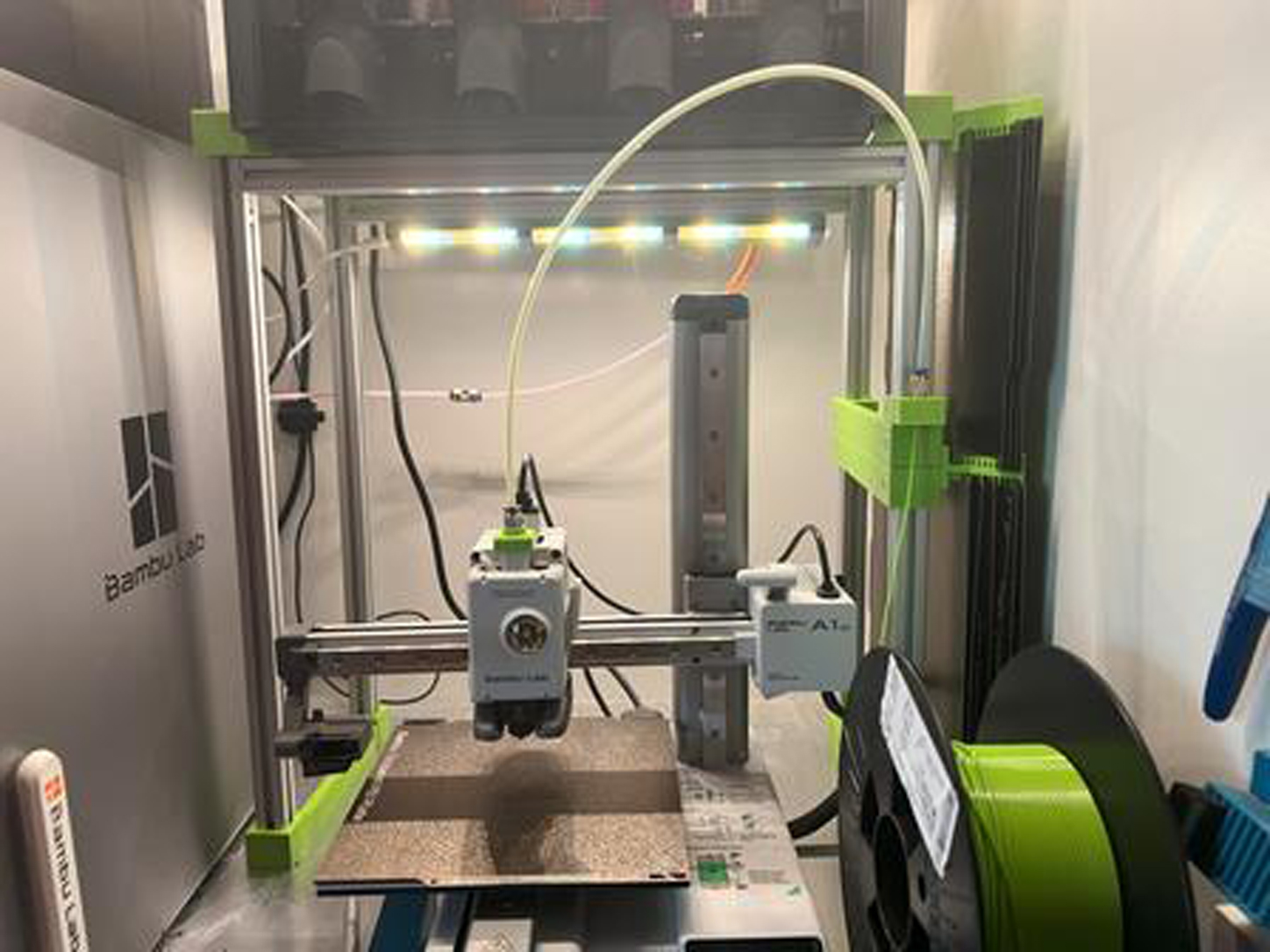
Automatic material supply and multi-material systems place additional demands on filament guide tubing.
Filament may be repeatedly loaded, unloaded, switched, and transported over relatively long distances. The path can also contain multiple curves and connection points.
For this reason, tubing used in these systems should be selected according to the actual filament diameter, path length, bend geometry, and connector design rather than assuming that one standard tube size is suitable for every system.
Industrial 3D Printers
Industrial printers may operate for longer production cycles and often require higher component consistency.
For manufacturers building printers at scale, PTFE tubing should therefore be considered part of the overall filament-delivery system rather than just a commodity plastic tube.
For an overview of tubing developed for these applications, see Besteflon’s PTFE Tubes for 3D Printers.
What Specifications Matter When Sourcing PTFE Tubes?
When sourcing PTFE tubes for 3D printer manufacturing, nominal size alone is not enough. Two tubes with the same stated dimensions can perform differently because of tolerances, inner surface quality, concentricity, and manufacturing consistency. OEM buyers should therefore define the following specifications before requesting a quotation.
1. Inner Diameter and Outer Diameter
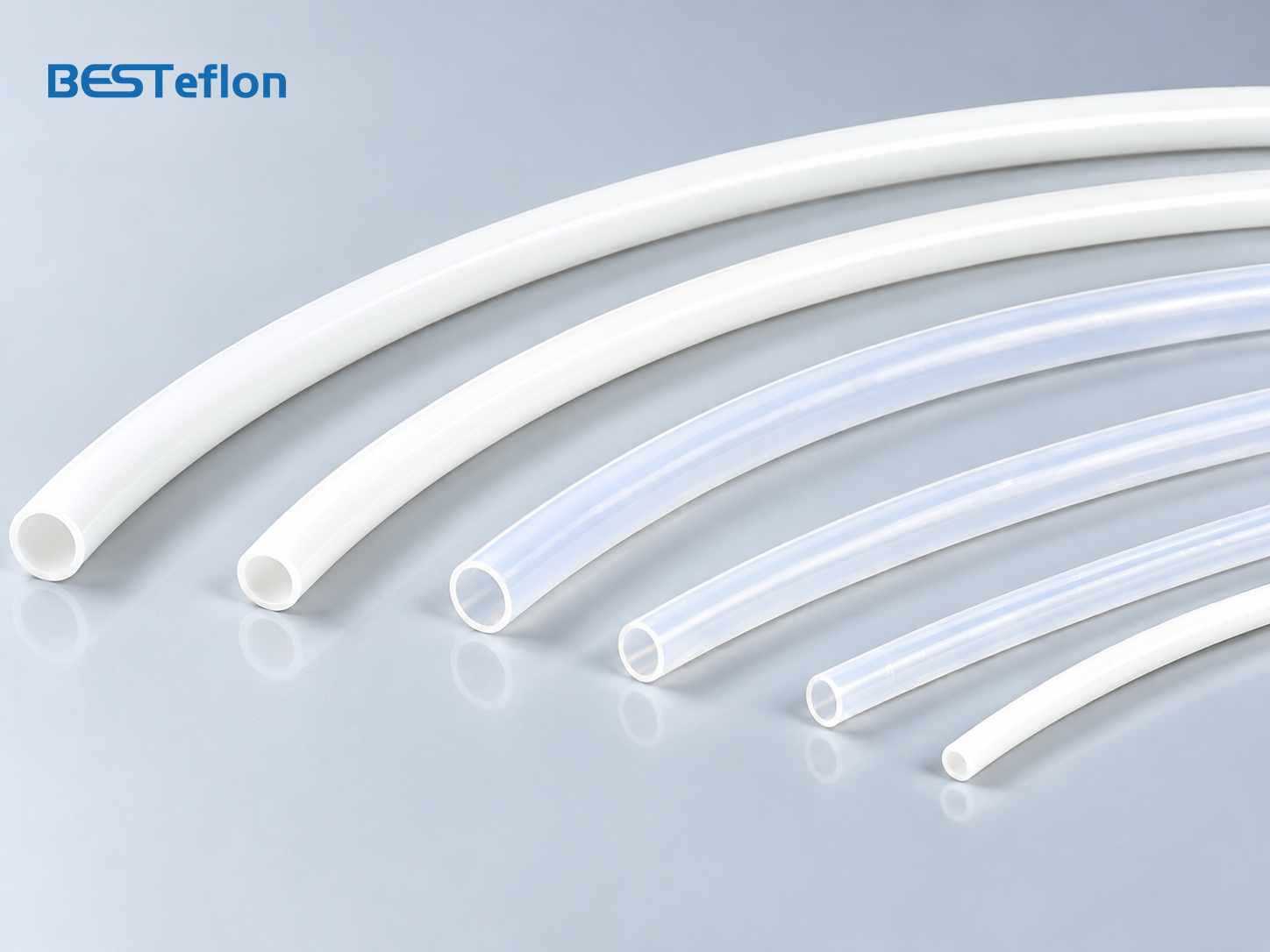
For 1.75 mm filament, 2 mm ID × 4 mm OD PTFE tubing is commonly used in Bowden and filament-guiding systems. However, it is not suitable for every printer.
Some designs may require a tighter ID for better filament guidance, while long or curved feeding paths may benefit from more clearance. Printers using 2.85 mm filament also require larger tubing.
The specification should clearly define:
- · Inner diameter (ID)
- · Outer diameter (OD)
- · Wall thickness
- · Filament diameter
- · Required length
The correct tube size should be based on the actual filament path and printer design rather than simply choosing the most common market size.
2. Inner Diameter Tolerance
Tolerance is just as important as nominal size. If the ID is too large, excessive clearance may increase filament movement. If it is too tight, feeding resistance can increase, especially through bends or when using flexible filament.
Instead of only asking, “Can you supply 2 × 4 mm PTFE tubing?”, OEM buyers should ask:
“What ID and OD tolerances can you consistently maintain during batch production?”
This helps determine whether the supplier can provide consistent tubing for mass production.
3. Inner Surface Smoothness
PTFE naturally offers low friction, but extrusion quality still affects filament movement. The inner bore should be smooth, clean, and free from scratches, contamination, or deformation.
This becomes particularly important in long Bowden and automatic material-supply systems, where small increases in friction can accumulate along the filament path.
In short, low friction comes from PTFE; consistent low-friction performance also depends on manufacturing quality.
4. Concentricity and Roundness
Correct ID and OD do not necessarily mean the tube is dimensionally perfect. If the inner bore is off-center, wall thickness becomes uneven. If the tube becomes oval, it may also affect connector fit and filament clearance.
For OEM applications, especially those requiring tight tolerances, concentricity and roundness should be included in supplier quality evaluation.
5. Temperature Capability
PTFE provides excellent temperature resistance. Besteflon PTFE tubing has a broad operating temperature range of approximately -65°C to +260°C (-85°F to 500°F).
However, PTFE material capability should not be confused with the allowable operating temperature of the complete hot-end system. Actual conditions depend on tube position, proximity to the heated zone, fittings, and printer design.
Therefore, temperature requirements should always be evaluated according to the tube's actual installation and operating environment.
Virgin PTFE vs. Lower-Grade Raw Materials
For 3D printer OEM projects, virgin PTFE is generally preferred where predictable dimensions, surface quality, and stable physical properties are required.
High-quality virgin PTFE can provide:
- · Consistent extrusion performance
- · Stable dimensional control
- · Smooth internal surfaces
- · Predictable mechanical characteristics
- · Consistent appearance and cleanliness
This becomes increasingly important when production moves from prototypes to thousands of printers.
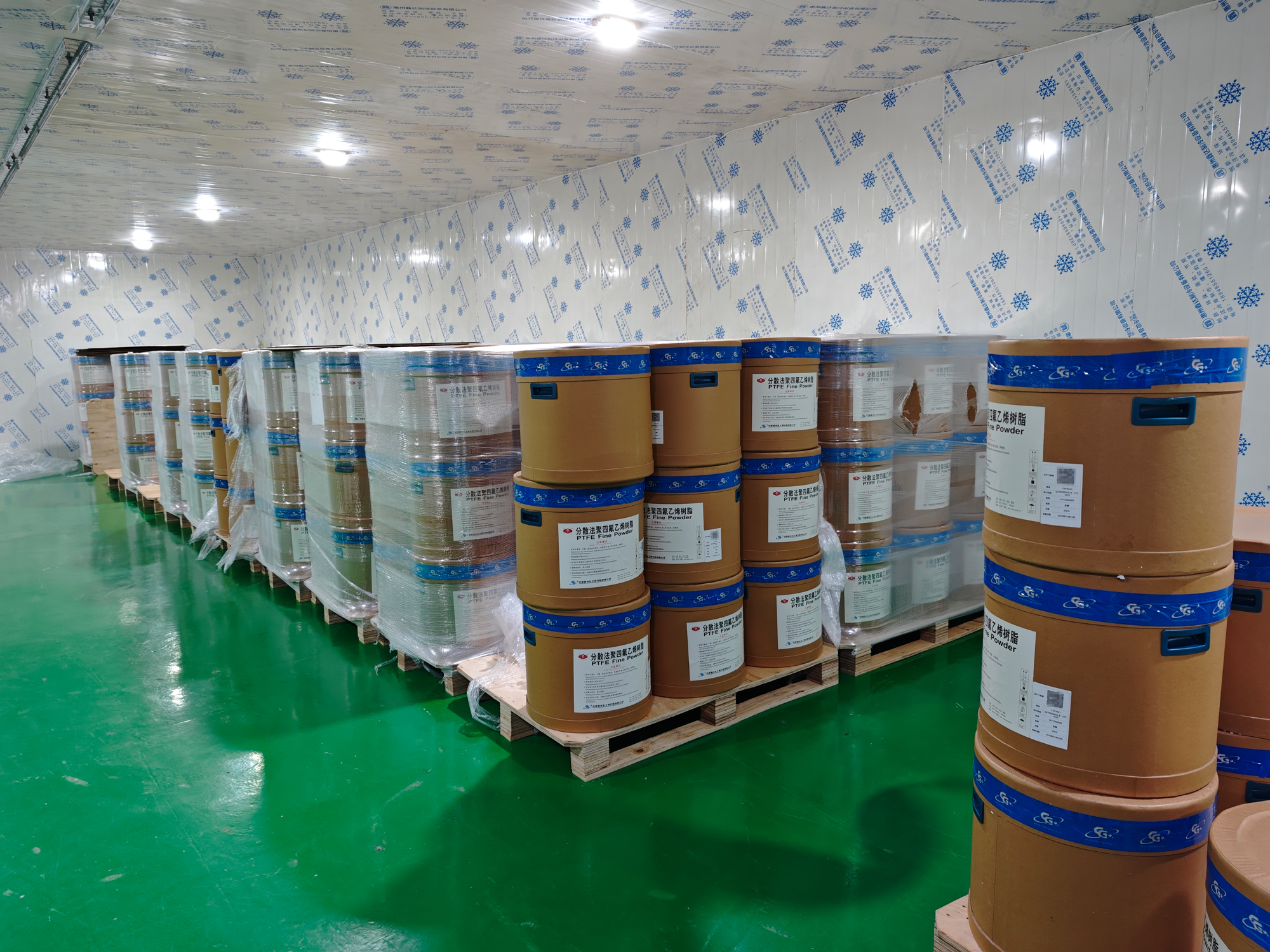
Besteflon uses high-quality PTFE raw materials from established material suppliers, including Chemours and Daikin, and controls material storage conditions before extrusion.
For OEM buyers, the key question should not simply be “Is this PTFE?” but rather:
What raw material is being used, how is it controlled, and can the supplier maintain the same material standard between production batches?
How to Evaluate a PTFE Tube Manufacturer
Finding a PTFE tube supplier online is easy. Determining whether that supplier can support long-term 3D printer manufacturing is more difficult.
1. Evaluate Actual Manufacturing Experience
Start by determining whether the company actually manufactures PTFE tubing.
Useful questions include:
- · How long have you manufactured PTFE tubes?
- · Which PTFE tube sizes do you regularly produce?
- · Can you control ID and OD tolerances?
- · Can you produce custom specifications?
- · What inspection equipment is used?
- · How do you control production batches?
This is more meaningful than simply asking how many years a company has exported products.
Besteflon has more than 20 years of PTFE manufacturing experience, allowing us to support both standard tubing and custom OEM requirements.
2. Check Production Capacity
Capacity matters when a 3D printer moves from development to mass production.
A supplier may successfully produce a few hundred meters for prototyping but struggle when monthly demand increases substantially.
Buyers should evaluate:
- · Number and type of extrusion lines
- · Standard and custom size capabilities
- · Monthly or annual capacity
- · Production lead times
- · Ability to handle repeat orders
- · Scalability for future demand
Besteflon operates a manufacturing facility of approximately 10,000 m² with annual production capacity reaching approximately 30 million meters across its tubing production.
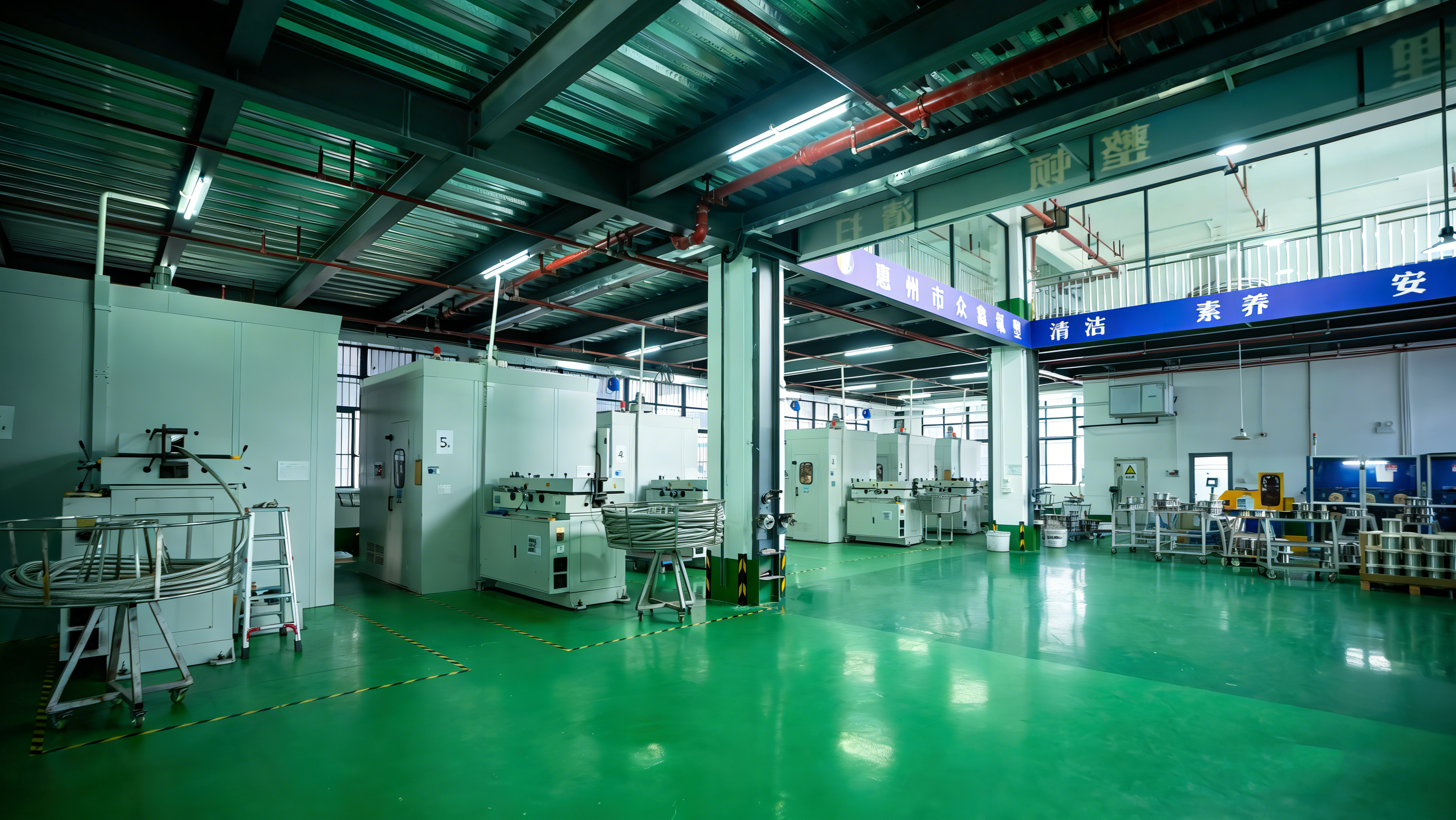
For growing 3D printer brands, scalable supply can reduce the risk of having to requalify a second tube manufacturer after the product has already entered mass production.
3. Review the Quality-Control Process
A reliable supplier should have quality-control procedures throughout production rather than relying only on a final visual inspection.
A typical process may include:
Raw Material Inspection → Extrusion → Dimensional Inspection → Surface Inspection → Performance Testing → Final Inspection → Packaging → Shipment
For 3D printer tubing, dimensional inspection deserves particular attention.
Buyers should ask:
- · How frequently are ID and OD measured?
- · Is tolerance checked during production?
- · Are inspection records retained?
- · How are nonconforming products handled?
The goal is not merely to receive a good first shipment. It is to receive tubing with comparable characteristics in the next shipment and the shipment after that.
4. Review Certifications and Traceability
Certifications can help OEM buyers assess whether a supplier has established manufacturing and quality-management systems.
Depending on the project and market, buyers may ask about documents or systems related to:
- · ISO 9001
- · IATF 16949
- · FDA-related material requirements
- · RoHS
- · SGS testing
Not every 3D printer project requires every certification listed above. The relevant requirements should be determined by the application and destination market.
The important point is whether the manufacturer can provide appropriate documentation and maintain material and production traceability when required.
Samples and Testing: What Should You Check Before Bulk Ordering?
A good-looking sample does not guarantee reliable performance or consistent mass production. Before approving a PTFE tube supplier, test samples under conditions close to the actual printer application.
Step 1: Dimensional Inspection
Measure the ID, OD, wall thickness, roundness, and dimensional consistency at several points. Compare multiple samples rather than relying on a single piece.
Step 2: Filament Feeding Test
Use the actual filament size and material intended for the printer.
Feed filament through the complete tube length and observe whether movement remains smooth.
For a 1.75 mm printer, testing should ideally include the same filament brands or tolerance ranges expected during normal operation.
Step 3: Test Bending and Repeated Feeding
Install the tube using the actual or expected bending path and check for increased feeding resistance. For Bowden and AMS systems, repeated load → feed → retract → reload cycles can help identify potential problems during long-term operation.
Step 4: Test Flexible Filaments
If the printer is designed to support TPU or other flexible filaments, test them separately.
Flexible filament is less resistant to compression and buckling than rigid materials such as PLA, so excessive internal clearance, poor path design, or increased friction can become more noticeable.
Step 5: Validate a Pilot Batch
Once samples pass testing, place a small pilot order to verify batch consistency before moving to mass production.
A practical qualification process is:
Sample → Dimensional Check → Printer Test → Pilot Batch → Mass Production
The goal is simple: confirm that the supplier can consistently reproduce the approved sample quality at production scale.
Customization Options for 3D Printer Manufacturers
Standard tubing works for many printers, but OEM projects often require specifications designed around a particular filament path.
A PTFE manufacturer may support customization including:
- · Custom ID and OD
- · Tighter dimensional tolerances
- · Custom wall thickness
- · Different tube colors
- · Cut-to-length tubing
- · Roll packaging
- · Custom packaging
- · OEM labeling
- · Product marking
- · Prototype and pre-production samples
This allows engineers to specify the tubing around the printer rather than redesigning the printer around an off-the-shelf tube.
For manufacturers developing Bowden extruders, direct-drive filament guides, AMS systems, or industrial machines, Besteflon can provide customized PTFE Tubes for 3D Printers according to specific ID, OD, tolerance, length, color, and production requirements.
PTFE Tube Sourcing Checklist for OEM Buyers
Before placing a bulk order, use the following checklist:
Why Source 3D Printer PTFE Tubes from Besteflon?
Besteflon specializes in PTFE tubing and hose manufacturing and supports both standard products and customized OEM projects.
Our manufacturing capabilities include:
- · 20+ years of PTFE manufacturing experience
- · 10,000 m² manufacturing facility
- · Annual production capacity of approximately 30 million meters
- · Certified Quality & Compliance – Certified to ISO 9001, with FDA, RoHS, and SGS compliance
- · High-quality virgin PTFE raw materials
- · Custom ID, OD, wall thickness, and tolerance
- · Custom colors and cut lengths
- · OEM and ODM manufacturing
- · Prototype and sample development
- · Quality inspection throughout production
- · Support for small validation batches and mass production
For 3D printer manufacturers, our objective is not simply to supply a standard tube. We work with customers to match tube dimensions, tolerances, packaging, and production requirements to their filament-delivery system.
FAQ About Sourcing PTFE Tubes for 3D Printers
What size PTFE tube is commonly used for 1.75 mm filament?
A 2 mm ID × 4 mm OD PTFE tube is commonly used for 1.75 mm filament, particularly in Bowden-style systems. However, tighter or larger inner diameters may be appropriate depending on filament tolerance, path length, bending, connectors, and printer architecture.
Is a tighter PTFE tube always better for 3D printing?
No. A tighter tube can reduce lateral filament movement, but excessive tightness may increase friction or make the system more sensitive to filament diameter variations. The ideal ID should balance filament guidance and low feeding resistance.
Can PTFE tubes be used with TPU filament?
Yes. PTFE tubing can guide TPU and other flexible filaments, but the filament path should be carefully designed. Inner diameter, tube length, bending, gaps between components, and surface smoothness can have a greater effect when feeding flexible materials.
What PTFE tube is suitable for an AMS system?
There is no universal AMS tube specification. The appropriate tube depends on filament diameter, feeding distance, bend radius, number of connection points, feeder design, and the amount of repeated loading and unloading.
Can PTFE tubes be customized for 3D printer OEM projects?
Yes. Depending on manufacturing capability, PTFE tubing can be customized in ID, OD, wall thickness, tolerance, color, cut length, packaging, and labeling. Custom samples can be produced for engineering validation before mass production.
How should I test a PTFE tube supplier before mass production?
A practical qualification process is:
Sample → Dimensional Inspection → Filament Feeding Test → Bending/Friction Test → Repeated Cycling → Pilot Batch → Mass Production
Most importantly, evaluate consistency across multiple samples and production batches rather than judging the supplier from one sample alone.
Conclusion:
If you are looking for PTFE tubes for your 3D printer project? Send Besteflon your required ID, OD sizes and application requirements. Our team will evaluate your specifications and provide suitable samples for testing before mass production.
If you are in PTFE Tube, you may like
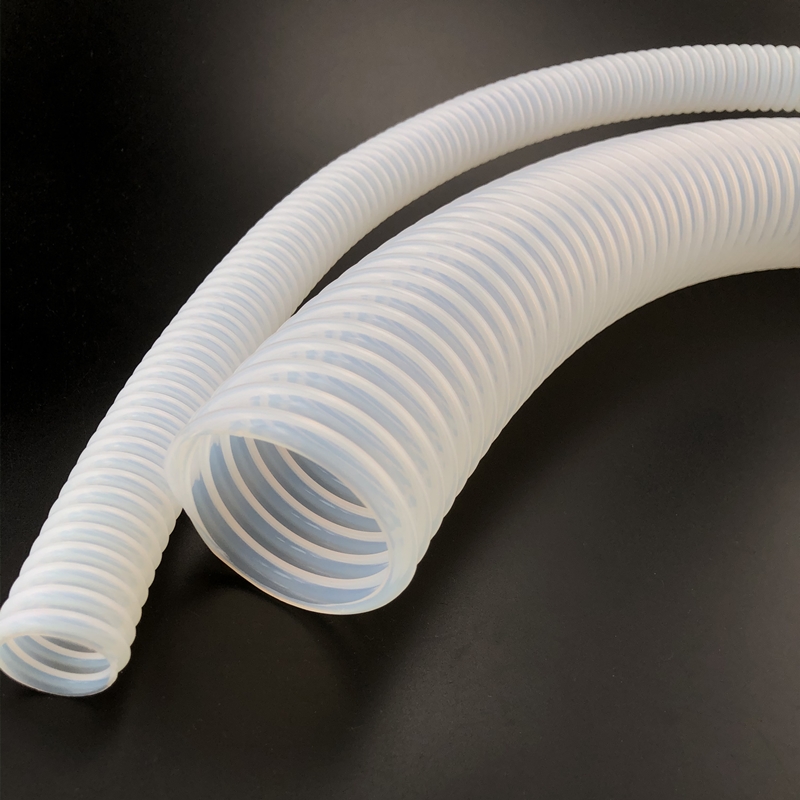
Buying the right PTFE Smooth Bore Tube is not only about choosing different specifications for different applications. More to choose a reliable manufacturer. Besteflon Fluorine plastic Industry Co., Ltd. specializes in the production of high-quality PTFE hoses and tubes for 20 years. If any questions and needs, please feel free to consult us for more professional advice.
Post time: Oct-08-2026