
Introduction
When engineers, buyers, and maintenance teams search for fluoropolymer fluid-transfer products, the terms “PTFE tube” and “PTFE hose” are often used as if they mean the same thing. Both products may contain an inner layer made from polytetrafluoroethylene (PTFE), a material valued for its broad chemical resistance, low-friction surface, wide service-temperature capability, and excellent aging performance. However, a PTFE tube and a PTFE hose are not identical products. Their construction, pressure capability, flexibility, connection method, installation behavior, and typical applications can be very different.
Understanding these differences is essential because choosing by material name alone can lead to premature failure that does not meet the operating conditions. At Besteflon, we manufacture PTFE tubing and engineered PTFE hose solutions for applications ranging from laboratory fluid handling and chemical transfer to automotive, pharmaceutical, food-processing, and industrial systems. This guide explains how the two product categories differ and how to select the right fluid solution for your application.
What Is a PTFE Tube?
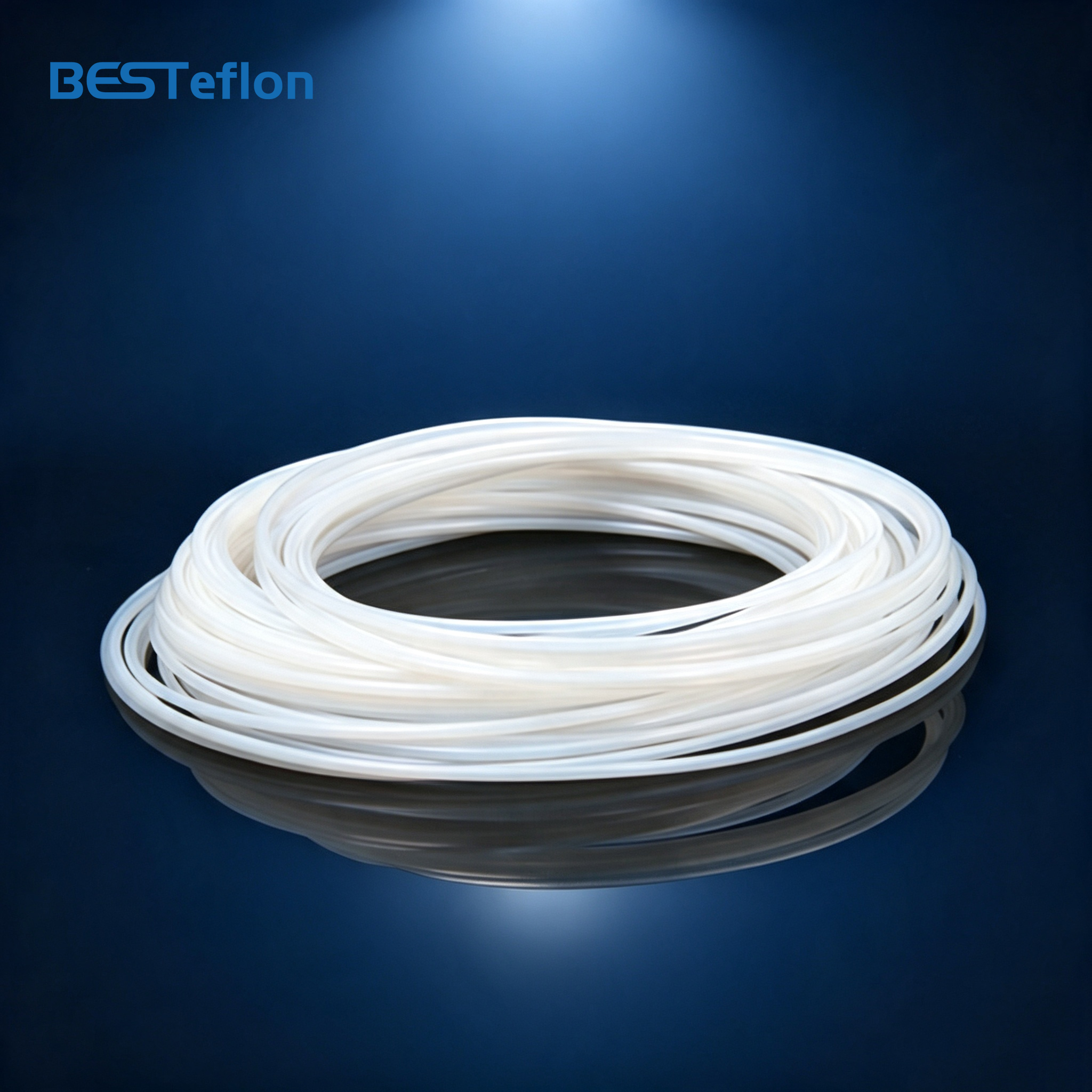
A PTFE tube is generally a single-wall extruded product made primarily from PTFE resin. It can be produced in many inside diameters, outside diameters, and wall thicknesses. Depending on its formulation and intended service, the tube may be natural white, translucent, colored, or conductive. PTFE tubes are available with a smooth bore, while specialized tube designs may also use convolutions to increase flexibility.
The defining feature is its relatively simple construction. A bare PTFE tube normally does not include an external stainless-steel braid, textile reinforcement, protective cover, or permanently attached end fittings. It is therefore lightweight, clean, easy to route in suitable low- or moderate-pressure systems, and economical when reinforcement is unnecessary. It can be connected using compatible compression fittings, flare fittings, push-in systems designed for PTFE tubing, or other application-specific connectors.
What Is a PTFE Hose?
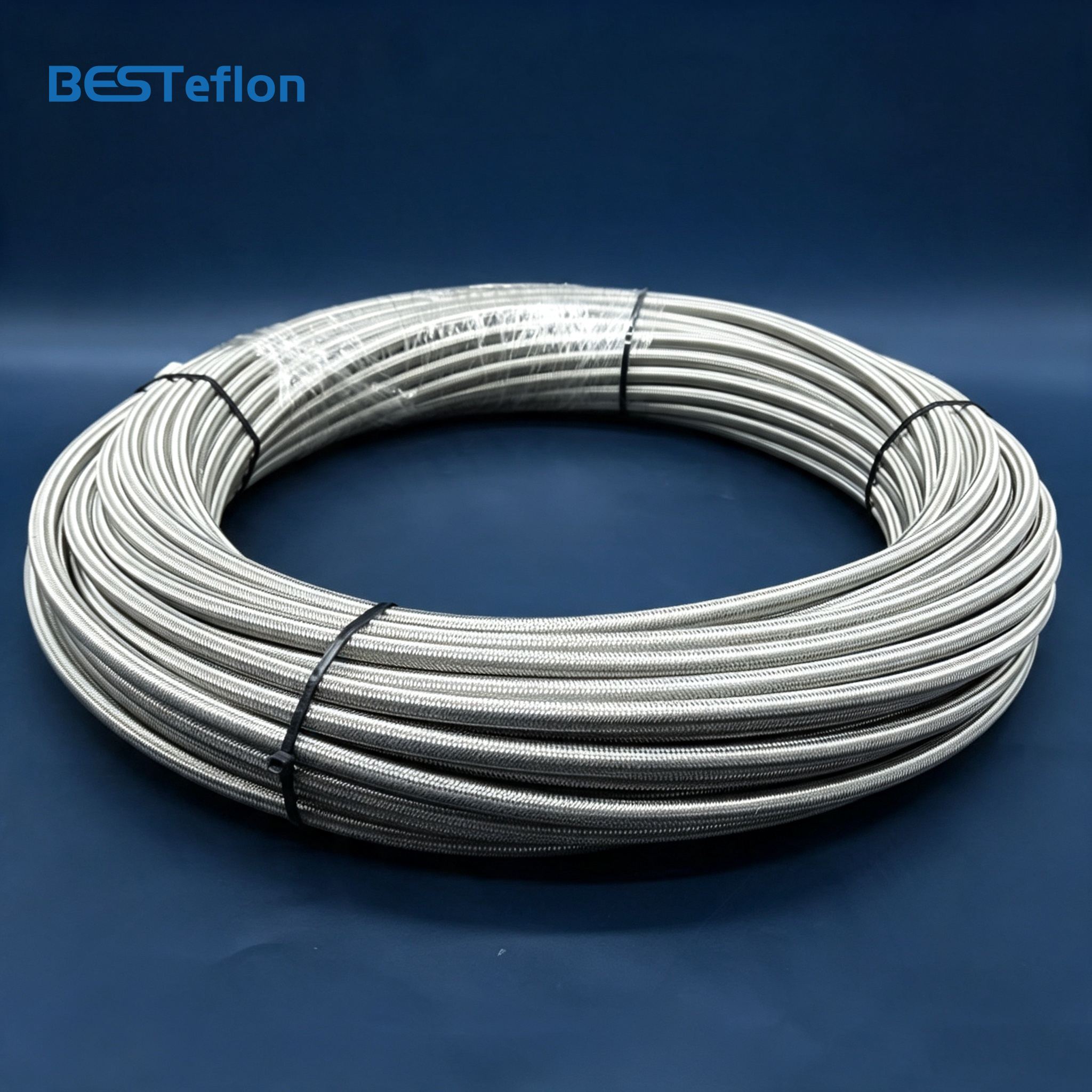
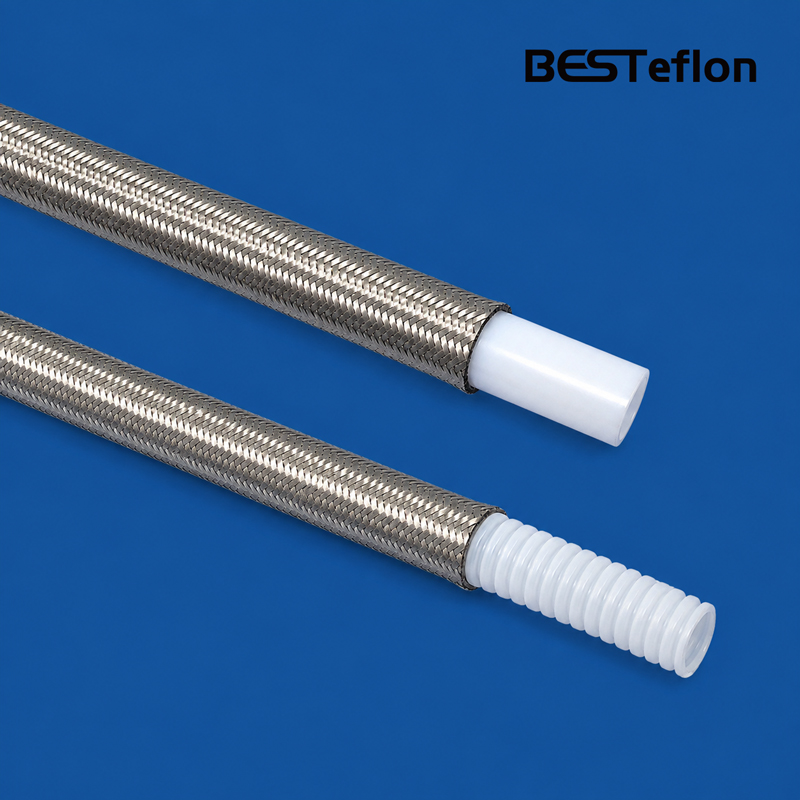
A PTFE hose is an engineered flexible hose construction in which a PTFE inner tube acts as the fluid-contact layer and one or more outer layers provide mechanical reinforcement or environmental protection. A common design combines a smooth-bore or convoluted PTFE inner tube with a stainless-steel wire braid. Depending on the application, the hose may also include an aramid or textile braid, a silicone or polymer cover, fire protection, or abrasion-resistant protection.
Unlike bare tubing, PTFE hose is frequently supplied as a complete hose assembly with end fittings that are crimped, swaged, or otherwise attached using a controlled assembly process. The reinforcement helps the hose withstand internal pressure, pressure pulsation, vibration, movement, and external mechanical loads that an unreinforced tube may not tolerate. The end connections also make the assembly easier to integrate into industrial equipment, vehicles, process lines, and hydraulic or pneumatic systems.
Besteflon designs PTFE hose products in smooth-bore and convoluted configurations. Smooth-bore hose supports efficient flow and easier cleaning, while convoluted PTFE hose offers a smaller bend radius and improved flexibility for tight routing. Conductive inner tube can also be specified when the transferred medium and flow conditions may generate electrostatic charge.
The Main Differences Between PTFE Tube and PTFE Hose
1. Construction
A PTFE tube is usually a single extruded layer. A PTFE hose is a multi-component product consisting of a PTFE inner tube plus reinforcement and, when required, an outer cover and attached fittings. This structural difference influences almost every other performance characteristic.
The simpler construction of Besteflon PTFE tubing is advantageous in clean, compact systems that do not require heavy reinforcement. A Besteflon PTFE hose, by contrast, is designed as a complete fluid-transfer component for more demanding mechanical and pressure conditions.
2. Pressure Capability
Unreinforced PTFE tubing can handle useful working pressures, but its allowable pressure normally decreases as temperature rises and varies significantly with diameter and wall thickness. It may also be more vulnerable to expansion, kinking, or damage when exposed to severe pressure pulsation.
The reinforcement in a PTFE hose restrains the liner and can provide substantially higher pressure capability. Stainless-steel braided designs are often chosen for high-pressure or cyclic-pressure service. However, the correct rating must always come from the specific product data and assembly configuration; the words “tube” and “hose” alone do not define a safe working pressure. Besteflon evaluates dimensions, braid design, fitting compatibility, temperature, and application requirements when recommending a hose. If you are unsure which product is suitable for your specific operating conditions, you may consult us.
3. Flexibility and Bend Radius
A thin-wall PTFE tube can be flexible, but PTFE also has a tendency to kink if it is forced below its minimum bend radius. A larger or thicker-wall tube may be relatively stiff. Routing must therefore allow gradual bends and sufficient support.
PTFE hose delivers much better flexibility than PTFE tube. Though the inner tube is PTFE material, the stainless‑steel braid enables repeated flexing and dynamic movement, while PTFE tube is semi‑rigid and only suitable for static bending.
4. Resistance to Vibration and Mechanical Stress
Bare PTFE tubing works well in protected, properly supported installations. Continuous rubbing, vibration, impact, or repeated bending can shorten its service life. It may need clamps, guards, or protective sleeving where mechanical exposure cannot be avoided.
A reinforced PTFE hose is generally better suited to vibration, equipment movement, and pressure impulses. Its braid supports the liner, while an optional cover can reduce damage from abrasion and the surrounding environment. This is one reason Besteflon PTFE hose assemblies are widely considered for automotive brake, fuel, oil, and industrial process connections.
5. End Connections
PTFE tubing is commonly purchased in bulk length and connected during equipment assembly. This gives designers flexibility and can simplify maintenance in low-pressure systems, but the fitting must match the tube’s dimensions, hardness, temperature, pressure, and medium.
PTFE hose is often supplied with professionally installed end fittings. The hose, fitting, ferrule, and assembly method operate as a system. A reliable crimp is not created by selecting parts that merely appear to fit. Besteflon can provide customized hose assemblies with fitting materials, connection types, angles, and lengths selected for the customer’s installation.
6. Cost and Total Value
PTFE tubing usually has a lower initial cost because its construction is simpler and it may be installed with standard compatible fittings. For a stable, protected, low-pressure line, purchasing a reinforced assembly would add cost without necessarily adding value.
PTFE hose assemblies cost more because they include reinforcement, fittings, assembly labor, and often testing. In high-pressure, high-vibration, safety-sensitive, or maintenance-intensive applications, that additional engineering can reduce leakage risk, installation time, and unplanned replacement.
Quick Comparison
|
Feature |
PTFE Tube |
PTFE Hose |
| Construction | Usually a single extruded PTFE tube | PTFE tube plus reinforcement; optional cover and fittings |
| Pressure | Application-dependent; generally lower without reinforcement | Generally higher with suitable braid and assembly |
| Flexibility | Varies by size and wall; can kink below minimum bend radius | braid enables repeated flexing and dynamic movement |
| Vibration | Best in protected, supported routes | Better suited to vibration and pressure pulsation |
| Connections | Often field-connected with compatible tube fittings | Often supplied as a finished assembly with attached fittings |
| Size/weight | Smaller and lighter | Larger and heavier due to reinforcement and fittings |
| Typical use | Instruments, dosing, sampling, insulation, protected lines | Industrial, automotive, chemical, hot-fluid, moving equipment |
Where Is PTFE Tube Commonly Used?
PTFE tubing is often a practical choice for laboratory and analytical instruments, chemical dosing, semiconductor and electronics equipment, gas sampling, high-purity water or reagent transfer, electrical insulation, protective sleeving, and low- to moderate-pressure process connections. It is especially suitable when the line is protected, movement is limited, a compact outside diameter is important, and field-installed fittings are acceptable.
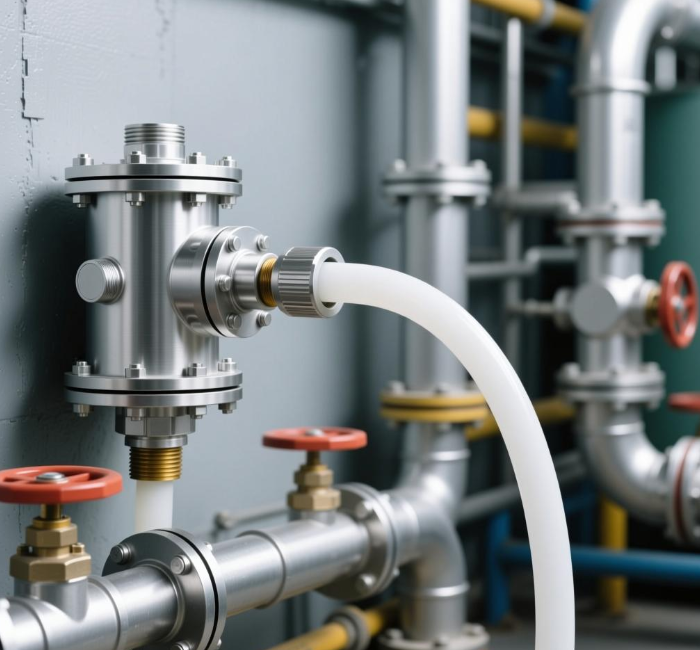
The tube specification should still account for chemical compatibility, permeation, temperature, pressure, vacuum conditions, dimensional tolerances, bend radius, and connection design. For vacuum or elevated-temperature service, wall stability and external support may become especially important.
Where Is PTFE Hose Commonly Used?
PTFE hose is typically selected for chemical transfer, steam or hot-fluid service, compressed gas, automotive brake and fuel systems, hydraulic connections, pharmaceutical and food-processing equipment, filling machinery, aerospace systems, and industrial equipment exposed to vibration or movement. PTFE smooth-bore hose is preferred when flow and cleanability dominate, while PTFE convoluted hose is valuable where flexible routing and a tight bend radius are critical.
How to Choose Between a PTFE Tube and a PTFE Hose
Start with the complete operating environment, not the product name. Define the fluid or gas, concentration, operating and cleaning temperatures, working pressure, burst pressure, vacuum level, required flow, bend radius, movement, vibration, abrasion, and connection type. Also identify whether the line is safety-critical and whether documentation, cleanliness, conductivity, or special testing is required.
Choose PTFE tube: when the route is protected, pressure is within the tube’s verified rating, movement is limited, compact dimensions matter, and the installation can use compatible tube fittings.
Choose reinforced PTFE hose: when the system experiences higher pressure, pressure cycling, vibration, frequent movement, abrasion, or when a tested assembly with permanent end fittings is preferred. Choose a convoluted inner tube when tight bends are essential, and a smooth bore inner tube when maximum flow efficiency and cleanability are more important.
Avoid selecting solely from a maximum-temperature headline. Real service ratings are affected by pressure, diameter, wall thickness, reinforcement, fittings, bend conditions, and the duration of exposure. A technically sound selection treats the complete line as a system.
Why Work with Besteflon?
Besteflon focuses on PTFE fluid-transfer products and supports customers from material selection through customized production. Our product range includes PTFE smooth-bore tubes, convoluted tubes, conductive tubes, stainless-steel braided PTFE hoses, covered hose constructions, and finished hose assemblies. Dimensions, braid, cover, fitting material, fitting angle, overall length, and marking can be adapted to project requirements.
For custom projects, Besteflon reviews the application conditions before recommending a construction. Appropriate dimensional inspection, pressure or leakage testing, and other verification can be arranged according to the product and agreed specification. This application-driven approach helps customers avoid both under-specification and unnecessary over-engineering.
Whether you need lightweight PTFE tubing for an instrument or a reinforced PTFE hose assembly for a demanding process line, Besteflon can help you compare the options and develop a practical solution. Superb Hoses, Besteflon Made.
Frequently Asked Questions
Can a PTFE tube replace a PTFE hose?
Sometimes, but only when its verified pressure, temperature, bend, mechanical-protection, and connection capabilities satisfy the application. It should not replace a reinforced hose in demanding service simply because both use PTFE.
Is every PTFE hose reinforced with stainless steel?
No. Stainless-steel wire braid is common, but some designs use cotton or aramid reinforcement, polymer covers, or multiple protective layers. The correct construction depends on the application.
Which is more flexible: PTFE tube or PTFE hose?
It depends on dimensions and design. Thin-wall tubing can be flexible, while braided smooth-bore hose may be stiffer. Convoluted PTFE hose is generally selected when a tighter bend radius is required.
Do PTFE tube and hose have the same chemical resistance?
Their PTFE fluid-contact surfaces may offer similar broad chemical compatibility, but the complete product must be considered. Reinforcement, covers, fittings, seals, temperature, permeation, and concentration can change suitability.
Can Besteflon customize both products?
Yes. Besteflon can support custom tube dimensions and formulations as well as hose constructions, braid or covers, fitting configurations, lengths, and application-specific assembly requirements.
Conclusion
The simplest distinction is that a PTFE tube is usually a bare extruded fluid path, while a PTFE hose is an engineered flexible construction built around a PTFE tube with reinforcement and often attached fittings. PTFE tubing offers simplicity, compact dimensions, cleanliness, and value in protected systems. PTFE hose provides greater mechanical support, pressure capability, vibration resistance, and assembly convenience for demanding applications.
The best choice depends on actual service conditions. Share your medium, pressure, temperature, size, routing, movement, and connection requirements with Besteflon, and our team can help identify whether PTFE tube, smooth-bore PTFE hose, or convoluted PTFE hose is the most suitable solution.
If you are in PTFE Tube, you may like
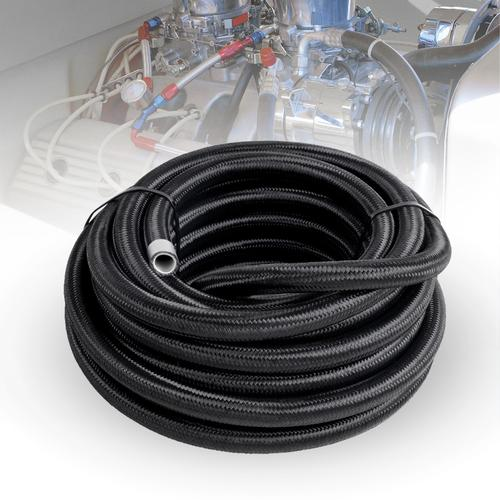
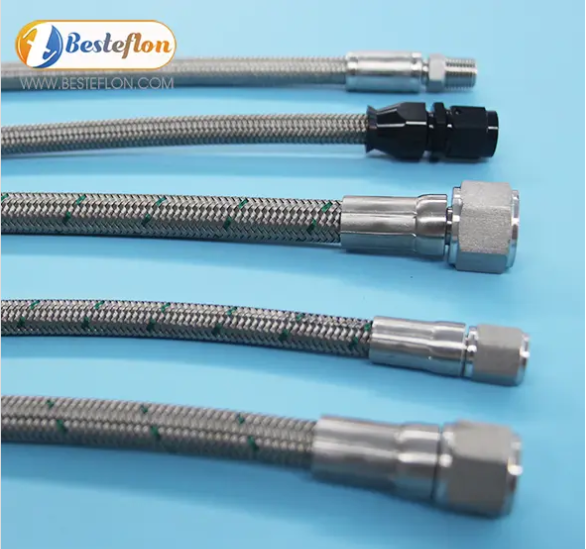
Buying the right PTFE Tube is not only about choosing different specifications for different applications. More to choose a reliable manufacturer. Besteflon Fluorine plastic Industry Co., Ltd. specializes in the production of high-quality PTFE hoses and tubes for 20 years. If any questions and needs, please feel free to consult us for more professional advice.
Post time: Aug-15-2026