
What Is PTFE? Understanding the Core Material
Polytetrafluoroethylene, commonly known as PTFE or Teflon, is a unique synthetic fluoropolymer famous for its outstanding properties that make it ideal as a hose liner. Its chemical structure gives it exceptional chemical inertness, meaning it resists almost all acids, solvents, fuels, and oils without degrading. This makes PTFE hoses perfect for handling aggressive fluids where other materials fail.
PTFE also boasts a wide temperature tolerance, operating reliably in extreme conditions from as low as -65°C up to +260°C. This broad range ensures stable performance in both freezing environments and high-heat applications where many rubbers or plastics would soften or melt.
Another critical feature is PTFE’s non-contaminating surface and extremely low permeability. Its smooth, non-stick inner wall prevents contamination and buildup inside the hose, maintaining fluid purity and high flow rates. Compared to rubber and other polymers, PTFE liners do not absorb chemicals nor allow vapor transmission, cutting down fuel odors and leakage concerns.
In short, PTFE excels as a hose liner by combining:
- Superior chemical resistance unmatched by rubber or standard polymers
- Stability under extreme temperatures without loss of strength or flexibility
- Non-contaminating, smooth bore surface for high purity and easy cleaning
- Low permeability to prevent vapor loss and odors
These attributes make PTFE the preferred choice for many high-performance applications requiring reliable, durable, and safe fluid transfer.
Construction of PTFE Braided Hose
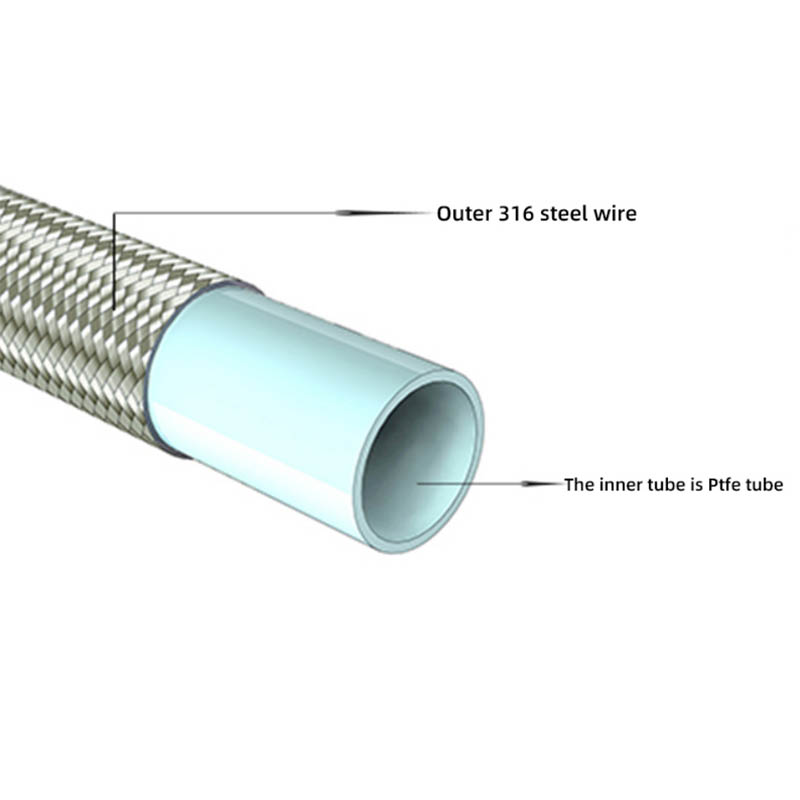
A PTFE braided hose typically starts with a smooth bore extruded PTFE tube at its core. This inner lining can be either conductive or non-conductive, depending on the application. The smooth bore PTFE hose ensures minimal friction and maximum flow while resisting chemical attack.
Surrounding this core is a reinforcement layer, usually a stainless steel braid made from either 304 or 316 grade steel. This stainless steel braided PTFE hose design offers excellent strength and pressure resistance. Alternatively, some hoses use a nylon braid for lighter-duty or more flexible needs.
For higher pressure or extra flexibility, you can find options with a double braid or convoluted design. These adaptations help the hose handle more demanding environments without sacrificing durability.
At each end, PTFE hoses come with various fittings such as AN, JIC, and NPT, making them easy to connect in many systems. Many PTFE hose assemblies follow industry standards like SAE 100R14 to ensure reliability and compatibility across global markets.
This construction mix—smooth bore PTFE core with a strong braided outer layer—provides a versatile and chemically resistant hose solution widely used worldwide.
Key Advantages of PTFE Braided Hose
PTFE braided hose stands out for its superior chemical resistance. It handles acids, solvents, fuels, and oils without breaking down, making it a top choice over other materials. This chemical resistance means fewer replacements and lower maintenance costs.
Its extreme temperature tolerance, from -65°C up to +260°C, keeps it reliable in the toughest environments, whether freezing cold or blazing hot. This wide range beats most rubber hoses, making PTFE hoses ideal for many industries.
Thanks to the low permeability and vapor barrier properties, PTFE hoses prevent fuel odors and vapor leaks, improving safety and keeping systems clean. This feature is especially valuable for fuel lines and chemical transfer.
The hose also offers high pressure capability, typically handling between 2000 and 3000+ PSI. This makes stainless steel braided PTFE hose perfect for hydraulic and high-pressure fluid systems.
Despite its strength, the PTFE braided hose remains flexible, durable, abrasion-resistant, and lightweight. This combo ensures easier installation and longer service life, especially where movement or vibration occurs.
Lastly, the non-stick interior provides a smooth bore for high flow rates and easy cleaning. This Teflon-lined hose minimizes contamination and buildup, a must-have for food, pharma, and chemical processing.
Overall, PTFE braided hose combines toughness with performance, making it a dependable solution for demanding applications worldwide.
Common Applications Across Industries
PTFE braided hose is a go-to for many industries due to its versatility and reliability. Here’s where you’ll most often find it:
- Automotive and Motorsport: Ideal for fuel lines, brake hoses, oil and coolant transfer, and turbocharger systems thanks to its high pressure resistance and chemical compatibility. The smooth bore PTFE hose keeps fluids flowing without contamination or breakdown.
- Industrial and Chemical Processing: Handles corrosive fluids, acids, and harsh chemicals safely. Its chemical resistant hose properties make it perfect for pharmaceutical plants and chemical factories where purity and durability matter.
- Aerospace and Aviation: Used for hydraulic lines and fuel systems that demand extreme temperature tolerance and reliable pressure handling.
- Food, Beverage, and Pharmaceutical: Sanitary fluid transfer requires hoses that don’t contaminate or absorb flavors. PTFE lined hose is ideal here because of its non-stick, inert surface.
- Other Uses: Common in power steering, transmission systems, steam lines, and various manufacturing processes. Its flexibility and abrasion resistance make it a solid choice wherever tough hose performance is required.
This variety of applications shows why PTFE hose, also known as Teflon braided hose, remains a top choice globally. Whether you’re looking for a stainless steel braided PTFE hose or a flexible PTFE tubing solution, it covers a wide range of needs.
PTFE Braided Hose vs Rubber Hose: A Direct Comparison
Here’s a quick breakdown to help you see how PTFE braided hose stacks up against rubber hose:
| Feature | PTFE Braided Hose | Rubber Hose |
|---|---|---|
| Temperature Range | -65°C to +260°C (high temperature PTFE hose) | Typically -40°C to +100°C |
| Chemical Compatibility | Exceptional resistance to acids, fuels, solvents, oils | Limited; can degrade with strong chemicals |
| Permeability | Very low permeability; prevents fuel vapors and odors | Higher permeability; allows vapor and odor leakage |
| Lifespan | Longer-lasting, resistant to aging, cracking | Shorter life, prone to wear and environmental damage |
| Pressure Handling | High pressure capability (2000–3000+ PSI) | Lower pressure, not ideal for high-pressure systems |
| Flexibility & Durability | Flexible, abrasion-resistant, lightweight | Generally flexible but heavier; less abrasion resistant |
| Cost | Higher upfront cost but better performance and longevity | Lower initial cost but may require frequent replacement |
Use Case Recommendations
- Choose PTFE braided hose for demanding jobs needing high chemical resistance, extreme temperatures, and high pressure—like motorsport fuel lines or chemical processing.
- Use rubber hose for everyday, low-pressure tasks where cost is a bigger factor and chemical exposure is limited.
In short, PTFE braided hose offers better long-term value and reliability for tough environments despite a higher price. Rubber hose may work for simpler, low-risk jobs but won’t match PTFE’s performance when things get tricky.
Factors to Consider When Selecting PTFE Braided Hose
Choosing the right PTFE braided hose means paying attention to a few key points that impact performance and safety. Here’s what you should keep in mind:
- Size and Pressure Ratings: Make sure the hose diameter and pressure capacity fit your system requirements. PTFE hoses come in various sizes and can handle pressures from 2000 up to 3000+ PSI or more.
- Conductive vs Non-Conductive Liners: Conductive PTFE hose liners help dissipate static electricity, crucial for fuel or flammable liquids. If your application involves static-sensitive fluids, opt for conductive liners; otherwise, non-conductive might be enough.
- Braid Material Choices: Stainless steel braided PTFE hoses (typically 304 or 316 stainless steel) offer superior durability and high-pressure resistance. Nylon braid is lighter and corrosion-resistant but usually suits lower pressure uses.
- Temperature and Fluid Compatibility: PTFE hoses perform well in extreme temperatures (-65°C to +260°C) and resist most chemicals, but always verify compatibility with the specific fluids you handle to avoid damage or leaks.
- Certification and Quality Standards: Look for hoses that meet standards like SAE 100R14 for safety and reliability. Certified braided PTFE hoses ensure consistent quality, especially important in critical fields like aerospace or pharmaceuticals.
Taking these factors into account ensures you pick a flexible PTFE tubing solution that’s safe, reliable, and fits your needs perfectly.
Maintenance, Installation, and Best Practices for PTFE Braided Hose
When working with a PTFE braided hose, proper installation and regular maintenance are key to getting the best performance and longest life from your hose.
Proper Assembly Techniques:
- Use the right tools designed for PTFE hose fittings, such as torque wrenches and crimping tools, to avoid damaging the stainless steel braid or the smooth bore PTFE liner.
- Choose compatible fittings like AN, JIC, or NPT that match your hose specifications and application needs.
- Follow manufacturer guidelines closely for assembling to prevent leaks and ensure pressure ratings are met.
Inspection Tips:
- Regularly check the hose for signs of wear, damage, or kinking. Even small bends can reduce hose life and performance.
- Look for any cracks or corrosion on the stainless steel braid, and ensure fittings are secure.
- Replace hoses showing signs of excessive wear or physical damage immediately to avoid failure.
Storage and Handling:
- Store PTFE hoses in a cool, dry place away from direct sunlight or chemicals that might degrade the braid or liner.
- Avoid sharp bends or heavy weights on the hose during storage and installation.
- When handling, prevent twisting or crushing that could damage the conductive or non-conductive PTFE liner.
Taking these simple yet critical steps in your PTFE hose assembly and maintenance will ensure superior chemical resistance, high temperature performance, and a longer service life—making your investment in a stainless steel braided PTFE hose worthwhile.
Why Choose BESTEFLON for Your PTFE Braided Hose Needs
When it comes to PTFE braided hose, BESTEFLON stands out as a reliable manufacturer and supplier. We specialize in producing high-quality stainless steel braided PTFE hose and flexible PTFE tubing designed to meet a wide range of industrial and automotive demands.
What Sets BESTEFLON Apart?
| Feature | Description |
|---|---|
| Quality Materials | We use premium PTFE liners and durable stainless steel braid (304/316) to ensure long life and excellent chemical resistance. |
| Custom Options | Tailored sizes, pressure ratings, and conductive or non-conductive liners to fit your exact needs. |
| Competitive Pricing | China-based production offers cost advantages without sacrificing product quality. |
| Durability & Reliability | Our hoses handle extreme temperatures, high pressures, and tough environments with ease. |
| Customer Support | Responsive service helps you select, install, and maintain your PTFE hose assemblies effectively. |
By choosing BESTEFLON, you get a chemical resistant hose that performs well in critical applications like fuel lines, brake systems, and industrial fluid transfer — all backed by solid quality and expert support.
Whether you need a braided Teflon fuel line, an AN PTFE hose, or a custom PTFE hose assembly, BESTEFLON combines value and performance for your global business needs.
Buying the right PTFE Braided Hoses is not only about choosing different specifications for different applications. More to choose a reliable manufacturer. Besteflon Fluorine plastic Industry Co., Ltd. specializes in the production of high-quality PTFE hoses and tubes for 20 years. If any questions and needs, please feel free to consult us for more professional advice.
If you are in PTFE Flexible Hose,You May Like
Post time: Mar-18-2026