
Introduction: Why Quality Inspection Matters for PTFE Tubes
PTFE tubes are widely used in chemical processing, automotive systems, and industrial equipment, where consistent quality and reliable performance are essential. At Besteflon, every stage of quality control matters—from raw material inspection and dimensional checks to leakage, pressure, and fatigue testing—to help ensure our products meet applicable industry standards and customer requirements.
In this article, we explain how Besteflon approaches PTFE tube quality inspection and why these procedures matter when selecting a reliable PTFE tube manufacturer.
1. Raw Material Inspection: Starting with Material Quality
Consistent product quality begins with the materials used in manufacturing. Even when the production process is well controlled, variations in raw material properties can affect the consistency of the finished tubing.
For this reason, raw material inspection is the first step in Besteflon's quality control process.
Working with Established PTFE Material Suppliers
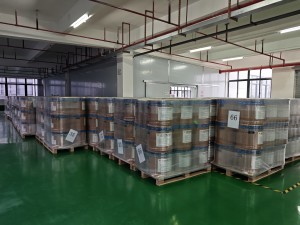
Besteflon uses PTFE raw materials from established fluoropolymer suppliers, including Chemours in the United States and Daikin in Japan.
Before production, incoming materials are checked against relevant specifications and purchasing requirements. Supplier documentation and material information are reviewed to help verify that the selected materials are suitable for the intended manufacturing process.
Why Does Raw Material Quality Matter?
Raw material quality can influence several aspects of finished tube performance, including:
·Material consistency: Helps maintain consistent product characteristics between production batches.
·Processing stability: Suitable materials support controlled and repeatable manufacturing conditions.
·Surface quality: Material characteristics and processing conditions can affect the finished tube's internal and external surfaces.
·Application suitability: The selected material must be appropriate for the intended operating environment and customer requirements.
By controlling material selection and incoming inspection, Besteflon establishes a quality foundation before the extrusion and subsequent manufacturing stages begin.
2. Dimensional Inspection: Verifying Inner and Outer Diameters
Dimensional accuracy is one of the most important quality requirements for PTFE tubing. A tube may appear normal but still fail to fit the customer's equipment if its dimensions fall outside the specified tolerances.
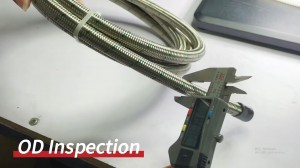
Besteflon checks the inner diameter (ID) and outer diameter (OD) of PTFE tubes against the corresponding product specifications.
Inner Diameter (ID) Inspection
The inner diameter determines the size of the tube's internal passage. It can influence fluid flow, component compatibility, and the fit between the tubing and other parts of a system.
For example, PTFE tubing used in 3D printer filament guidance requires a suitable internal diameter to allow the filament to move through the tube as intended. In industrial fluid-transfer applications, the internal dimensions must also be appropriate for the equipment design and operating requirements.
Outer Diameter (OD) Inspection
The outer diameter is important for installation and compatibility with fittings, connectors, and surrounding components.
If the OD deviates from the specified range, the tube may not fit correctly into the intended assembly. For OEM customers producing equipment in volume, dimensional inconsistencies can also create assembly difficulties and additional production costs.
Why Dimensional Tolerances Matter
Checking ID and OD is not simply about confirming nominal dimensions. The measured dimensions must also be evaluated against the applicable tolerance requirements.
For customized tubing projects, these requirements should be agreed upon before mass production begins.
Through dimensional inspection, Besteflon works to ensure that the supplied tubing conforms to the required specifications and supports reliable integration into customer equipment.
3. Visual Inspection: Checking Appearance and Surface Quality
During this stage, the tube's appearance and visible surface condition are examined against the relevant product requirements.

What Is Checked During Visual Inspection?
Typical inspection points include:
·Visible surface defects: Checking for obvious irregularities that do not meet the specified appearance requirements.
·Deformation: Identifying noticeable changes in shape or other visible abnormalities.
·Stains and contamination: Checking for unwanted marks, contamination, or other surface issues.
·Overall appearance: Confirming that the finished tube meets the applicable visual quality criteria.
The specific acceptance requirements depend on the product type and intended application.
For example, tubing used in precision equipment may have particular requirements for surface condition and cleanliness. Tubes supplied for other industrial applications may have different visual acceptance criteria.
4. Air Tightness Testing: Checking for Leakage
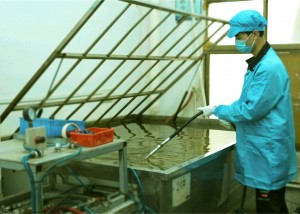
Air tightness testing is an important part of quality verification. The purpose of this test is to determine whether the tested tube or hose has leakage that exceeds the applicable acceptance criteria.
How Does Air Tightness Testing Help?
Under defined test conditions, the product is checked for signs of leakage. The test pressure, procedure, and acceptance criteria should correspond to the relevant product requirements.
Air tightness testing helps identify leakage-related issues that may not be visible during a routine appearance inspection.
For customers using tubing in fluid-transfer systems, suitable sealing performance can be important for system reliability and preventing unwanted fluid release.
Besteflon incorporates air tightness testing into its quality verification process to help assess whether applicable products meet their specified leakage requirements.
5. Hydrostatic Pressure Holding Test: Evaluating Pressure Retention
In addition to air tightness testing, Besteflon conducts hydrostatic pressure holding tests for applicable products.
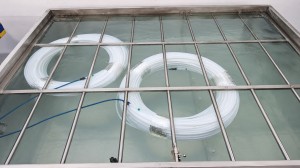
This test evaluates how a product performs while subjected to a specified water pressure over a defined holding period.
What Does a Hydrostatic Pressure Holding Test Evaluate?
During testing, the product is exposed to the required pressure conditions, and its pressure-holding behavior is monitored for relevant changes or abnormalities.
Depending on the test procedure, observations may include pressure changes, visible leakage, or other signs that indicate whether the product satisfies the specified acceptance criteria.
The test pressure, holding duration, and acceptance requirements must be established according to the product specification and applicable testing requirements.
Why Is Pressure Holding Performance Important?
For products intended to operate under pressure, maintaining the required pressure without unacceptable leakage or other failures is an important aspect of performance evaluation.
A hydrostatic pressure holding test provides information about the product's behavior under the defined test conditions. It should not be confused with a burst test, which evaluates a different performance characteristic.
6. Additional Performance Validation for PTFE Hoses
Bare PTFE tubes and reinforced PTFE hoses do not have identical structures or performance requirements.
A stainless steel braided PTFE hose includes a PTFE inner tube and a braided metal reinforcement layer. Some PTFE hoses also feature protective outer covers to meet additional application requirements.
These additional structural components influence the product's mechanical behavior. Depending on the hose design, operating conditions, and customer specifications, further performance validation may therefore be required.
At Besteflon, applicable stainless steel braided PTFE hoses and PTFE hoses with outer covers may undergo additional testing, including high-pressure gas testing, hydraulic burst testing, and bending fatigue testing.
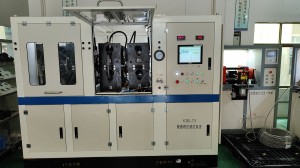
6.1 High-Pressure Gas Testing
High-pressure gas testing is used to evaluate the pressure-related performance of applicable products under defined test conditions.
The test conditions and acceptance criteria depend on the product construction, intended application, and relevant technical requirements.
This type of validation can provide additional information about a hose's performance under specified pressure conditions. It is distinct from a routine air tightness test, which primarily checks for unacceptable leakage.
Because pressurized gas testing can involve significant stored energy, it must be performed using appropriate equipment, protective measures, and established testing procedures.
For Besteflon's applicable hose products, high-pressure gas testing contributes to the broader performance verification process.
6.2 Burst Testing
Burst testing evaluates the pressure at which an applicable hose or assembly fails under a controlled hydraulic test or gas pressure test.
During the test, hydraulic pressure is increased according to the established procedure until the defined endpoint is reached, such as rupture or another specified failure condition.
The resulting burst pressure can then be compared with the product's technical requirements or applicable standard.
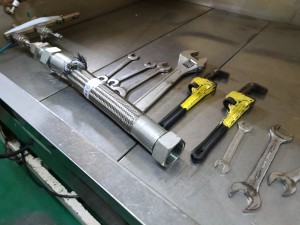
This test helps evaluate the ultimate pressure resistance of the tested product. It is not the same as the normal working pressure, nor does a burst result alone establish a safe operating pressure.
Burst performance depends on factors such as the PTFE inner tube, reinforcement structure, dimensions, manufacturing quality, and test conditions.
For reinforced PTFE hoses, hydraulic burst testing can provide valuable evidence of pressure capability when performed according to the relevant requirements.
6.3 Bending Fatigue Testing
PTFE hoses may experience repeated movement and bending during installation or operation. Depending on the application, repeated bending can place mechanical demands on the hose structure and its reinforcement.
Bending fatigue testing evaluates how an applicable hose performs under repeated bending cycles according to a defined test procedure.
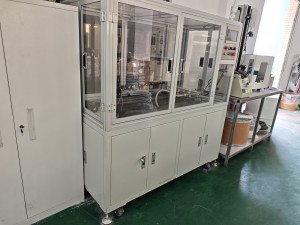
The test may involve specified bending conditions, cycle requirements, and inspection criteria. After testing, the product is evaluated for relevant signs of damage or failure.
Bending fatigue testing is particularly relevant when assessing hoses intended for applications where flexibility and repeated movement are important.
However, fatigue performance depends on the hose construction, bending radius, movement conditions, and other application factors. Test results should therefore be interpreted in the context of the product's specified requirements.
For suitable PTFE hose products, Besteflon uses bending fatigue testing as part of its additional performance validation process.
7. Quality Certifications and Supporting Test Documentation
Testing equipment and inspection procedures are important, but a manufacturer's quality management system and supporting documentation also matter.
Besteflon's relevant certifications and product-related documentation help customers assess the company's quality management practices and the suitability of products for their intended applications.
The following are the certifications obtained by Besteflon:
ISO 9001: Quality Management System
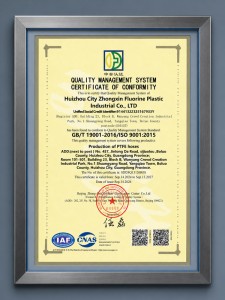
ISO 9001 is an international standard for quality management systems. Certification demonstrates that Besteflon has a quality management system assessed against the standard's requirements.
For a manufacturer, this provides a framework for managing processes, addressing nonconformities, and supporting continual improvement.
IATF 16949: Automotive Quality Management
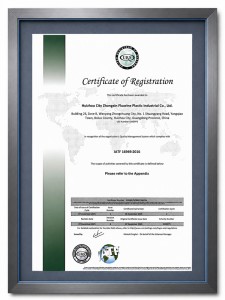
IATF 16949 is a quality management system standard for the automotive industry.
It is particularly relevant to automotive supply chains, where process consistency, risk management, defect prevention, and customer-specific requirements are important.
For automotive applications, including relevant brake hose projects, customers should confirm that the supplier's certification scope and product requirements are appropriate for the intended project.
Besteflon's IATF 16949 credentials support its work with customers in the automotive sector, subject to the applicable certification scope.
FDA: U.S. Food and Drug Administration
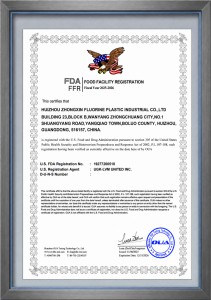
For PTFE products intended for relevant food-contact or other regulated applications, FDA-related material requirements and supporting documentation may be important.
Customers should confirm the applicable regulatory provisions and whether the specific material and finished product satisfy the requirements relevant to their intended use.
Besteflon has received FDA certification; its manufactured PTFE tubing is food-contact approved.
RoHS Compliance
RoHS addresses restrictions on certain hazardous substances in applicable electrical and electronic equipment and related products.
Where RoHS requirements apply to a customer's project, relevant compliance documentation can help demonstrate conformity with the specified requirements.
Customer-Specific Test Reports
Some projects require additional verification beyond standard quality inspections.
Depending on the product and application, supporting documents may include inspection records, material documentation, or reports from specified performance tests.
Customers should confirm which documents are available for their particular product, as the scope of testing and documentation can vary by model and project.
Besteflon can conduct additional tests based on the customer's requirements and provide the corresponding test results.
8. Why Quality Control Matters When Choosing a PTFE Tube Manufacturer
When selecting a PTFE tube manufacturer, price and nominal dimensions are only part of the decision. A reliable supplier should also have appropriate inspection procedures, clearly defined acceptance criteria, and the ability to maintain product consistency across repeat orders.
For OEM buyers and industrial customers, several questions are worth considering.
Does the Supplier Have a Clear Inspection Process?
Ask how incoming materials, dimensions, appearance, and applicable performance characteristics are inspected.
A defined process helps clarify how product quality is evaluated and how potential issues are identified.
Are Dimensional Tolerances Clearly Specified?
Confirm the required ID, OD, wall thickness where applicable, and acceptable dimensional tolerances before placing a production order.
Clear specifications reduce the risk of misunderstandings during manufacturing and assembly.
Can the Supplier Provide Relevant Test Documentation?
Depending on the application, you may need material information, inspection records, certificates, or product-specific test reports.
Confirm the availability and scope of these documents before finalizing the supplier qualification process.
Can the Supplier Maintain Consistency Between Batches?
A sample that meets the requirements is an important first step, but repeat production must also remain consistent.
Discuss how the manufacturer manages quality during ongoing production and how nonconforming products are identified and addressed.
Are Tests Appropriate for the Actual Application?
Not every PTFE product requires the same testing program.
Bare tubing, stainless steel braided hoses, and hoses with protective outer covers may have different structures and performance requirements. The test plan should reflect the actual product design, operating conditions, and applicable standards.
At Besteflon, the quality verification process combines basic inspections with additional performance tests for applicable hose products. This approach helps customers evaluate product conformity and select suitable tubing or hose solutions for their projects.
Frequently Asked Questions About PTFE Tube Quality Testing
What tests are used to inspect PTFE tubes?
Besteflon's quality inspection process includes raw material inspection, inner and outer diameter checks, visual inspection, air tightness testing, and hydrostatic pressure holding tests. Applicable reinforced hoses may also undergo high-pressure gas, hydraulic burst, and bending fatigue testing, depending on product specifications and requirements.
What is the purpose of an air tightness test?
An air tightness test checks whether a product has leakage that exceeds the specified acceptance criteria under defined test conditions. It evaluates sealing performance rather than every aspect of pressure resistance or long-term durability.
What is the difference between a hydrostatic pressure holding test and a burst test?
A hydrostatic pressure holding test evaluates how a product maintains pressure over a defined period. A hydraulic burst test evaluates the product's pressure resistance up to a defined failure endpoint. The tests serve different purposes and should be interpreted according to the applicable requirements.
Why is bending fatigue testing important for PTFE hoses?
Bending fatigue testing evaluates how an applicable hose performs under repeated bending conditions. It can help assess whether the hose meets specified mechanical performance requirements for applications involving repeated movement.
How does Besteflon verify PTFE tube quality?
Besteflon uses a quality verification process covering raw material inspection, dimensional checks, visual inspection, air tightness testing, and hydrostatic pressure holding tests. Additional pressure and fatigue testing is carried out for applicable hose products according to their specifications and testing requirements.
Conclusion:
Besteflon has specialized in PTFE tubing and hose manufacturing since 2005, serving customers across chemical processing, automotive, machinery, electronics, pharmaceutical, and other industrial sectors.
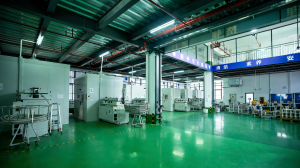
Its manufacturing facility covers approximately 10,000 m², supporting production, processing, inspection, and related manufacturing operations.
Looking for a PTFE tube or braided PTFE hose manufacturer for your next project?
Contact Besteflon with your required dimensions, application, operating conditions, and testing requirements. Our team can help evaluate your specifications and discuss suitable product options and supporting documentation.
Explore our PTFE tubing and hose solutions at:


If you are in PTFE Hose,You May Like
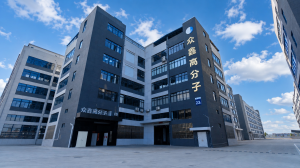
Buying the right Automotive PTFE Hose is not only about choosing different specifications for different applications. More to choose a reliable manufacturer. Besteflon Fluorine plastic Industry Co., Ltd. specializes in the production of high-quality PTFE hoses and tubes for 20 years. If any questions and needs, please feel free to consult us for more professional advice.
Post time: Oct-29-2026