Flexible PTFE Teflon Hose Manufacturers & Supplier from China
Besteflon is head quartered in Huizhou, Guangdong, China, specializing in various aspects of PTFE (polytetrafluoroethylene) assembly and PTFE lined flexible hose.
Combining over 20 years of experience and well-equipped production facilities, our team continuously produces and supplies PTFE flexible hose that meet the highest standards, serving major customers across the pharmaceutical, chemical, food and beverage, semiconductor, automotive, and industrial manufacturing sectors worldwide.
Ptfe Lined Flexible Hose Features and Benefits
PTFE Flexible Hose
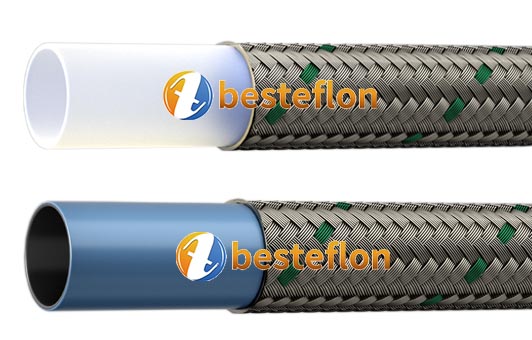
Working temperature:
from -60°C to +260°C from -76°F to +500°F
This stable structure allows PTFE hoses to work reliably at temperatures up to 260°C and as low as -60°C without deformation or performance loss
Technical construction characteristics:
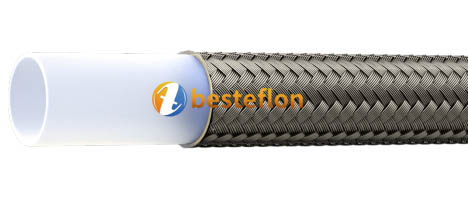
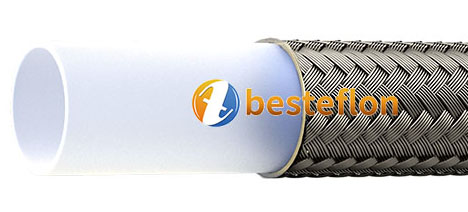
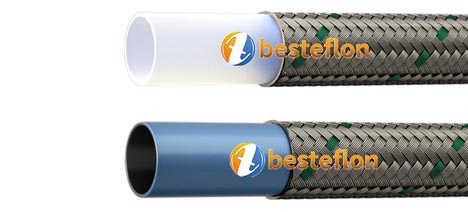
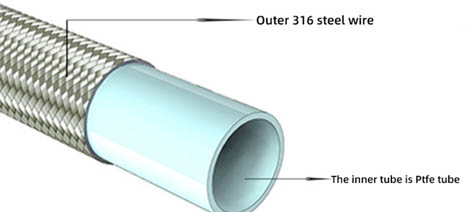
Internally made of PTFE core material and reinforced with AISI 304 stainless steel braided layer.SS304 braided reinforcement enhances PTFE hose flexibility and makes it more flexible.
flexibility and durability
PTFE hoses excel in both flexibility and durability. PTFE’s inherent toughness allows the hose to maintain its shape and structural integrity even after long-term cyclic use.
We are a professional manufacturer and supplier with 20 years of experience in PTFE flexible hose production.
High-Quality and Affordable
PTFE hoses strike an exceptional balance between high quality and cost-effectiveness, catering to the needs of both budget-conscious buyers and industries with strict performance standards.
Enhanced Flow Efficiency
Enhanced flow efficiency is a standout advantage of PTFE hoses, thanks to the material’s ultra-low friction coefficient that minimizes fluid resistance during transfer.
higher pressures
PTFE hoses are engineered to handle higher pressures than many conventional hose materials, making them suitable for high-intensity fluid transfer applications where pressure stability is critical.
Chemical Inertness
PTFE hoses exhibit exceptional chemical inertness, meaning they resist reactions with almost all chemicals, acids, alkalis, solvents and oxidizing agents.
This remarkable property stems from their unique molecular structure: the carbon backbone of PTFE is fully encapsulated by tightly bonded fluorine atoms, forming a dense, non-reactive protective layer. This layer prevents external chemicals from penetrating or interacting with the material, ensuring PTFE hoses maintain structural integrity and performance even in harsh chemical environments.
| Item No. | Inner Diameter | Outer Diameter | Tube Wall Thickness |
Working Pressure | Burst Pressure | Minimum Bending Radius | Specification | Collar Spec. | ||||||
| (inch) | (mm) | (inch) | (mm) | (inch) | (mm) | (psi) | (bar) | (psi) | (bar) | (inch) | (mm) | |||
| ZXGM101-04 | 3/16" | 5 | 0.323 | 8.2 | 0.033 | 0.85 | 3770 | 260 | 15080 | 1040 | 0.787 | 20 | -3 | ZXTF0-03 |
| ZXGM101-05 | 1/4" | 6.5 | 0.394 | 10 | 0.033 | 0.85 | 3262.5 | 225 | 13050 | 900 | 1.063 | 27 | -4 | ZXTF0-04 |
| ZXGM101-06 | 5/16" | 8 | 0.461 | 11.7 | 0.033 | 0.85 | 2900 | 200 | 11600 | 800 | 1.063 | 27 | -5 | ZXTF0-05 |
| ZXGM101-07 | 3/8" | 10 | 0.524 | 13.3 | 0.033 | 0.85 | 2610 | 180 | 10440 | 720 | 1.299 | 33 | -6 | ZXTF0-06 |
| ZXGM101-08 | 13/32" | 10.3 | 0.535 | 13.6 | 0.033 | 0.85 | 2537.5 | 175 | 10150 | 700 | 1.811 | 46 | -6 | ZXTF0-06 |
| ZXGM101-10 | 1/2" | 13 | 0.681 | 17.3 | 0.039 | 1 | 2102.5 | 145 | 8410 | 580 | 2.598 | 66 | -8 | ZXTF0-08 |
| ZXGM101-12 | 5/8" | 16 | 0.799 | 20.3 | 0.039 | 1 | 1595 | 110 | 6380 | 440 | 5.906 | 150 | -10 | ZXTF0-10 |
| ZXGM101-14 | 3/4" | 19 | 0.921 | 23.4 | 0.047 | 1.2 | 1305 | 90 | 5220 | 360 | 8.898 | 226 | -12 | ZXTF0-12 |
| ZXGM101-16 | 7/8" | 22.2 | 1.043 | 26.5 | 0.047 | 1.2 | 1087.5 | 75 | 4350 | 300 | 9.646 | 245 | -14 | ZXTF0-14 |
| ZXGM101-18 | 1" | 25.4 | 1.161 | 29.5 | 0.059 | 1.5 | 942.5 | 65 | 3770 | 260 | 11.811 | 300 | -16 | ZXTF0-16 |
* Meet The SAE 100R14 standard.
* Custom-specifications may be discussed with us for detailed in detail
Don’t you find what you are looking for?
Just tell us your detailed requirements. The best offer will be provided.
OEM PTFE Flexible Hose Pipe Supplier
With extensive and comprehensive inventory, we can quickly turnover and supply large quantities of PTFE hoses. According to customer requirements, most customized PTFE hose components can be supplied in a few days or less. All loose hoses, fittings, and collars in both imperial and metric sizes can be supplied in a few days.
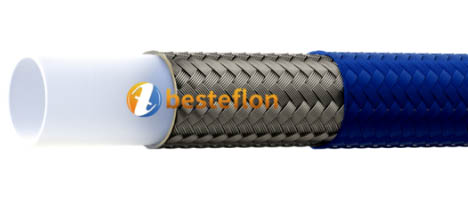
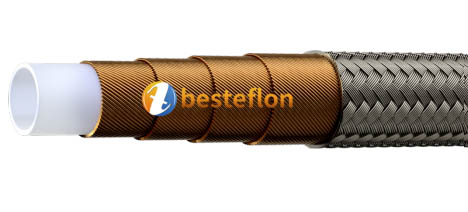
We provide a selection of materials for the outer braiding of our hoses, such as stainless steel, polyester, and Kevlar. Each material offers unique benefits, including enhanced durability, temperature resistance, and flexibility. Customers can choose the braiding material that best suits their industry-specific needs, whether it's for chemical, automotive, or aerospace applications.
Our PTFE hoses are available in a variety of diameters and wall thicknesses to accommodate different application requirements. We can customize the hose size to your exact specifications, ensuring a perfect fit for your system, regardless of whether you need small or large diameter hoses.
Additionally, we offer the customization option of adding your company logo or brand to the hose. This can be done through printing, embossing, or etching, allowing for increased brand visibility and differentiation. We make sure that the logo is resistant to wear and maintains its appearance under various operating conditions.
We offer a wide selection of fittings, including stainless steel, brass, and other corrosion-resistant materials. Customers can choose the type of fitting, such as NPT, BSP, or JIC, based on their specific application requirements. Our fittings are designed for easy installation and secure connections, and we can tailor the material and type to match both the hose and the operational environment perfectly.
Our Product Competitive Advantage
1.The basic materials have been approved by the US Food and Drug Administration
Can resist almost all chemicals
Our products hold FDA certification, and we have completed FDA facility registration.
2.Besteflon, a China-based flexible PTFE hose supplier, provides a range of inner diameters spanning 2 mm to 100 mm
Our PTFE tubes can be braided with stainless steels or other material types. We also offer anti-static PTFE tubes and can supply matching fittings for the hoses as per customer requirements.
3.Besteflon provides a wide range of services
Our well-trained staff provide you with advice on the selection and design of PTFE hoses. Customer specific requirements are met through one-time, small batch, or bulk production.
4.Provide comprehensive technical advice by phone or via on-site consultations at all project stages
Using the latest testing methods in quality assurance
Highly flexible solutions for hose pipelines and fittings
Applications
PTFE Hoses in Biotech and Pharmaceutical
Besteflon’s PTFE flexible hoses are trusted in biotech and pharmaceutical sectors for their exceptional chemical inertness, sterile surface, and temperature resistance (-60°C to +260°C). Used in drug synthesis, sterile fluid transfer, and bioreactor systems, they prevent contamination and ensure fluid purity—critical for FDA-compliant processes.
In pharmaceutical production, our hoses safely convey acids, solvents, and active pharmaceutical ingredients (APIs) without leaching. In biotech labs, they support cell culture and fermentation workflows with reliable flexibility and easy sterilization. Backed by 20 years of expertise, our PTFE hoses meet strict industry standards, delivering consistent performance for high-precision applications.
PTFE Flexible Hose vs. Traditional Rubber Hoses: Technical Comparison
With 20 years of specialized experience in manufacturing PTFE products, Besteflon takes pride in offering high-performance PTFE flexible hose that outperforms traditional rubber hoses in multiple critical technical aspects, making it the preferred choice for demanding industrial applications.
Firstly, in terms of temperature resistance, PTFE flexible hose boasts exceptional thermal stability, operating reliably within a wide range of -200°C to +260°C (-328°F to +500°F). In contrast, traditional rubber hoses typically have a limited temperature tolerance (often -40°C to +120°C/-40°F to +248°F) and are prone to cracking, softening, or losing structural integrity under extreme heat or cold. This makes our PTFE hose ideal for applications involving high-temperature fluids, cryogenic processes, or fluctuating thermal environments.
Secondly, chemical compatibility is a key differentiator. PTFE (polytetrafluoroethylene) is inherently chemically inert, meaning PTFE flexible hose resists corrosion, swelling, or degradation when in contact with strong acids, alkalis, solvents, oils, and other aggressive media. Traditional rubber hoses, however, are vulnerable to chemical attack—they may degrade, leak, or contaminate fluids, posing risks to both equipment and operational safety. For industries such as chemical processing, pharmaceuticals, and petrochemicals, this inertness ensures long-term reliability and fluid purity.
Thirdly, durability and low maintenance set our PTFE hose apart. Unlike rubber hoses, which tend to age, harden, or deteriorate over time due to oxidation, UV exposure, or repeated flexing, PTFE flexible hose maintains its flexibility and structural integrity for years. It also has excellent wear resistance, reducing the need for frequent replacements and lowering overall operational costs. Additionally, PTFE’s non-stick surface minimizes fluid buildup and contamination, simplifying cleaning and ensuring consistent flow performance.
Lastly, in terms of pressure handling and versatility, PTFE flexible hose excels in high-pressure applications (with options for reinforced designs like steel wire braiding) while remaining highly flexible, allowing for easy routing in tight spaces. Traditional rubber hoses often struggle to balance flexibility and high-pressure resistance, and their performance may decline rapidly under continuous high-pressure use.
Backed by two decades of engineering expertise and strict quality control, Besteflon’s PTFE flexible hose combines technical superiority with proven reliability. Whether you require a solution for extreme temperatures, aggressive chemicals, or long-term industrial use, our PTFE flexible hose outperforms traditional rubber hoses in every critical metric—delivering value, safety, and peace of mind to global customers.
Authentication Certificate
Besteflon is a professional and formalized company. In the course of the company's development, we have continuously accumulated experience and improved our technical level, and are committed to providing customers with the highest quality products and services.
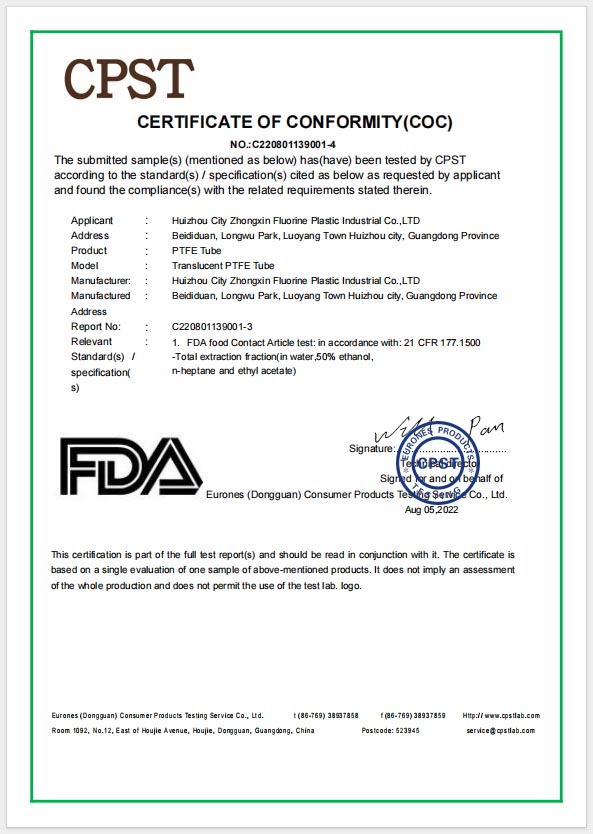
FDA
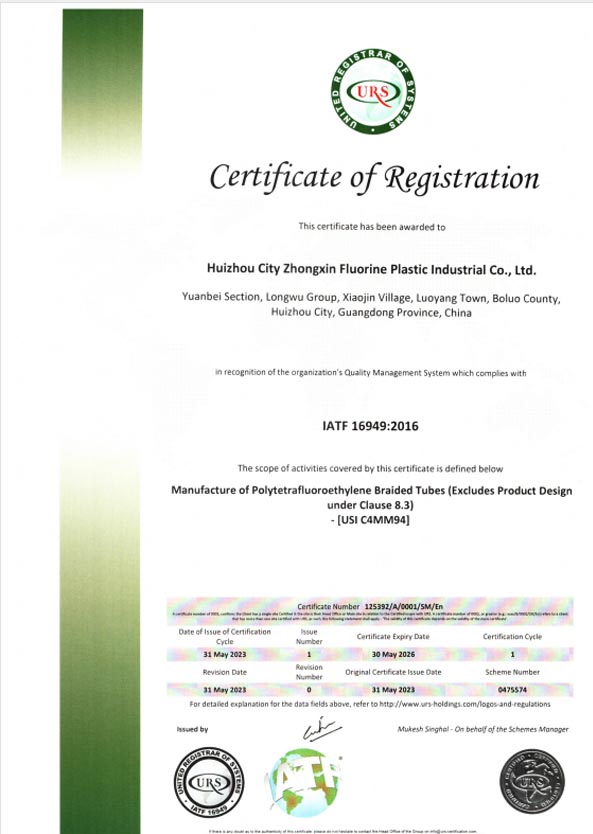
IATF16949
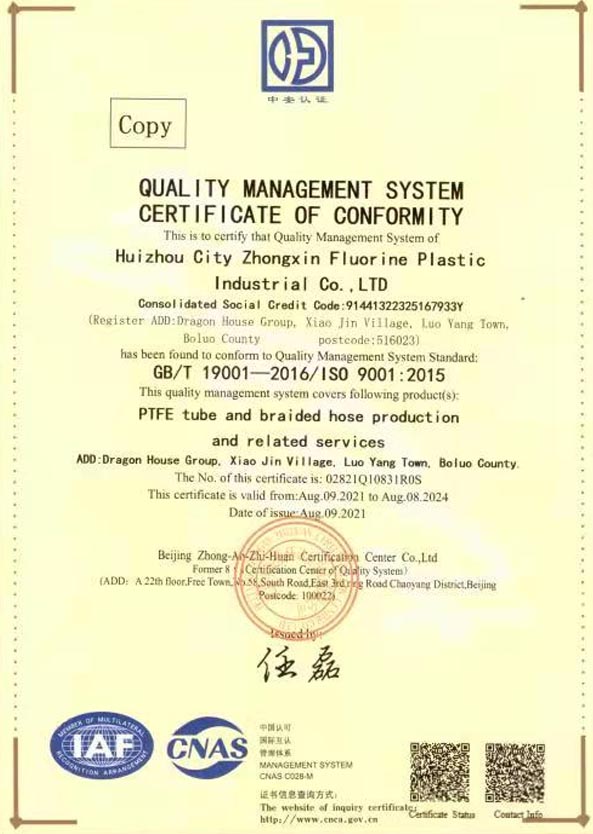
ISO
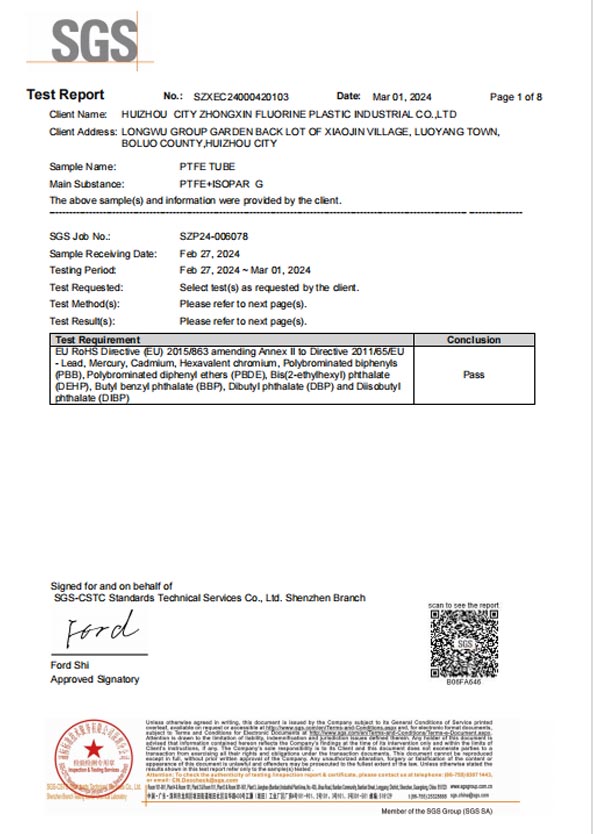
SGS
FAQ
1.Is PTFE hose flexible?
PTFE hoses used for biotechnology and pharmaceutical fluid delivery. Very flexible - very sturdy - smooth holes for fast flow and easy cleaning.
2.What does PTFE hose represent?
PTFE hoses are made of polytetrafluoroethylene, which is an engineering fluorinated polymer. Polytetrafluoroethylene is a different name for a compound, also known as Teflon.
3.How flexible is China flexible PTFE hose ?
PTFE woven fabrics have excellent flexibility, making them ideal for weighing and quantitative systems, or short flexibility that requires additional flexibility, suitable for large amplitude vibration, rotation, or rolling equipment. PTFE fabric is permeable, allowing air to enter and exit devices without breathing bags.
4.Which is better, PTFE hose or rubber hose?
PTFE hoses have excellent chemical resistance and can withstand extreme temperature conditions, but they are more expensive. On the other hand, rubber hoses offer superior flexibility and are highly cost-effective, but they fall short of PTFE hoses in chemical resistance.
5.What are the drawbacks of PTFE?
Limitations of PTFE:
Non melting machinable materials.
Low tensile yield strength and modulus (compared to PEEK, PPS, and LCP)
High wear behavior in unfilled state.
Cannot be welded.
Sensitive to creep and wear.
Low radiation resistance.
6.How long is the service life of PTFE?
All PTFE materials have an unlimited shelf life when stored under normal warehouse conditions. In fact, a common industry joke is that for 85 years, PTFE "hasn't existed long enough" to determine how long it can last!
7.How do different braided materials affect the pressure resistance of PTFE hoses?
Braided materials play a critical role in enhancing the structural integrity, pressure-bearing capacity, and long-term durability of PTFE hoses. Below is a detailed analysis of how steel wire, aramid fiber, and glass fiber—three commonly used braiding materials—influence PTFE hoses:
1. Steel Wire Braiding
Steel wire (typically stainless steel 304/316) is renowned for its exceptional tensile strength and rigidity, making it the top choice for high-pressure applications. PTFE hoses with steel wire braiding can withstand working pressures ranging from 1000 to 5000 psi (depending on hose diameter and braid density), significantly outperforming non-reinforced or lightly reinforced PTFE hoses.
2. Aramid Fiber Braiding
Aramid fiber is a high-strength, lightweight synthetic material with pressure-bearing capabilities comparable to steel wire (working pressure: 800–3000 psi) but at 1/5 the weight. Its flexible braid structure adapts well to dynamic bending, making it ideal for applications requiring both moderate pressure resistance and maneuverability.
3. Glass Fiber Braiding
Glass fiber braiding offers moderate pressure reinforcement, with working pressures ranging from 300 to 1500 psi—suitable for low-to-medium pressure applications (e.g., chemical fluid transfer, HVAC systems). Its primary advantage lies in high-temperature resistance (up to 260°C, matching PTFE’s thermal stability) rather than extreme pressure bearing.
8.How to Maintain PTFE Flexible Hoses?
To maintain PTFE flexible hoses effectively and extend their service life, follow these key steps:
1. Avoid overbending — Do not exceed the hose’s rated minimum bend radius, as excessive flexing can damage the braided reinforcement layer.
2. Keep it clean — Rinse the inner and outer surfaces with neutral detergent after use, especially for hoses used in chemical or food applications, to prevent residue buildup.
3. Store properly — Store hoses in a cool, dry, and ventilated area away from direct sunlight, sharp objects, and corrosive chemicals.
4. Inspect regularly — Check for cracks, bulges, or loose fittings periodically. Replace the hose immediately if any damage is found.
9. PTFE Flexible Hose Applications
Besteflon China flexible PTFE hose suppliers excel due to their excellent chemical resistance, high flexibility, and long service life for most media. In the food and pharmaceutical industries, their neutral taste and odor, as well as their bacteriological safety, make them an ideal choice for transporting potentially problematic products. In the shipbuilding or aerospace industry, PTFE hoses can safely transport fuel or cooling water.
Adhesive and chemical transfer
Bus, truck, and off-highway vehicles
Engine and fuel
Paint and paint spraying